Monthly Archives: October 2025

Торфяной гранулятор: эффективное оборудование для устойчивого сельского хозяйства и садоводства

С ростом спроса на органические субстратные материалы в современной сельскохозяйственной, садоводческой и экологической промышленности, торф, как ценный природный органический материал, благодаря своим отличным водоудерживающим, воздухопроницаемым и медленно высвобождающим питательным веществам свойствам, широко применяется в качестве почвенного улучшителя, субстрата для рассады и в цветоводстве. Однако традиционный торф в рассыпчатом виде неудобен для транспортировки и использования. Появление торфяного гранулятора эффективно решает эти проблемы, значительно повышая эффективность использования и добавленную стоимость торфа.

Решения-для-грануляции-торфа

Решения-для-грануляции-торфа

Что такое торфяной гранулятор?

Торфяной гранулятор — это специализированное оборудование для переработки рассыпчатого торфа в гранулированную форму. С помощью механического прессования, прокатывания или барабанного гранулирования торф формируется в плотные и однородные по размеру гранулы. Гранулированный торф удобен для упаковки, транспортировки и хранения, а также улучшает текучесть и равномерность внесения при использовании, повышая эффективность применения.

Принцип работы торфяного гранулятора

Торфяной гранулятор обычно состоит из системы подачи, гранулирующего механизма, формующего устройства и системы вывода. Предварительно подготовленный торф равномерно подается в машину, где под действием валков или прессующих механизмов уплотняется и формируется в цилиндрические или шарообразные гранулы, которые затем нарезаются или просеиваются до нужного размера. Процесс отличается высокой степенью автоматизации, высокой производительностью и высоким выходом годных гранул.

Преимущества торфяного гранулятора

1. Повышение эффективности использования
Гранулированный торф легче хранить и транспортировать, что сокращает потери и повышает общий коэффициент использования.

2. Улучшенные физико-химические свойства
Гранулированный торф не пылит, распределяется равномерно и способствует лучшему поглощению влаги и питательных веществ корневой системой растений.

3. Экологичность и энергоэффективность
Многие торфяные грануляторы используют сухой способ гранулирования без добавления воды или связующих веществ, что экономит энергию и соответствует принципам зеленого производства.

4. Простота эксплуатации
Оборудование отличается продуманной конструкцией, высоким уровнем автоматизации, простотой в управлении и обслуживании, подходит для предприятий разного масштаба.

Сферы применения

Торфяной гранулятор используется не только в сельском хозяйстве и садоводстве, но и в экологической реабилитации, почвенном улучшении, цветоводстве и производстве субстратов. Гранулированный торф применяется в качестве субстрата для рассады, почвенного улучшителя, питательной почвы для цветов и других целей, занимая важное место в современной сельскохозяйственной и садоводческой индустрии.

Торфяной гранулятор — это важное оборудование для повышения ценности торфяных ресурсов, стимулирующее развитие органического и устойчивого сельского хозяйства, а также обеспечивающее техническую поддержку для садоводства и экологической реабилитации. Выбирая эффективный и надежный торфяной гранулятор, вы получите больше возможностей для повышения производительности и расширения рынка. Более подробную информацию можно найти на сайте:https://www.granulyator.com/product/granulyator-torfa/

What Factors Should Be Considered When Designing a Pomace Drying Process for Fertilizer Production?

The production of organic fertilizer presents a valuable opportunity to address agricultural needs while managing waste effectively. Among the various raw materials available, high-moisture organic waste, particularly pomace, stands out as an ideal candidate for conversion into nutrient-rich fertilizers. This blog explores the essential factors that should be considered when designing a pomace drying process for fertilizer production.

What Types of Raw Materials Are Best for Organic Fertilizer Production?

Pomace, the solid remains of fruits and vegetables after juice extraction, contains a wealth of nutrients that can significantly enhance soil health. High-moisture organic waste such as fruit pomace, vegetable byproducts, and winery waste provides an excellent base for organic fertilizer. Each industry has specific needs that align with pomace utilization. For instance, the fruit juice industry generates apple and grape pomace, both rich in nitrogen and beneficial for promoting plant growth. Similarly, vegetable processing can yield cucumber or tomato pomace, which also contributes essential nutrients.

Pomace Dryer

Pomace Dryer

The incorporation of pomace into fertilizer production not only reduces waste but also results in a high-quality organic product that can improve soil fertility. The ability to repurpose this organic matter helps close the loop in the food supply chain, encouraging sustainability within various sectors. Thus, the selection of high-moisture organic waste like pomace is critical to produce effective fertilizers tailored to specific agricultural requirements.

How Do Machine Features Influence the Pomace Drying Process?

The efficiency of the pomace drying process directly affects the quality of the resulting organic fertilizer. Key features of modern drying machines can significantly streamline the water reduction process. A pomace dryer, for instance, is designed to effectively lower moisture content from over 90% to below 10%. This dehydration technique is crucial for preserving the nutrient value of the pomace while ensuring its marketability as a fertilizer.

In addition to a pomace dryer, other machines play supportive roles. A dewatering machine excels in initial moisture extraction, preparing pomace for further drying stages. Composting equipment facilitates the aerobic decomposition of organic materials, enriching the fertilizer’s nutrient profile. A wet granulator or pelletizer then creates uniform granules, enhancing the ease of application and distribution in agricultural settings.

What Are the Key Stages in the Pomace Drying Process?

Understanding the stages of the pomace drying process is vital for optimizing production. Initially, the dehydration process reduces moisture content through methods such as mechanical pressing, which efficiently extracts liquid. Following this, the drying phase, primarily conducted by the pomace dryer, ensures that the remaining moisture reaches optimal levels for storage and usage.

Once dried, the pomace undergoes composting to promote microbial activity, which enhances nutrient availability. The final stage involves granulating the dried pomace into pellets. This not only facilitates easier handling but also enhances the application efficiency of the organic fertilizer. Each stage of the process requires careful design consideration to maximize efficiency and nutrient retention.

How Can Choosing the Right Equipment Enhance Fertilizer Production?

Selecting the appropriate equipment plays a pivotal role in the overall efficiency of fertilizer production. The choice of machinery directly impacts the water reduction processes, nutrient retention, and final product quality. Investing in advanced pomace dryers with precise temperature control and airflow management ensures optimal drying conditions. Such features minimize nutrient loss while achieving the desired moisture content.

Moreover, integrating a comprehensive system that includes complementary machinery, like dewatering and granulating machines, allows for a streamlined and efficient workflow. By designing a cohesive drying process, manufacturers can enhance productivity and ensure the delivery of high-quality organic fertilizer that meets market demands.

Conclusion

In conclusion, when designing a pomace drying process for fertilizer production, it is crucial to consider the specific characteristics of raw materials, the features of drying equipment, and the essential stages of the drying process. By focusing on these factors, producers can create an efficient and sustainable system. A professional drying equipment manufacturer, such as Yushunxin, can provide the necessary technology and support to optimize your pomace drying process for successful organic fertilizer production. You can visit: https://www.fertilizerdryer.com/pomace-drying-machine/

Dry Granulation Technology in Bio Fertilizer Production

As sustainable agriculture continues to expand, bio fertilizer manufacturing technologies are evolving to improve efficiency, reduce energy use, and enhance product quality. Among these innovations, dry granulation technology has become one of the most practical and cost-effective ways to produce bio fertilizer granules without relying on high heat or moisture.


1. What Is Dry Granulation in Bio Fertilizer Production?

Dry granulation refers to the process of compressing fine powder materials directly into dense granules without the use of liquid binders or drying systems. In bio fertilizer production lines, this technique helps preserve microbial activity and nutrient value that might otherwise be destroyed by high temperatures.
Unlike wet granulation, which requires a dryer and cooler, dry granulation machines use mechanical pressure to achieve compact, uniform granules — making them ideal for temperature-sensitive biological materials.


2. Working Principle of the Roller Compactor Granulator

The most widely used dry granulation equipment in the biofertilizer industry is the roller compactor granulator (also known as a double roller press granulator or dry extrusion granulator).
The process begins with feeding evenly mixed powder materials into the rollers. Through high-pressure extrusion, the material is compacted into dense sheets or flakes. These are then crushed and screened into granules of the desired size.
This method ensures uniform density and prevents nutrient segregation, resulting in stable, easy-to-store fertilizer products.


3. Advantages of Dry Extrusion Technology

Dry granulation offers multiple advantages for bio fertilizer manufacturing plants:

  • Energy Efficiency: No need for drying or cooling equipment, reducing power consumption.

  • Microbial Protection: Keeps beneficial bacteria alive by avoiding high-temperature processes.

  • Simple Process Flow: Compact line layout and fewer processing steps mean lower maintenance and production costs.

  • High Granule Strength: The mechanical compaction produces hard, dust-free granules that can be easily transported and applied.

These benefits make dry compaction systems particularly suitable for organic and bio-based fertilizers that require gentle processing.


4. Raw Materials Suitable for Dry Granulation

A dry granulation machine for biofertilizer can handle a wide range of materials such as composted manure, humic acid, amino acid, microbial powder, and NPK mixtures.
Since the process works best with powders that have moderate moisture (below 10%), pre-dehydration and fine grinding are often necessary to achieve consistent granulation performance. Click here to learn more about raw materials suitable for twin-roll granulator.

application of dry compaction granulator

application of dry compaction granulator


5. Integrating Dry Granulation into a Bio Fertilizer Production Line

In modern bio fertilizer manufacturing systems, dry granulation can be seamlessly integrated with upstream and downstream processes. It typically follows mixing and batching systems and connects to screening and packaging units for final product handling.
YUSHUNXIN designs customized dry granulation solutions based on different raw materials, capacity targets, and granule specifications — ensuring stable operation and high granule uniformity.


Conclusion

Dry granulation technology represents a clean, efficient, and microbe-friendly solution for modern bio fertilizer production. By using advanced roller compactor granulators and optimized process design, producers can achieve high-quality bio fertilizer granules with lower energy consumption and higher nutrient retention — supporting a more sustainable agricultural future. Welcome to visit: https://www.biofertilizerproduction.com/product/roller-compactor-granulator-for-bio-fertilizer-manufacturing/

Линия по производству комплексных удобрений — ключевое оборудование для высококачественного развития современной сельского хозяйства

С ускорением процесса модернизации сельского хозяйства удобрения играют незаменимую роль в повышении урожайности, улучшении структуры почвы и обеспечении продовольственной безопасности. Комплексные удобрения, объединяющие в себе несколько питательных элементов, благодаря своему сбалансированному составу, высокой усвояемости и удобству применения стали основным продуктом рынка. Линия по производству комплексных удобрений является основным оборудованием, обеспечивающим масштабное, стандартизированное и эффективное производство комплексных удобрений. В данной статье мы подробно расскажем о составе линии, технологическом процессе и её значении для современной аграрной отрасли.

Линия-по-производству-npk-удобрения-1–10-т-ч

Линия-по-производству-npk-удобрения-1–10-т-ч

1. Состав линии по производству комплексных удобрений

Полная линия обычно включает следующие основные компоненты:

1. Система дозирования сырья
Обеспечивает точное измерение и смешивание азота, фосфора, калия и других микроэлементов, что гарантирует научно обоснованную формулу и равномерное распределение питательных веществ.

2. Оборудование для перемешивания
Высокоэффективное смешивание различных компонентов для последующего гранулирования.

3. Грануляторы
Ключевой этап. Обычно применяются барабанные, дисковые или вальцовые грануляторы, которые формируют однородные и прочные гранулы.

4. Система сушки и охлаждения
Свежие гранулы содержат влагу, поэтому после сушки и охлаждения они приобретают необходимую прочность и стабильность для хранения.

5. Оборудование для сортировки и нанесения покрытия
Отделяет порошок и несоответствующие гранулы, а также может наносить покрытие для улучшения свойств удобрения.

6. Упаковочная система
Автоматически фасует и упаковывает готовые удобрения, что облегчает хранение и транспортировку.

2. Технологический процесс линии

Типичный процесс включает: дозирование → смешивание → гранулирование → сушка → охлаждение → сортировка → нанесение покрытия (по необходимости) → упаковка. Весь процесс автоматизирован и отличается высокой производительностью, позволяя выпускать разнообразные продукты под запросы клиентов.

drum fertilizer granulation line

drum fertilizer granulation line

3. Преимущества линии по производству комплексных удобрений

1. Крупномасштабное и эффективное производство
Высокая степень автоматизации, снижение трудозатрат, повышение производительности.

2. Стабильное качество продукции
Точная дозировка сырья, равномерные гранулы, предсказуемая эффективность.

3. Экологичность и энергосбережение
Оснащение системами пылеулавливания и очистки отходящих газов, соответствие требованиям экологической безопасности.

4. Гибкость производства
Возможность оперативно менять рецептуру, производить продукцию под разные культуры и регионы.

4. Значение линий по производству комплексных удобрений для современного сельского хозяйства

Линия по производству комплексных удобрений — не только важное оборудование для химических заводов, но и прочная основа для высококачественного развития сельского хозяйства. Её внедрение способствует повышению использования удобрений, снижает потери ресурсов и нагрузку на окружающую среду, ускоряет переход к «зелёному» земледелию. Для фермеров это означает возможность получать более высокие урожаи и доходы, а также поддержку продовольственной безопасности и развитию сельских территорий.

С развитием технологий и ростом потребностей рынка линии по производству комплексных удобрений будут и дальше совершенствоваться, становясь двигателем химической промышленности и современной аграрной отрасли. Если у вас есть вопросы или потребности в оборудовании, пожалуйста, свяжитесь с нами — мы предложим профессиональные решения! Более подробную информацию можно найти на сайте:https://www.granulyator.com/product/liniya-po-proizvodstvu-slozhnosostavnykh-udobreniy/

Building an Efficient Small-Scale Fertilizer Production Line

For many agricultural investors and local fertilizer manufacturers, setting up a small scale fertilizer production line is often the most practical starting point. It allows gradual entry into the fertilizer market with lower investment, easier management, and flexible operation. Whether producing organic, bio, or compound fertilizer, a mini fertilizer plant can achieve stable output while maintaining high product quality.

Why Choose a Small Fertilizer Production Setup

A compact fertilizer production line is ideal for farmers’ cooperatives, small agribusinesses, and startups that aim to process local organic waste or produce customized NPK blends. Unlike large-scale factories that require heavy infrastructure and automation, a small fertilizer making system focuses on efficiency and simplicity.
It can be installed on a limited site, requires fewer workers, and still includes the essential steps—composting, crushing, mixing, granulating, drying, and packaging.

By starting small, manufacturers can test local market demand, improve formulations, and later expand production capacity without high financial risk.

Common Equipment Configuration

A low-capacity fertilizer production line generally includes:

Composting unit: For organic material fermentation and stabilization.

Crushing and mixing machine: To create uniform raw material texture and nutrient distribution.

Granulator: Pan granulator, rotary drum granulator, or flat die pelletizer for forming uniform particles.

Drying and cooling system: Ensures product durability and long storage life.

Screening and packaging section: For grading granules and preparing products for sale.

This modular design allows manufacturers to adjust the process layout according to available materials and production goals. Click here to learn about the equipment of small fertilizer plant.

Small scale fertilizer production

Small scale fertilizer production

Applications and Advantages

A small scale fertilizer manufacturing plant is suitable for processing livestock manure, crop residues, and organic waste into marketable fertilizer products. It also supports the production of biofertilizers and NPK compound fertilizers in small batches.

Main benefits include:

Low initial investment and quick setup

Easy operation and maintenance

Adaptable to various raw materials

Scalable design for future expansion

These characteristics make the mini fertilizer production line a cost-effective and sustainable option for those entering the fertilizer industry.  Welcome to consult YUSHUNXIN to get the cost to set up small-scale fertilizer making line.

Towards Sustainable Local Fertilizer Production

As global agriculture shifts toward resource recycling and organic farming, small-scale fertilizer plants play an essential role in local nutrient management. They turn agricultural waste into valuable fertilizer products while promoting eco-friendly practices.

For entrepreneurs and farm owners, building a small fertilizer production system is not only an economic decision—it’s also a step toward a greener and more circular agricultural future.  Welcome to visit : https://www.fertilizerequipmentprice.com/small-scale-fertilizer-production-line/

Дисковый гранулятор SHUNXIN — разумный выбор для эффективного гранулирования

В современных отраслях сельского хозяйства, химии, охраны окружающей среды и других сферах качество гранулирующего оборудования напрямую влияет на производительность предприятия и качество продукции. Как известный бренд в отрасли, SHUNXIN, обладая многолетним профессиональным опытом, выпустил серию эффективных и долговечных дисковых грануляторов, которые пользуются широкой популярностью на рынке. В этой статье мы подробно расскажем о характеристиках и преимуществах дискового гранулятора SHUNXIN, чтобы помочь вам эффективно организовать процесс гранулирования.

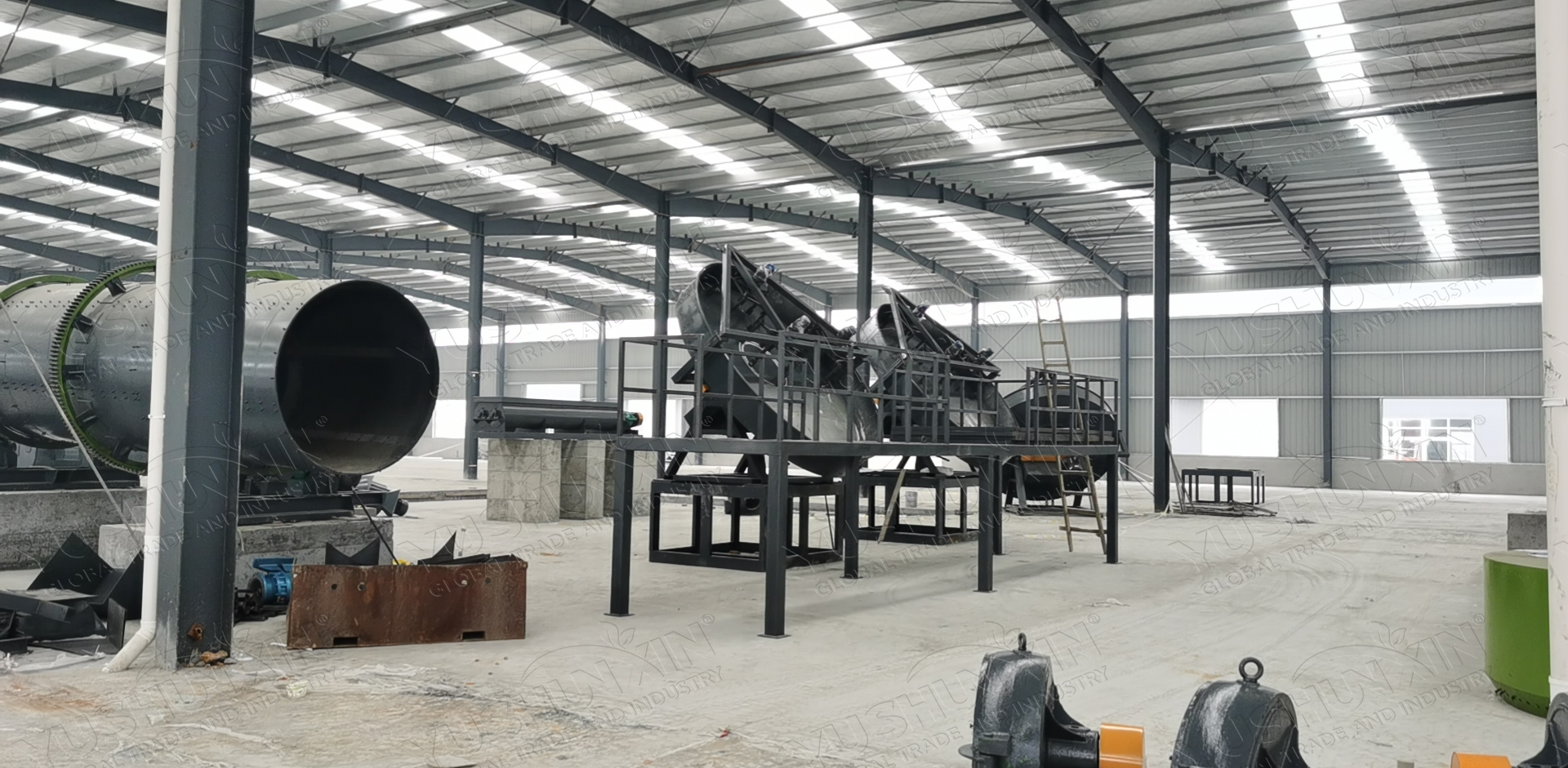
Дисковый гранулятор + барабанный гранулятор

Дисковый гранулятор + барабанный гранулятор

1. Описание продукта

Дисковый гранулятор SHUNXIN — это высокоэффективное оборудование, специально разработанное для гранулирования порошкообразных материалов. Продукт широко применяется для производства органических, комплексных, биологических удобрений, а также в химической и кормовой промышленности. Он способен превращать порошкообразные или мелкие гранулы в однородные, красивые по форме частицы. Простая конструкция, удобство в эксплуатации и стабильная работа делают оборудование отличным выбором для предприятий, стремящихся к масштабному и автоматизированному производству гранул.

2. Основные преимущества

1. Высокая эффективность гранулирования, коэффициент образования гранул свыше 93%
Дисковый гранулятор SHUNXIN использует уникальную наклонную конструкцию диска и продуманную систему орошения, что значительно повышает коэффициент образования гранул. Размер частиц можно легко регулировать в зависимости от производственных требований.

2. Рациональная конструкция, прочность и долговечность
Корпус изготовлен из высококачественной стали с антикоррозийной обработкой, что обеспечивает долговечность даже при интенсивной эксплуатации. Ключевые узлы дополнительно усилены для увеличения срока службы.

3. Простота эксплуатации и обслуживания
Удобная конструкция, простое управление и легкое освоение. Ежедневное обслуживание занимает минимум времени и трудозатрат, что увеличивает общую производительность.

4. Экологичность и энергоэффективность
Стабильная работа, низкий уровень шума и низкое энергопотребление соответствуют современным тенденциям энергосбережения и защиты окружающей среды. Герметичная конструкция снижает выбросы пыли, обеспечивая чистоту и безопасность рабочего места.

3. Широкая область применения

Дисковый гранулятор SHUNXIN подходит для производства различных видов гранул, особенно эффективен в следующих областях:

– Гранулирование органических, комплексных, смешанных (BB) удобрений
– Производство химических порошков и кормовых добавок
– Получение гранулированных материалов для сельского хозяйства и охраны окружающей среды
– Производство гранул в металлургии и строительных материалах

4. Рекомендации по выбору

При выборе дискового гранулятора SHUNXIN рекомендуется учитывать особенности вашего сырья, производственный масштаб, требования к размеру гранул и другие факторы. Обращайтесь к официальным поставщикам, чтобы обеспечить надежное гарантийное обслуживание и техническую поддержку — это залог спокойной и эффективной работы оборудования.

Как один из лидеров в сфере гранулирующего оборудования, дисковый гранулятор SHUNXIN завоевал признание клиентов благодаря своей эффективности, надежности, энергоэффективности и экологичности. Если вы ищете гранулятор с высоким соотношением цены и качества, SHUNXIN — ваш достойный выбор. Свяжитесь с нами, чтобы получить дополнительную информацию о продуктах и индивидуальные решения для вашего бизнеса — вместе мы выведем ваше производство на новый уровень эффективности. Более подробную информацию можно найти на сайте:https://www.sxmashina.com/tarelchatyy-granulyator-protsess/