Monthly Archives: September 2025

What Is the Future of Dry Granulation Technology in Limestone Fertilizer Production?

The global demand for efficient fertilizer manufacturing continues to expand, and the field of limestone fertilizer production now faces new technological opportunities. Dry granulation technology already plays an important role in the preparation of lime-based fertilizer granules, and its future development will influence how producers improve product quality, reduce operational costs, and meet the needs of different industries. The following discussion explores raw materials, production requirements, technical equipment, and the advancement of double roller extrusion technology in fertilizer manufacturing.


What Raw Materials Can Be Used for Lime-Based Fertilizer Manufacturing?

Limestone, lime rock, and quicklime powder represent the most common raw materials in lime fertilizer production. Each of these materials brings different benefits to industrial users. For example, limestone powder provides stable calcium content, which supports soil conditioning functions in agriculture and also serves as a neutralizer in industrial chemical processes. Quicklime offers higher reactivity, which benefits industries that require stronger binding properties in fertilizer particles. Dolomite powder supplies additional magnesium nutrients, which expands the application of the final product beyond basic calcium fertilizers.

Limestone Powder Granulator

Limestone Powder Granulator

In fertilizer manufacturing, these raw materials require transformation into durable particles or pellets because fine powder does not provide stable handling or controlled release. By converting lime rock powder into compact granules, producers can supply industries that need easier storage, transport, and application. The overall procedure of powder preparation and granulation ensures that each material achieves the maximum efficiency for its target customers in agriculture, environmental treatment, and industrial blending.


How Does Dry Granulation Technology Improve Lime Fertilizer Production?

Dry granulation technology plays a crucial role in lime-based fertilizer production because it eliminates the need for large amounts of liquid binders. The procedure involves mechanical force, where a double roller extrusion granulator compresses lime powder into compacted sheets and then breaks them into uniform granules. This method reduces energy consumption compared to wet granulating, and it also lowers the risk of generating chemical reactions between lime and water.

For producers, the advantages become clear. Granules manufactured through dry extrusion maintain consistent particle size, which improves both spreading in the field and blending in compound fertilizer plants. The compacting process enhances granule hardness, which reduces dust formation during handling and shipping. Furthermore, dry granulating allows flexible adjustment of particle diameter, so industries can request customized specifications based on their operational standards. As a result, lime fertilizer particle preparation through extrusion contributes to efficiency, safety, and long-term cost control.


What Machines Support the Granulation Process in Lime Fertilizer Manufacturing?

Efficient limestone fertilizer production requires integrated machinery systems. A loader type feeder supplies the material at a controlled rate into the line. A chain crusher crushes larger lime rock into fine powder, ensuring uniformity before mixing. A horizontal mixer blends different raw ingredients, guaranteeing even distribution of calcium or magnesium content. After mixing, a double roller extrusion granulator performs the dry compacting procedure, turning powder into granules without adding water.

Once extrusion forms the granules, a rotary screening machine separates qualified particles from oversized or undersized ones. Oversized particles return to the crusher, while fine powder enters the mixer again. A belt conveyor ensures smooth flow through each stage of the process. Finally, an automatic packaging scale handles the packing of finished lime fertilizer pellets into bags for shipping. Each machine contributes to efficiency, and together, this system builds a reliable granulating line that meets industrial demands.


What Is the Future Outlook for Limestone Dry Granulation Technology?

The future of lime fertilizer granulation technology appears increasingly promising because industries demand cleaner, more efficient production methods. Dry extrusion compacting technology provides a solution that reduces water consumption, cuts energy costs, and produces stable particles suitable for large-scale fertilizer plants. Environmental regulations encourage producers to adopt machines that decrease dust emissions, and extrusion granulation addresses this requirement effectively.

As technology develops, machinery design will incorporate higher automation, digital monitoring, and more precise control of compaction pressure. These improvements will allow fertilizer producers to deliver granules with uniform size distribution and optimized hardness, which can meet the demands of both large agricultural distributors and industrial users. From raw material preparation to final packaging, the entire procedure of lime fertilizer production will become more sustainable, flexible, and profitable.


Conclusion

The production of lime, limestone, and quicklime fertilizer granules demonstrates how raw material selection, dry granulation technology, and integrated machinery collectively shape product quality and manufacturing efficiency. Industries benefit from consistent particle hardness, controlled size distribution, and reduced operational costs when they adopt advanced extrusion equipment. In this context, professional equipment manufacturers play a key role. A professional fertilizer equipment manufacturer – Yushunxin – continues to provide reliable solutions for limestone fertilizer granulating lines, ensuring that producers prepare durable and efficient particles for a wide range of applications. You can visit: https://www.extruder-granulator.com/product/limestone-powder-granulation-machine/

Производственная линия комплексных удобрений производительностью 10 тонн в час — эффективное и интеллектуальное решение для современного сельского хозяйства

В условиях быстрого развития современного сельского хозяйства высокий и качественный урожай невозможно представить без научного и рационального внесения удобрений. Комплексные удобрения, объединяющие в себе несколько питательных элементов в оптимальных пропорциях, пользуются большой популярностью среди фермеров и аграрных предприятий. Для удовлетворения потребностей масштабного производства удобрений эффективная производственная линия становится ключом к повышению конкурентоспособности. Сегодня мы представляем вашему вниманию решение — производственную линию для выпуска комплексных удобрений с производительностью 10 т/ч.

Линия-по-производству-npk-удобрения-1–10-т-ч

Линия-по-производству-npk-удобрения-1–10-т-ч

1. Краткое описание производственной линии 10 т/ч

Производственная линия комплексных удобрений 10 т/ч способна выпускать 10 тонн готового продукта в час. Данная линия подходит для производства различных формул NPK, BB-удобрений и других смешанных комплексных удобрений в режиме непрерывной и автоматизированной работы. Современные технологии и интеллектуальные системы управления гарантируют одинаковое качество и стабильность гранул.

2. Основной технологический процесс

Дозирование сырья
В соответствии с требуемой формулой азот, фосфор, калий и другие компоненты автоматически и точно дозируются.

Смешивание
Сырьё тщательно перемешивается в высокоэффективных смесителях для достижения однородности.

Гранулирование
Смесь поступает в гранулятор (дисковый или барабанный), где формируются гранулы.

Сушка и охлаждение
Свежие гранулы проходят через сушильную и охлаждающую установку для повышения прочности и хранения.

Просеивание
Просеивающее оборудование отделяет стандартные гранулы от нестандартных, которые возвращаются на переработку.

Обработка оболочкой (по выбору)
По желанию проводится обработка гранул для улучшения внешнего вида и влагостойкости.

Автоматическая упаковка
Готовые гранулы автоматически взвешиваются и фасуются для удобства транспортировки и продажи.

3. Основное оборудование линии

Система автоматического дозирования
Высокоэффективный смеситель
Барабанный или дисковый гранулятор
Ротационная сушилка
Ротационный охладитель
Барабанный грохот (сито)
Аппарат для нанесения покрытия (по выбору)
Автоматическая упаковочная машина
Конвейерная система и оборудование для обеспыливания

4. Преимущества производственной линии

Высокая производительность, до 10 тонн в час — идеально для средних и крупных предприятий
Высокий уровень автоматизации, интеллектуальное управление PLC — от загрузки сырья до упаковки
Стабильное качество продукции, точное дозирование и современные технологии обеспечивают равномерность и нужный состав гранул
Экологичность, система обеспыливания делает процесс чистым и безопасным
Гибкость, возможна настройка под разные формулы и виды сырья

5. Область применения

Линия 10 т/ч широко применяется для производства NPK-удобрений, BB-удобрений, органо-минеральных комплексных продуктов на предприятиях по производству удобрений, в крупных агрохолдингах, агропромышленных парках и кооперативах.

6. Пример реализации

Недавно мы успешно поставили и установили линию на 10 т/ч для клиента из Украины. После наладки оборудование показало стабильную работу, а производительность и качество продукции соответствуют ожиданиям. Клиент высоко оценил наше оборудование и сервис.

Если у вас есть потребность в производственной линии для комплексных удобрений или вы хотите получить индивидуальное предложение — свяжитесь с нами. Мы разработаем оптимальное решение именно для вашего производства. Более подробную информацию можно найти на сайте:https://www.sxmashina.com/liniya-po-proizvodstvu-npk-udobreniya-1-10-t-ch/

How Does Drying Fruit Waste Aid in Manufacturing High-Quality Organic Fertilizers?

The growing demand for sustainable agriculture and eco-friendly soil enhancers creates a strong need for efficient organic fertilizer production. Among the many raw materials available, fruit pomace stands out because it contains high levels of moisture and nutrients. However, without proper water reduction techniques, pomace cannot transform into stable and effective fertilizer granules. Therefore, the drying process becomes the central stage in the preparation of high-quality organic fertilizer. This article explains how drying fruit waste improves fertilizer manufacturing, why pomace dryers play a decisive role, and what complementary equipment supports a complete production system.


Why Does High-Moisture Organic Waste Require Careful Treatment in Fertilizer Production?

Fruit pomace, vegetable residues, and other organic by-products contain more than 80–90% water. Such high moisture content limits storage, transport, and direct application in fertilizer manufacturing. If a producer uses untreated pomace, the material ferments irregularly, causes odor, and prevents uniform granulation. For this reason, organic fertilizer producers need reliable water reduction processes that can stabilize the raw material and convert wet waste into suitable composting feedstock.

Different industries benefit from this transformation in various ways. For juice production, apple pomace or grape pomace becomes an alternative income stream when transformed into granulated organic fertilizer instead of being discarded. For wineries, winery residue contributes to soil health as compost and pelletized fertilizer rather than becoming a disposal burden. For fruit processing companies, drying pomace reduces waste management costs and creates value-added fertilizer products. Therefore, the treatment of pomace through drying, dehydration, dewatering, and subsequent composting directly supports both environmental protection and economic efficiency.

Pomace Dryer

Pomace Dryer


How Does Pomace Drying Technology Improve the Fertilizer Manufacturing Process?

A pomace dryer offers a continuous and effective water reduction solution that lowers the moisture content from above 90% to below 10%. This drying procedure ensures stable storage, easy handling, and consistent composting results. The technology design of modern pomace drying equipment allows the organic material to pass through controlled heat exchange, which maintains nutrient value while achieving moisture reduction. As a result, the dried pomace becomes an ideal raw material for granulation and particle forming.

When a fertilizer producer integrates a pomace dryer into the production system, the process becomes more predictable. The machine creates uniform raw material that can enter composting equipment without uneven fermentation. After compost maturation, the same material can pass into a pelletizer or granulator, where it transforms into fertilizer granules with higher density and longer shelf life. Through this multi-stage design, the production procedure maintains efficiency while delivering high-quality organic fertilizer pellets.


What Other Equipment Supports Moisture Reduction and Fertilizer Granulation?

Although the pomace dryer takes the central role in water removal, other machines also contribute to a complete fertilizer production line. A dewatering machine often performs the initial separation of free water before the drying stage, which reduces energy consumption during subsequent dehydration. After drying, compost turners accelerate the composting process and improve aeration, which ensures microbial activity and nutrient preservation.

Once composting finishes, the material moves to wet granulation or pelletizing equipment. A granulator shapes the dried and composted pomace into uniform particles, while a pelletizer produces stable pellets suitable for packaging and distribution. Combining dewatering, drying, composting, and granulating machinery allows manufacturers to manage fruit pomace effectively, lowering moisture step by step until the material becomes solid fertilizer particles. This systematic production process not only improves efficiency but also guarantees product quality.


How Does the Complete System Create Sustainable Fertilizer Production?

The integration of pomace drying, composting, and granulation demonstrates how fruit waste becomes a valuable resource. Each stage of the procedure provides a clear benefit: dewatering lowers initial water content, drying stabilizes the pomace, composting enriches the nutrient profile, and granulation transforms the material into market-ready fertilizer granules. Through this structured preparation, producers gain reliable control over moisture reduction and final fertilizer quality.

By using advanced pomace drying equipment, organic fertilizer manufacturers can redesign waste management as a profitable system. Fruit processors, juice factories, and wineries no longer face disposal challenges but instead participate in sustainable fertilizer production. When pomace passes through the drying machine and related equipment, it changes from a liability into an asset.


Conclusion

The transformation of fruit pomace into organic fertilizer relies on precise water reduction. Without drying, manufacturers cannot achieve stable composting or consistent granulation. With a pomace dryer at the core of the production system, the moisture decreases from above 90% to less than 10%, which enables smooth composting, reliable pelletizing, and efficient fertilizer manufacturing. Complementary equipment such as dewatering machines, compost turners, and granulators enhances each stage, ensuring high-quality fertilizer particles.

For companies that seek advanced drying solutions, a professional drying equipment manufacturer such as Yushunxin provides reliable pomace dryers and integrated systems that support sustainable fertilizer production. You can visit: https://www.fertilizerdryer.com/pomace-drying-machine/

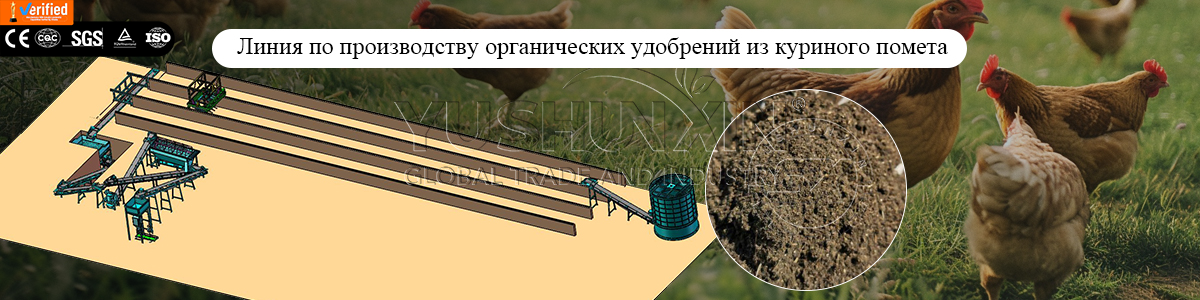
Комплексный анализ производства органических удобрений из куриного помёта: превращение отходов в зелёное богатство

С развитием идей «зелёного» сельского хозяйства и устойчивого развития органические удобрения занимают всё более важное место в современном аграрном секторе. Куриный помёт — ценный ресурс с высоким содержанием питательных веществ, и после правильной переработки он не только превращается из отхода в сокровище, но и значительно улучшает структуру почвы, повышает урожайность и качество сельхозкультур. В этом материале подробно разобран процесс производства органических удобрений из куриного помёта, выбор оборудования, преимущества и перспективы применения, что способствует развитию экологического сельского хозяйства и циркулярной экономики.

линия-по-производство-удобрений-из-куриного-помета-производительностью-5000-тонн-год

Преимущества органических удобрений из куриного помёта

1) Богатый состав питательных веществ
Куриный помёт содержит большое количество азота, фосфора, калия и других важных для растений элементов, отличается комплексным действием и продолжительным эффектом.

2) Улучшение структуры почвы
Высокое содержание органических веществ способствует образованию комковатой структуры почвы, повышает её влагоёмкость и водопроницаемость, стимулирует развитие полезных микроорганизмов.

3) Вторичное использование отходов
Рациональная переработка птичьего помёта снижает загрязнение окружающей среды, превращая отходы в ценный ресурс и способствуя экологическим циклам в сельском хозяйстве.

4) Безопасность и экологичность
После обеззараживания уничтожаются патогенные микроорганизмы, яйца гельминтов и семена сорняков, что делает удобрение безопасным для использования.

Технологический процесс производства органических удобрений из куриного помёта

Производство органических удобрений из куриного помёта включает несколько основных этапов:

1) Сбор и предварительная подготовка сырья
Куриный помёт смешивается с подстилкой (солома, рисовая шелуха, опилки и др.) для регулирования влажности до 50-60%. Удаляются крупные посторонние примеси, проводится предварительное измельчение.

2) Компостирование (ферментация)
Формируются компостные кучи или используются специальные ёмкости для ферментации. Масса регулярно перемешивается для аэрации и ускорения разложения. Контролируется температура (50-65°C), влажность и аэрация. Процесс продолжается 15-20 дней, после чего органика полностью разлагается и обеззараживается.

3) Просеивание и доработка
Сброженная масса просеивается для удаления неразложившихся остатков. При необходимости добавляются минеральные компоненты (азот, фосфор, калий) для получения комплексных удобрений.

4) Гранулирование, сушка, охлаждение
С помощью гранулятора масса формируется в гранулы для удобства транспортировки и внесения. Далее гранулы проходят сушку и охлаждение, чтобы снизить влажность и предотвратить слипание.

5) Просеивание и упаковка
Готовые гранулы сортируются по размеру, крупные возвращаются на повторное измельчение, мелкие – на повторное гранулирование. После сортировки удобрение фасуется и упаковывается автоматическими машинами для дальнейшей реализации.

Оборудование для производства

1) Компостный переворачиватель – быстро и равномерно перемешивает массу, ускоряя компостирование
2) Дробилка – измельчает крупные фракции, повышая однородность
3) Гранулятор – оборудование для получения гранул (дисковый, барабанный, влажный и др.)
4) Сушильная и охлаждающая машины – уменьшают влажность и температуру продукта
5) Сортировочная машина – разделяет гранулы по размеру
6) Автоматическая упаковочная машина – взвешивает, фасует и упаковывает продукцию

Применение и перспективы

– Сельское хозяйство: широко используется на овощных, плодовых, чайных, зерновых и цветочных плантациях.
– Озеленение и ландшафтный дизайн: применяется для улучшения и поддержания почвы в парках, газонах, зелёных зонах.
– Экологическая рекультивация: используется для восстановления деградированных и засолённых почв.
– Экспорт: растущий спрос на экологически безопасные органические удобрения на международных рынках.

Производство органических удобрений из куриного помёта не только решает проблему отходов птицеводства, но и существенно способствует развитию зелёного сельского хозяйства. Применение современных технологий и оборудования при соблюдении стандартов позволяет получить не только экономическую выгоду, но и защищать окружающую среду, содействовать устойчивому развитию. Более подробную информацию можно найти на сайте:https://www.liniyaudobreniy.com/resheniye-kurinyy-pomet-kak-odobreniye/