Category Archives: Freeze Dryer Production Line

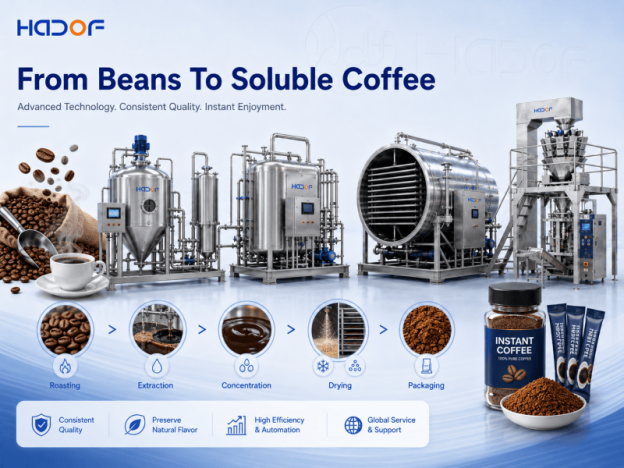
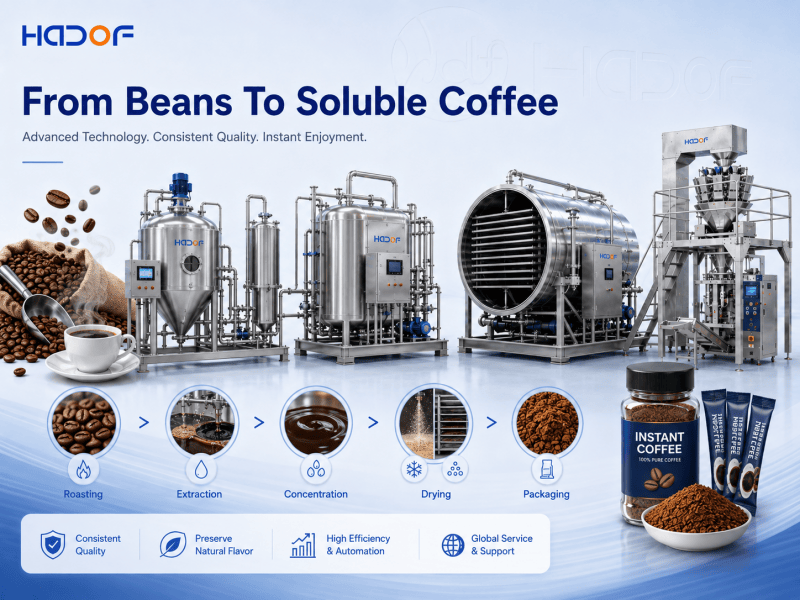
An Instant Coffee Production Line

How Freeze-Dried Coffee Is Made: From Green Beans to Instant Coffee

Freeze-dried coffee is the premium end of the instant coffee market. It dissolves quickly, keeps a clean, fresh-brewed aroma, and avoids the cooked, bitter notes that cheaper drying methods can leave behind. For coffee producers, a freeze-dried coffee line is a way to turn green beans into a high-value product with a long shelf life and strong export potential. This guide walks through the process, step by step, and explains the equipment behind it.

Step 1: Green Bean Selection and Roasting

Everything starts with the green bean. Consistent origin, moisture, and density give the roaster a predictable base. The beans are roasted to the profile your market expects — lighter roasts emphasize fruit and acidity, while darker roasts build body and chocolate notes. After roasting, the beans are rested briefly so the aromatics stabilize before extraction.

Step 2: Grinding and Extraction

The roasted beans are ground and extracted with hot water under controlled pressure. The goal is to pull the soluble solids, aroma compounds, and acids into a concentrated coffee extract without over-extracting the harsh, bitter notes. Extraction conditions — water temperature, pressure, and time — strongly affect the final cup quality.

Step 3: Concentration

The extract is usually concentrated before drying so the dryer has less water to remove. Concentration must be gentle: excessive heat at this stage drives off the very aromas that make freeze-dried coffee special. A well-designed line uses low-temperature concentration and captures aroma volatiles for later reintroduction.

Step 4: Pre-Freezing

The concentrated extract is frozen, often into a thin sheet or into droplets, depending on the line design. Fast freezing produces small ice crystals and a uniform frozen structure, which helps the next stage run efficiently. This pre-freezing step is a key part of the overall freeze-drying process and directly affects the final granule quality.

Step 5: Vacuum Freeze Drying

The frozen extract enters the vacuum chamber. Under low pressure, the ice sublimates directly into vapor without passing through a liquid stage, so the coffee’s structure and aroma stay largely intact. Gentle shelf heating drives the sublimation, and the condenser captures the vapor. This is the heart of a freeze-dried coffee production line, and it is where most of the equipment cost and energy use sit.

Step 6: Granulation, Grading, and Packaging

After drying, the coffee is milled or granulated to the target particle size. A screener separates the granules into grades, and oversize material is recycled. The finished granules are packed in moisture- and oxygen-barrier jars, pouches, or sachets. Packaging is critical: freeze-dried coffee is hygroscopic, so even a small moisture leak shortens shelf life and dulls the aroma.
An Instant Coffee Production Line

An Instant Coffee Production Line

coffee tea drinks instant coffee production line freeze dryer scaling

Why Freeze Drying Preserves Aroma

Heat is the enemy of coffee aroma. Freeze drying removes water at low temperature, so the delicate volatile compounds that create a fresh-brewed smell are protected. The result is a light, porous granule that dissolves quickly and delivers a cup much closer to fresh coffee than conventional hot-air drying. That quality difference is why freeze-dried coffee commands a premium in retail and foodservice.

Equipment for a Freeze-Dried Coffee Line

A complete production line typically includes roasting and grinding equipment, an extraction and concentration system, a pre-freezer, the industrial freeze dryer, a granulator and screener, and a packing machine. Capacity is usually specified by batch weight or shelf area, and the right size depends on your target output and the extraction cycle. The dryer is the core investment; the upstream and downstream equipment must be matched to it so the line runs smoothly.

Sizing the dryer is the most important decision. Too small, and the extraction side waits between batches, which wastes labour and energy. Too large, and you carry idle capacity and higher running costs. A common starting point for commercial producers is a batch size in the tens to low hundreds of kilograms, paired with a shelf area that matches the freeze-drying cycle of coffee extract. The pre-freezer and packing line should be sized to match the dryer’s throughput, and the extraction and concentration system should be able to supply consistent, concentrated extract at the rate the dryer needs.

Quality Control

Quality control runs through every stage. Green beans are checked for defects and moisture; the roast is profiled and logged; extraction is monitored for yield and solids; and the dried granules are tested for moisture, color, and solubility. A simple sensory check at the end confirms that the aroma and flavor match the target. Small deviations upstream show up clearly in the cup, so consistent process control matters more than any single machine.

Common Mistakes in Freeze-Dried Coffee Production

The first mistake is over-extracting the beans to chase higher yield. The extra solids come with harsh, bitter compounds that no amount of careful drying can hide. The second is concentrating the extract with too much heat, which drives off the aromatics that make freeze-dried coffee special. The third is inconsistent pre-freezing: uneven ice crystals lead to uneven drying and a granule that dissolves at different rates from one batch to the next. The fourth is under-sizing the condenser, so it cannot keep up with the vapor load and the cycle slows down. Finally, packing without enough moisture barrier undoes all the careful work upstream. Freeze-dried coffee is hygroscopic, and a small leak in the packaging shortens shelf life and dulls the aroma quickly.

Conclusion

Freeze-dried coffee is made by extracting and concentrating roasted coffee, freezing the extract, and removing the ice under vacuum so the aroma survives. The process is more demanding than conventional drying, but the premium product it delivers justifies the investment. HADOF Food Processing Manufacture designs complete freeze-dried coffee production lines, from extraction and concentration to the freeze dryer, granulation, and packaging. Tell us your target output and product format, and we will help you plan the right line.
What Equipment Is Needed Around an Industrial Freeze Dryer?

An industrial freeze dryer performs the main drying stage, but a commercial freeze-drying factory usually needs more than one machine. You need equipment for raw material preparation, cleaning, cutting, transport, freezing, freeze drying, and final packaging. A well-matched system helps each processing stage connect smoothly and reduces unnecessary manual handling.

For fruit projects, a complete freeze dried fruit production line can combine these machines around the industrial freeze dryer. The final configuration can change according to your raw material, required production capacity, and available factory space.

Why Does an Industrial Freeze Dryer Need Supporting Equipment?

The freeze dryer handles moisture removal under vacuum conditions. However, raw materials usually need several preparation steps before they enter the drying chamber.

For example, fresh mango may need washing, peeling, and cutting. Strawberries need gentle cleaning. Other fruits may require slicing or dicing before freezing. After preparation, quick-freezing equipment can freeze the product before operators load it onto freeze-drying trays. Finally, packaging equipment protects the finished product after drying.

Therefore, supporting equipment does not replace the freeze dryer. Instead, each machine prepares the product for the next production stage.

A typical processing flow looks like this:

Sorting → Washing → Cutting → Surface Water Removal → Freezing → Freeze Drying → Packaging

Factories can also add conveyors between these stages to improve material transfer.

1. Sorting Equipment for Raw Material Inspection

Commercial food production usually starts with raw material inspection. Workers can remove damaged fruit, unsuitable pieces, leaves, or other unwanted materials before washing.

A sorting platform gives operators a dedicated area for this work. Larger projects can also connect the sorting section with conveyors.

This step helps you control incoming raw materials before they enter the main processing line. It also makes the following washing and cutting stages easier to manage.

2. Washing Equipment Before Freeze Drying

Fresh fruits and vegetables often carry soil, dust, and surface impurities. Therefore, washing equipment usually comes near the beginning of a freeze-drying line.

A bubble cleaning machine uses water flow and bubbles to clean products. This type of equipment can handle fruits, vegetables, seafood, and other food materials. Hadof also offers different washing configurations according to material characteristics.

For example, strawberries need gentler handling than harder fruits. Root vegetables may need another washing method because soil can remain on uneven surfaces.

The right washer can help your factory create a more consistent preparation process before cutting and freezing.

3. Cutting and Slicing Equipment

Many raw materials need a suitable size before freezing.

Mango may enter the production line as slices, cubes, or strips. Apples can become slices or pieces. Bananas usually need uniform slices. Vegetables may require shredding, slicing, or dicing.

An industrial vegetable slicer can prepare fruits and vegetables in consistent shapes. Different cutter models can handle different production capacities and product formats.

Uniform cutting also helps operators arrange products on trays more easily. It can also support more consistent freezing and drying conditions across each batch.

Your production line does not need every type of cutting machine. Hadof can match suitable preparation equipment according to your raw material and final product format.

4. Surface Water Removal Equipment

After washing, raw materials may carry free water on their surfaces.

An air dryer or dewatering machine can remove part of this surface moisture before freezing. This step can improve material handling and prepare the product for the following freezing section.

Fruit processors can place this equipment after the washing or cutting stage, depending on the product and production flow.

For a complete freeze dried fruit production line, Hadof can combine cleaning, cutting, auxiliary, quick-freezing, and freeze-drying equipment according to the project.

5. Food Conveyors Between Processing Stages

As production capacity grows, manual transfer can slow down workflow.

Food conveyors can connect washing, slicing, drying, freezing, and packaging sections. Hadof offers elevator conveyors, turning conveyors, bucket conveyors, and parallel conveyors for different factory layouts.

An elevator conveyor can move products to a higher machine inlet. A turning conveyor can change material direction when the factory layout cannot follow one straight line. Parallel conveyors can support larger processing lines.

These machines become especially useful when your factory wants to reduce repeated lifting and manual carrying.

However, every project does not need the same conveyor layout. Hadof can arrange the transfer system around your factory space and production flow.

6. Quick-Freezing Equipment Before the Freeze Dryer

Freezing plays an important role before the main freeze-drying stage.

For larger commercial projects, an industrial tunnel freezer can support continuous freezing. Products travel through the tunnel on a conveyor while circulating cold air freezes them. Hadof also offers other freezing options, including liquid nitrogen and spiral freezing systems.

The correct freezing system depends on your product, production scale, and preferred workflow.

A smaller factory may use batch freezing equipment. A larger food factory may prefer a continuous freezer because it can connect more easily with upstream preparation equipment and downstream processing.

Hadof can match the freezing section with the required capacity of your industrial freeze dryer.

7. The Industrial Freeze Dryer as the Core Machine

The industrial freeze dryer machine remains the core equipment in the line.

Inside the system, the drying chamber holds product trays. The vacuum system lowers chamber pressure. The heating and circulation systems provide controlled energy, while the condensation system captures released water vapor. The refrigeration and control systems help operators manage the drying process.

The freeze dryer can process fruits, vegetables, meat, seafood, pet food, herbs, and other high-value materials. Different applications need different tray loading, freezing, and drying settings.

Your supporting equipment should match the freeze dryer’s batch capacity. Otherwise, the preparation stage may produce too little material, or the upstream equipment may deliver more product than the dryer can handle.

A balanced production line keeps the major stages working at suitable capacities.

8. Trays, Trolleys, and Material Transfer

Operators also need practical handling equipment around the freeze dryer.

Trays hold prepared products during drying. Trolleys or loading systems help operators move multiple trays between freezing and freeze-drying stages.

These components may look simple, but they affect daily production flow. A suitable loading arrangement can reduce repeated handling and help operators organize batches more clearly.

The final tray quantity and loading system should match the selected freeze dryer and the factory workflow.

9. Packaging Equipment After Freeze Drying

Freeze-dried food needs suitable packaging after the drying process.

A food packing machine can handle feeding, weighing, bag forming, sealing, cutting, and output according to the selected configuration. Hadof offers different packaging solutions for loose materials, powders, and individual products.

For example, freeze-dried fruit pieces can work with a vertical packaging system and weighing equipment. Fruit powder may need another filling method.

Factories can also connect packaging systems with elevators, conveyors, weighing systems, and working platforms.

The packaging stage completes the production flow after freeze drying and prepares the finished product for storage, retail, or export.

How Can These Machines Form a Complete Freeze-Drying Line?

A complete line does not mean that every factory needs every available machine.

A fruit snack factory may use:

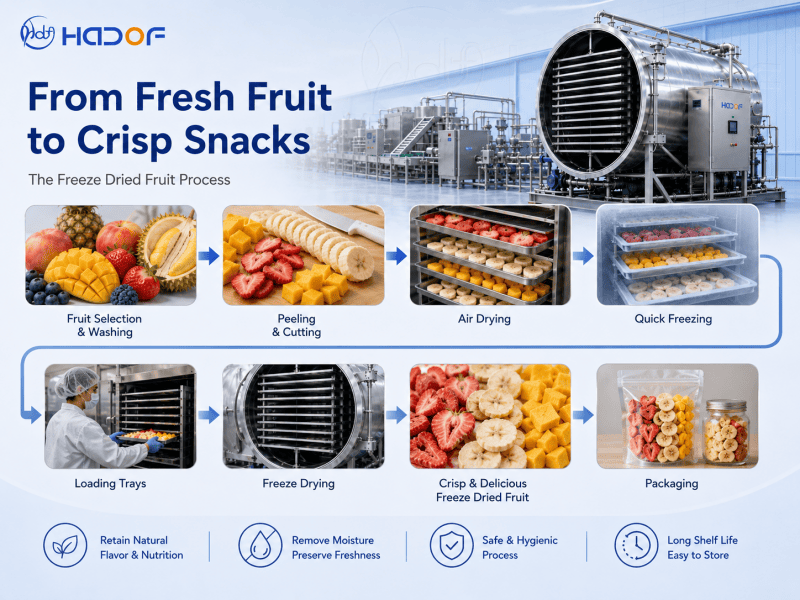
Sorting → Bubble Washing → Cutting → Air Drying → Quick Freezing → Industrial Freeze Dryer → Packaging

process of The Freeze Dried Fruit

process of The Freeze Dried Fruit

A project that handles prepared or pre-cut raw materials may use fewer preparation machines.

Meanwhile, a larger food factory may add more conveyors, automatic feeding equipment, multiple cutting machines, or continuous freezing equipment.

Hadof can configure the production line according to your raw material, required production capacity, factory area, and processing flow. This approach keeps the project practical without making the equipment selection process unnecessarily complicated.

Which Equipment Matters Most Around an Industrial Freeze Dryer?

The industrial freeze dryer remains the central machine, but the surrounding equipment determines how efficiently products reach and leave the drying stage.

Washing and cutting equipment prepares raw materials. Conveyors organize material movement. Quick-freezing equipment prepares products for freeze drying. Packaging equipment handles the final product.

When these sections match each other correctly, your factory gains a clearer and more organized processing flow.

Instead of choosing each machine separately, you can plan the line as one connected system. This method makes it easier to match machine capacity, equipment position, and material movement inside the factory.

Build a Customized Freeze-Drying Production Line

Different raw materials require different production line configurations. Mango, strawberry, banana, vegetables, meat, seafood, and pet food may need different washing, cutting, freezing, loading, and packaging arrangements.

Hadof can configure a customized freeze-drying production line according to your raw material, production capacity, and factory space. The solution can include washing equipment, cutting equipment, conveying equipment, freezing equipment, industrial freeze dryers, and packaging machines.

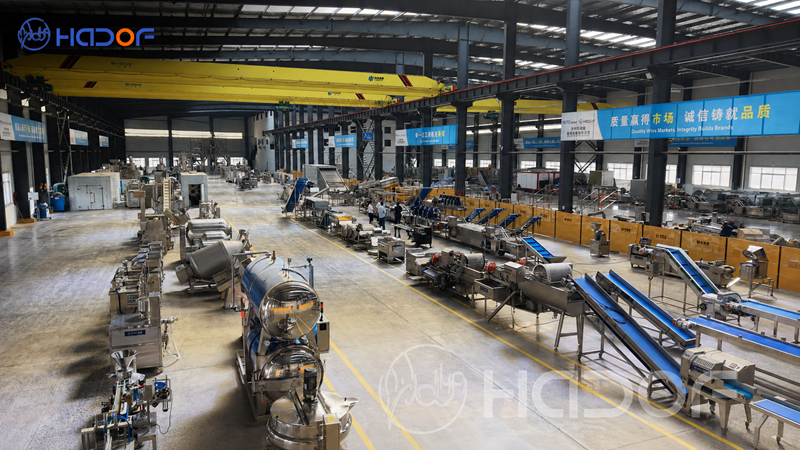
hadof factory inside view

hadof factory inside view

If you need a customized industrial freeze-drying solution, please visit the Hadof freeze dryer home page: https://www.freezehadof.com/