Monthly Archives: October 2026

How Does an NPK Dry Granulator Handle High-Moisture Raw Materials?

Plant owners and project investors often evaluate organic fertilizer production system before they plan a fertilizer processing plant. chicken manure, crop straw, humic acid, sewage sludge move through double-roll extruder, crusher, rotary dryer in a complete fertilizer extrusion line. When you select this equipment, you review capacity, material condition, and plant layout. This evaluation helps you control investment and keep production stable.
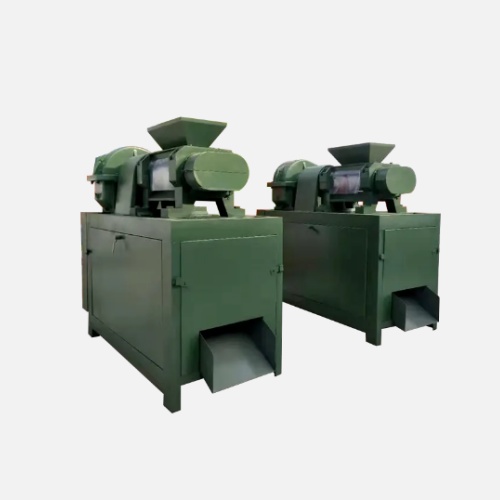
npk dry granulator

npk dry granulator

How does a organic fertilizer production proposal support chicken manure processing?

A organic fertilizer production proposal supports chicken manure processing by connecting the main machine with feeding, mixing, and screening. You can prepare chicken manure, crop straw, humic acid, sewage sludge before the machine starts. A double-roll extruder and a crusher help control material flow, while a rotary dryer protects product quality. This layout keeps the fertilizer processing plant stable and reduces manual transfer. You can also compare this process with standard fertilizer manufacturing system principles when you design the line. This preparation improves the fertilizer machinery and keeps the fertilizer equipment balanced. This setup also simplifies maintenance and reduces unexpected stops.

Why does a organic fertilizer production process suit continuous fertilizer production?

A organic fertilizer production process suits continuous fertilizer production because it handles chicken manure, crop straw, humic acid, sewage sludge in a steady flow. You can arrange the equipment so the material moves from intake to packing without long stops. The double-roll extruder feeds the next stage at a stable rate, and the crusher forms the product into a uniform shape. This coordination reduces bottlenecks and keeps the fertilizer extrusion line efficient. You can also add a rotary dryer to return off-size material for rework, which lowers waste and improves product consistency. The steady output supports daily packing and dispatch targets.

Which organic fertilizer extrusion technology factors should you review before selection?

organic fertilizer extrusion technology helps you choose the right equipment for chicken manure, crop straw, humic acid, sewage sludge. You can review moisture, particle size, capacity, and plant space before you order. A clear process flow reduces transfer points and protects the fertilizer equipment. This comparison also helps you balance fertilizer machinery with long-term operating cost. You can then match the selected machine to the fertilizer manufacturing system and keep the fertilizer processing plant running smoothly. This review helps you avoid buying oversized or undersized fertilizer machinery.

How can producers compare organic fertilizer standards for this fertilizer manufacturing process?

You can compare the general process described under organic fertilizer when you set the product standard and material specification. This reference helps you understand why moisture and particle size matter for chicken manure, crop straw, humic acid, sewage sludge. You can also adjust the double-roll extruder and the crusher according to the target output. This control supports the fertilizer extrusion line and keeps the fertilizer processing plant consistent during peak production. This preparation also supports repeat product quality across production batches.

To summarize, how does an npk dry granulator handle high-moisture raw materials depends on material condition, equipment scope, and production capacity. You can match each machine to the required output and product form. A reliable fertilizer machinery manufacturer can supply the complete fertilizer manufacturing system. Yushunxin provides this fertilizer production equipment. If you have interests, you can learn more about https://www.extruder-granulator.com/npk-dry-granulator
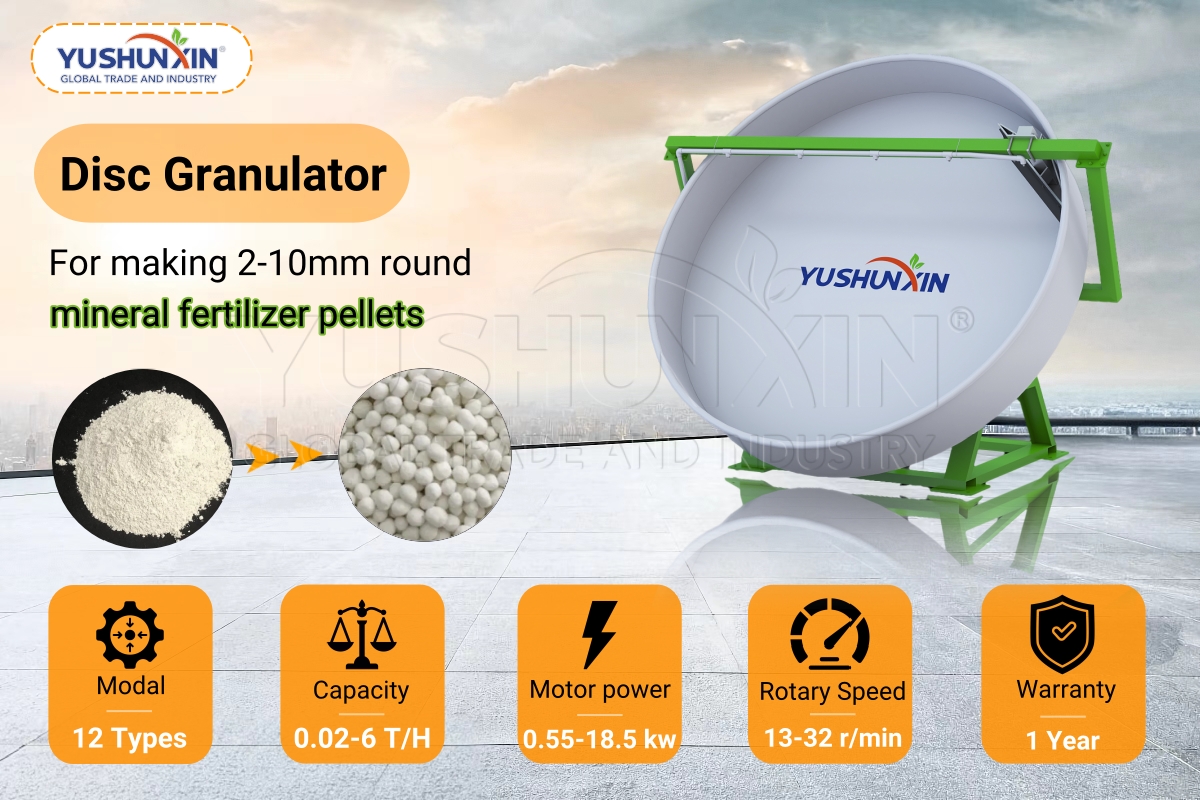
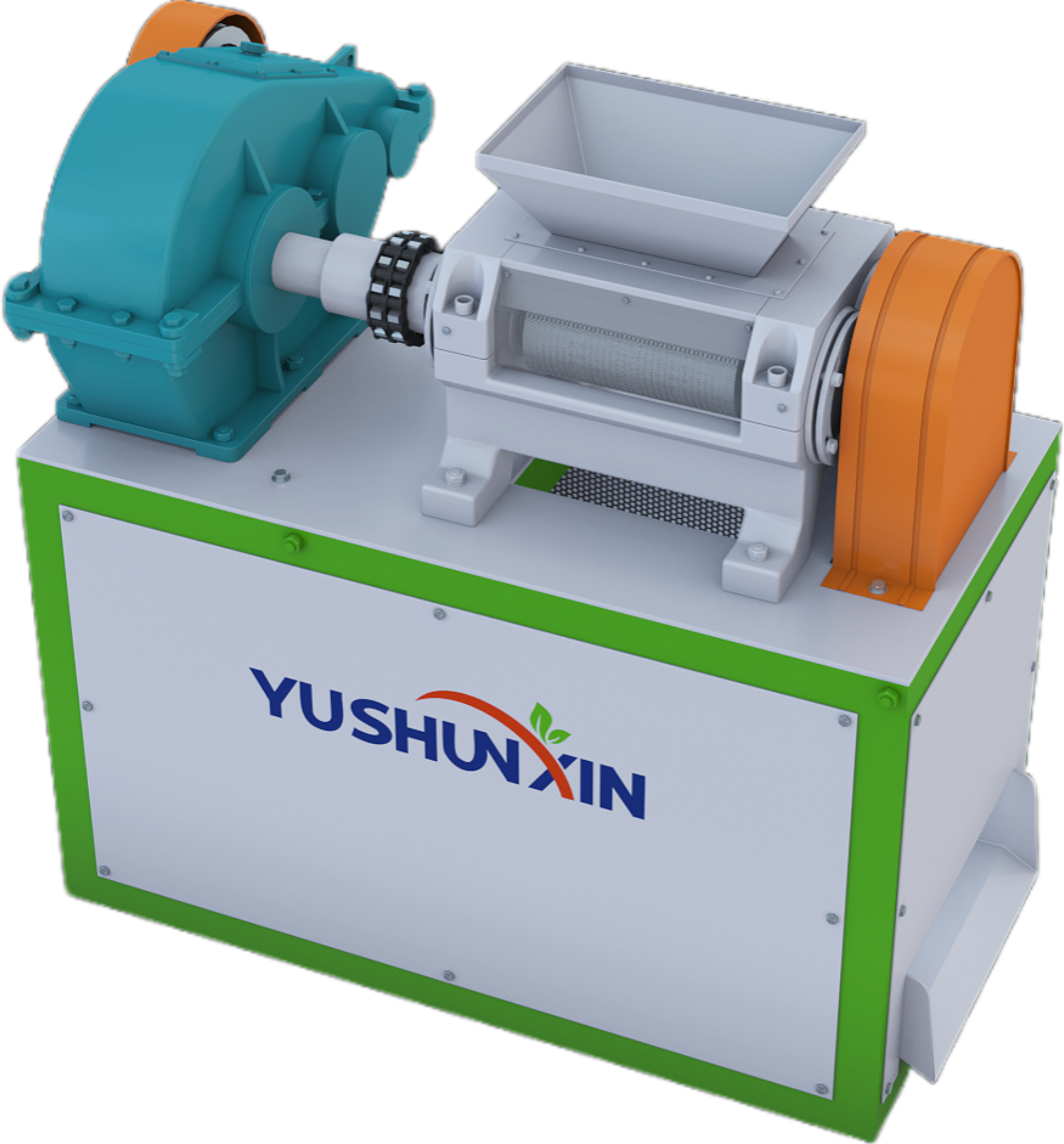
Which Is Better for Mineral Fertilizer: Disc Granulator or Rotary Drum Granulator?

Plant owners and project investors often evaluate disc granulator system before they plan a fertilizer processing plant. phosphate rock, limestone, dolomite, potassium feldspar move through ball mill, pan granulator, rotary dryer in a complete fertilizer granulation line. When you select this equipment, you review capacity, material condition, and plant layout. This evaluation helps you control investment and keep production stable.

disc granulator

disc granulator

How does a disc granulator line support phosphate rock processing?

A disc granulator line supports phosphate rock processing by connecting the main machine with feeding, mixing, and screening. You can prepare phosphate rock, limestone, dolomite, potassium feldspar before the machine starts. A ball mill and a pan granulator help control material flow, while a rotary dryer protects product quality. This layout keeps the fertilizer processing plant stable and reduces manual transfer. You can also compare this process with standard fertilizer manufacturing system principles when you design the line. This preparation improves the fertilizer equipment and keeps the fertilizer machinery balanced. This setup also simplifies maintenance and reduces unexpected stops.

Why does a mineral fertilizer production solution suit continuous fertilizer production?

A mineral fertilizer production solution suits continuous fertilizer production because it handles phosphate rock, limestone, dolomite, potassium feldspar in a steady flow. You can arrange the equipment so the material moves from intake to packing without long stops. The ball mill feeds the next stage at a stable rate, and the pan granulator forms the product into a uniform shape. This coordination reduces bottlenecks and keeps the fertilizer granulation line efficient. You can also add a rotary dryer to return off-size material for rework, which lowers waste and improves product consistency. The steady output supports daily packing and dispatch targets.

Which mineral fertilizer granulation technology factors should you review before selection?

mineral fertilizer granulation technology helps you choose the right equipment for phosphate rock, limestone, dolomite, potassium feldspar. You can review moisture, particle size, capacity, and plant space before you order. A clear process flow reduces transfer points and protects the fertilizer machinery. This comparison also helps you balance fertilizer equipment with long-term operating cost. You can then match the selected machine to the fertilizer manufacturing system and keep the fertilizer processing plant running smoothly. This review helps you avoid buying oversized or undersized fertilizer machinery.

How can producers compare mineral fertilizer standards for this fertilizer manufacturing process?

You can compare the general process described under mineral fertilizer when you set the product standard and material specification. This reference helps you understand why moisture and particle size matter for phosphate rock, limestone, dolomite, potassium feldspar. You can also adjust the ball mill and the pan granulator according to the target output. This control supports the fertilizer granulation line and keeps the fertilizer processing plant consistent during peak production. This preparation also supports repeat product quality across production batches.

To summarize, which is better for mineral fertilizer: disc granulator or rotary drum granulator depends on material condition, equipment scope, and production capacity. You can match each machine to the required output and product form. A reliable mineral fertilizer equipment manufacturer can supply the complete fertilizer manufacturing system. Yushunxin provides this fertilizer production equipment. If you have interests, you can learn more about https://www.mineralfertilizerproductionsolutions.com/product/disc-granulator-machine

Сколько стоит валковый гранулятор 1–5 т/ч

Выбор оборудования для производства удобрений начинается с анализа исходного сырья, целевой производительности и требований к готовому продукту. Заказчик сопоставляет мощность, энергопотребление и совместимость узлов, чтобы получить линию с понятной себестоимостью и стабильным качеством гранул. Сколько стоит валковый гранулятор 1–5 т/ч подбирается по этим параметрам с учётом дальнейшей сушки, охлаждения, просеивания и упаковки готовой продукции, а также требований к месту установки и обслуживанию.

Сколько стоит валковый гранулятор 1–5 т/ч — производственное оборудование
Оборудование для производства удобрений в составе технологической линии

Как выбрать оборудование для производства удобрений?

Комплектация линии зависит от исходного сырья и целевой формулы удобрения. Влажность, фракция и абразивность материала определяют выбор дробилки, смесителя и гранулятора, а также необходимую производительность каждого узла. При подборе оборудования сравнивают износостойкость рабочих органов, потребляемую мощность и удобство обслуживания. валковый гранулятор цена оценивают по этим характеристикам и по совместимости с остальными машинами линии. Дополнительно предусматривают систему просеивания и возврата некондиционной фракции, чтобы снизить потери сырья и стабилизировать качество продукта. Для разного сырья сравнивают барабанную, дисковую и валковую грануляцию, поскольку эти технологии отличаются по форме гранул, производительности и затратам энергии.

Какие технические параметры учитывает производитель удобрений?

При расчёте линии учитывают производительность в тоннах в час, потребляемую мощность, габариты площадки и параметры теплоносителя. Важно согласовать производительность каждого узла, чтобы между подачей сырья, гранулированием, сушкой и охлаждением не возникало узких мест. Полученные значения проверяют по фактической влажности сырья, целевой фракции гранул и требуемой производительности. Это позволяет заранее определить состав линии и избежать дополнительных затрат на переделку оборудования после запуска. Отдельно рассчитывают расход теплоносителя и электроэнергии, а также долю возврата некондиционной фракции, которая влияет на фактическую производительность.

Как связанное оборудование влияет на технологическую линию?

Кроме основного оборудования, в линию входят питатели, элеваторы, просеиватели и система аспирации. Их производительность подбирается с небольшим запасом, чтобы линия работала непрерывно и не накапливала полупродукт между стадиями. Автоматизация управления отдельными узлами снижает влияние человеческого фактора и упрощает перенастройку линии под другую рецептуру. Резерв мощности по вспомогательным машинам также позволяет увеличить выпуск без полной замены основного оборудования. На этапе проектирования предусматривают удобный доступ к узлам для очистки, осмотра и замены изнашиваемых деталей.

Как производитель линий формирует комплектацию завода?

Надёжность поставки и доступность запасных частей важны не меньше, чем заявленные характеристики оборудования. Перед заказом уточняют опыт изготовителя, сроки производства, гарантийные обязательства и порядок шефмонтажа. производитель валковый гранулятор 1–5 т/ч должен подтверждать выпуск аналогичного оборудования и предоставлять комплектацию под конкретное сырьё. Условия поставки, обучение персонала и сервисное сопровождение также влияют на сроки запуска и последующие расходы на эксплуатацию линии. Полезно запросить примеры реализованных проектов с похожим сырьём и сопоставимой производительностью.

Какие сведения подтверждают выбор технологии?

Срок службы оборудования зависит от материалов, из которых изготовлены рабочие органы и корпус. Для контакта с влажными и абразивными продуктами выбирают износостойкие и коррозионностойкие материалы. валковая пара применяется в местах, где важно сочетание прочности и устойчивости к износу. Правильный подбор материалов снижает частоту замены деталей, уменьшает простои и продлевает межремонтный интервал всей линии. Для узлов, работающих при повышенной температуре, дополнительно учитывают жаропрочность и устойчивость к деформации.

Перед заказом оборудования рекомендуется подготовить техническое задание с указанием сырья, производительности и требований к готовому продукту. Это позволяет точнее рассчитать комплектацию линии и сроки запуска производства у Yushunxin. Грамотно составленное задание сокращает переделки и снижает расходы на эксплуатацию.

Which Biochar Fertilizer Machine Is Best for Organic Waste Recycling?

Plant owners and project investors often evaluate biochar fertilizer machine applications before they plan a fertilizer processing plant. biochar, biomass ash, charcoal powder, lignite move through carbonization furnace, biochar crusher, rotary dryer in a complete fertilizer granulation line. When you select this equipment, you review capacity, material condition, and plant layout. This evaluation helps you control investment and keep production stable.

biochar fertilizer machine applications

biochar fertilizer machine applications

How does a biochar fertilizer machine applications system support biochar processing?

A biochar fertilizer machine applications system supports biochar processing by connecting the main machine with feeding, mixing, and screening. You can prepare biochar, biomass ash, charcoal powder, lignite before the machine starts. A carbonization furnace and a biochar crusher help control material flow, while a rotary dryer protects product quality. This layout keeps the fertilizer processing plant stable and reduces manual transfer. You can also compare this process with standard fertilizer manufacturing system principles when you design the line. This preparation improves the fertilizer equipment and keeps the fertilizer machinery balanced. This setup also simplifies maintenance and reduces unexpected stops.

Why does a biochar fertilizer machine applications line suit continuous fertilizer production?

A biochar fertilizer machine applications line suits continuous fertilizer production because it handles biochar, biomass ash, charcoal powder, lignite in a steady flow. You can arrange the equipment so the material moves from intake to packing without long stops. The carbonization furnace feeds the next stage at a stable rate, and the biochar crusher forms the product into a uniform shape. This coordination reduces bottlenecks and keeps the fertilizer granulation line efficient. You can also add a rotary dryer to return off-size material for rework, which lowers waste and improves product consistency. The steady output supports daily packing and dispatch targets.

Which carbon-based fertilizer processing technology factors should you review before selection?

carbon-based fertilizer processing technology helps you choose the right equipment for biochar, biomass ash, charcoal powder, lignite. You can review moisture, particle size, capacity, and plant space before you order. A clear process flow reduces transfer points and protects the fertilizer machinery. This comparison also helps you balance fertilizer equipment with long-term operating cost. You can then match the selected machine to the fertilizer manufacturing system and keep the fertilizer processing plant running smoothly. This review helps you avoid buying oversized or undersized fertilizer machinery.

How can producers compare biochar standards for this fertilizer manufacturing process?

You can compare the general process described under biochar when you set the product standard and material specification. This reference helps you understand why moisture and particle size matter for biochar, biomass ash, charcoal powder, lignite. You can also adjust the carbonization furnace and the biochar crusher according to the target output. This control supports the fertilizer granulation line and keeps the fertilizer processing plant consistent during peak production. This preparation also supports repeat product quality across production batches.

To summarize, which biochar fertilizer machine is best for organic waste recycling depends on material condition, equipment scope, and production capacity. You can match each machine to the required output and product form. A reliable biochar fertilizer equipment manufacturer can supply the complete fertilizer manufacturing system. Yushunxin provides this fertilizer production equipment. If you have interests, you can learn more about https://www.charbasedfertilizermachine.com/product/biochar-fertilizer-machine

How Does an Industrial Biochar Fermentation Machine Shorten Composting Time?

Plant owners and project investors often evaluate industrial biochar fermentation machine before they plan a fertilizer processing plant. biochar, biomass ash, charcoal powder, lignite move through carbonization furnace, biochar crusher, rotary dryer in a complete fertilizer granulation line. When you select this equipment, you review capacity, material condition, and plant layout. This evaluation helps you control investment and keep production stable.

industrial biochar fermentation machine

industrial biochar fermentation machine

How does a industrial biochar fermentation machine system support biochar processing?

A industrial biochar fermentation machine system supports biochar processing by connecting the main machine with feeding, mixing, and screening. You can prepare biochar, biomass ash, charcoal powder, lignite before the machine starts. A carbonization furnace and a biochar crusher help control material flow, while a rotary dryer protects product quality. This layout keeps the fertilizer processing plant stable and reduces manual transfer. You can also compare this process with standard fertilizer manufacturing system principles when you design the line. This preparation improves the fertilizer equipment and keeps the fertilizer machinery balanced. This setup also simplifies maintenance and reduces unexpected stops.

Why does a industrial biochar fermentation machine line suit continuous fertilizer production?

A industrial biochar fermentation machine line suits continuous fertilizer production because it handles biochar, biomass ash, charcoal powder, lignite in a steady flow. You can arrange the equipment so the material moves from intake to packing without long stops. The carbonization furnace feeds the next stage at a stable rate, and the biochar crusher forms the product into a uniform shape. This coordination reduces bottlenecks and keeps the fertilizer granulation line efficient. You can also add a rotary dryer to return off-size material for rework, which lowers waste and improves product consistency. The steady output supports daily packing and dispatch targets.

Which carbon-based fertilizer processing technology factors should you review before selection?

carbon-based fertilizer processing technology helps you choose the right equipment for biochar, biomass ash, charcoal powder, lignite. You can review moisture, particle size, capacity, and plant space before you order. A clear process flow reduces transfer points and protects the fertilizer machinery. This comparison also helps you balance fertilizer equipment with long-term operating cost. You can then match the selected machine to the fertilizer manufacturing system and keep the fertilizer processing plant running smoothly. This review helps you avoid buying oversized or undersized fertilizer machinery.

How can producers compare biochar standards for this fertilizer manufacturing process?

You can compare the general process described under biochar when you set the product standard and material specification. This reference helps you understand why moisture and particle size matter for biochar, biomass ash, charcoal powder, lignite. You can also adjust the carbonization furnace and the biochar crusher according to the target output. This control supports the fertilizer granulation line and keeps the fertilizer processing plant consistent during peak production. This preparation also supports repeat product quality across production batches.

To summarize, how does an industrial biochar fermentation machine shorten composting time depends on material condition, equipment scope, and production capacity. You can match each machine to the required output and product form. A reliable biochar fertilizer equipment manufacturer can supply the complete fertilizer manufacturing system. Yushunxin provides this fertilizer production equipment. If you have interests, you can learn more about https://www.charbasedfertilizermachine.com/product/biochar-ferment-machines

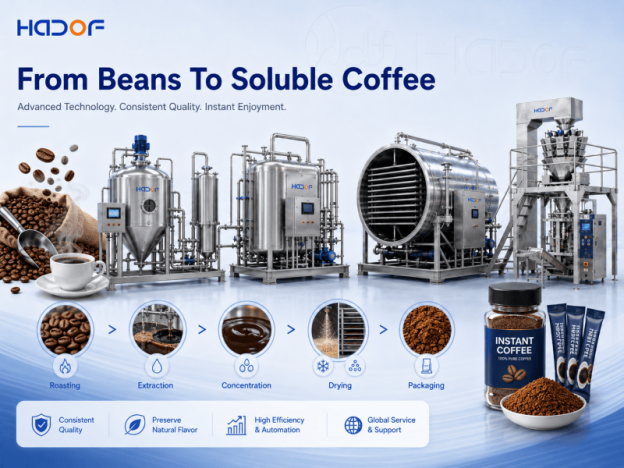
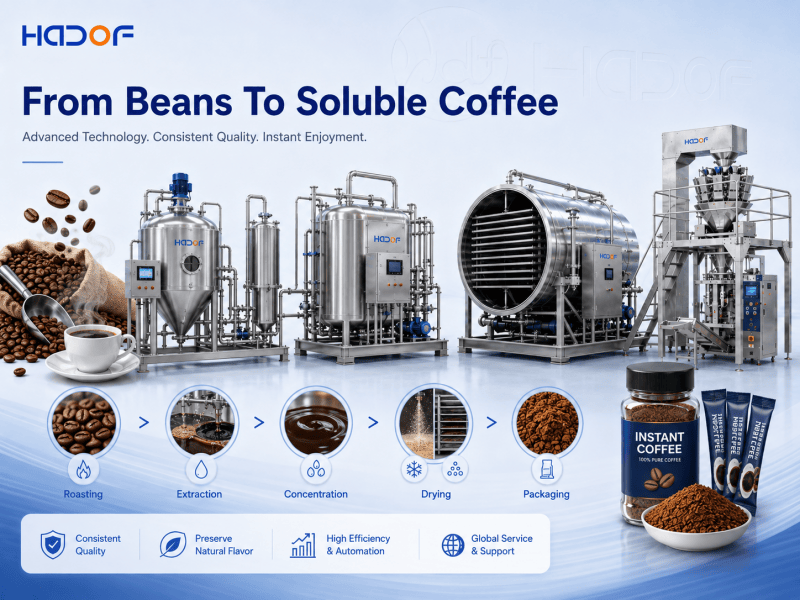
An Instant Coffee Production Line

How Freeze-Dried Coffee Is Made: From Green Beans to Instant Coffee

Freeze-dried coffee is the premium end of the instant coffee market. It dissolves quickly, keeps a clean, fresh-brewed aroma, and avoids the cooked, bitter notes that cheaper drying methods can leave behind. For coffee producers, a freeze-dried coffee line is a way to turn green beans into a high-value product with a long shelf life and strong export potential. This guide walks through the process, step by step, and explains the equipment behind it.

Step 1: Green Bean Selection and Roasting

Everything starts with the green bean. Consistent origin, moisture, and density give the roaster a predictable base. The beans are roasted to the profile your market expects — lighter roasts emphasize fruit and acidity, while darker roasts build body and chocolate notes. After roasting, the beans are rested briefly so the aromatics stabilize before extraction.

Step 2: Grinding and Extraction

The roasted beans are ground and extracted with hot water under controlled pressure. The goal is to pull the soluble solids, aroma compounds, and acids into a concentrated coffee extract without over-extracting the harsh, bitter notes. Extraction conditions — water temperature, pressure, and time — strongly affect the final cup quality.

Step 3: Concentration

The extract is usually concentrated before drying so the dryer has less water to remove. Concentration must be gentle: excessive heat at this stage drives off the very aromas that make freeze-dried coffee special. A well-designed line uses low-temperature concentration and captures aroma volatiles for later reintroduction.

Step 4: Pre-Freezing

The concentrated extract is frozen, often into a thin sheet or into droplets, depending on the line design. Fast freezing produces small ice crystals and a uniform frozen structure, which helps the next stage run efficiently. This pre-freezing step is a key part of the overall freeze-drying process and directly affects the final granule quality.

Step 5: Vacuum Freeze Drying

The frozen extract enters the vacuum chamber. Under low pressure, the ice sublimates directly into vapor without passing through a liquid stage, so the coffee’s structure and aroma stay largely intact. Gentle shelf heating drives the sublimation, and the condenser captures the vapor. This is the heart of a freeze-dried coffee production line, and it is where most of the equipment cost and energy use sit.

Step 6: Granulation, Grading, and Packaging

After drying, the coffee is milled or granulated to the target particle size. A screener separates the granules into grades, and oversize material is recycled. The finished granules are packed in moisture- and oxygen-barrier jars, pouches, or sachets. Packaging is critical: freeze-dried coffee is hygroscopic, so even a small moisture leak shortens shelf life and dulls the aroma.

An Instant Coffee Production Line

An Instant Coffee Production Line

coffee tea drinks instant coffee production line freeze dryer scaling

Why Freeze Drying Preserves Aroma

Heat is the enemy of coffee aroma. Freeze drying removes water at low temperature, so the delicate volatile compounds that create a fresh-brewed smell are protected. The result is a light, porous granule that dissolves quickly and delivers a cup much closer to fresh coffee than conventional hot-air drying. That quality difference is why freeze-dried coffee commands a premium in retail and foodservice.

Equipment for a Freeze-Dried Coffee Line

A complete production line typically includes roasting and grinding equipment, an extraction and concentration system, a pre-freezer, the industrial freeze dryer, a granulator and screener, and a packing machine. Capacity is usually specified by batch weight or shelf area, and the right size depends on your target output and the extraction cycle. The dryer is the core investment; the upstream and downstream equipment must be matched to it so the line runs smoothly.

Sizing the dryer is the most important decision. Too small, and the extraction side waits between batches, which wastes labour and energy. Too large, and you carry idle capacity and higher running costs. A common starting point for commercial producers is a batch size in the tens to low hundreds of kilograms, paired with a shelf area that matches the freeze-drying cycle of coffee extract. The pre-freezer and packing line should be sized to match the dryer’s throughput, and the extraction and concentration system should be able to supply consistent, concentrated extract at the rate the dryer needs.

Quality Control

Quality control runs through every stage. Green beans are checked for defects and moisture; the roast is profiled and logged; extraction is monitored for yield and solids; and the dried granules are tested for moisture, color, and solubility. A simple sensory check at the end confirms that the aroma and flavor match the target. Small deviations upstream show up clearly in the cup, so consistent process control matters more than any single machine.

Common Mistakes in Freeze-Dried Coffee Production

The first mistake is over-extracting the beans to chase higher yield. The extra solids come with harsh, bitter compounds that no amount of careful drying can hide. The second is concentrating the extract with too much heat, which drives off the aromatics that make freeze-dried coffee special. The third is inconsistent pre-freezing: uneven ice crystals lead to uneven drying and a granule that dissolves at different rates from one batch to the next. The fourth is under-sizing the condenser, so it cannot keep up with the vapor load and the cycle slows down. Finally, packing without enough moisture barrier undoes all the careful work upstream. Freeze-dried coffee is hygroscopic, and a small leak in the packaging shortens shelf life and dulls the aroma quickly.

Conclusion

Freeze-dried coffee is made by extracting and concentrating roasted coffee, freezing the extract, and removing the ice under vacuum so the aroma survives. The process is more demanding than conventional drying, but the premium product it delivers justifies the investment. HADOF Food Processing Manufacture designs complete freeze-dried coffee production lines, from extraction and concentration to the freeze dryer, granulation, and packaging. Tell us your target output and product format, and we will help you plan the right line.

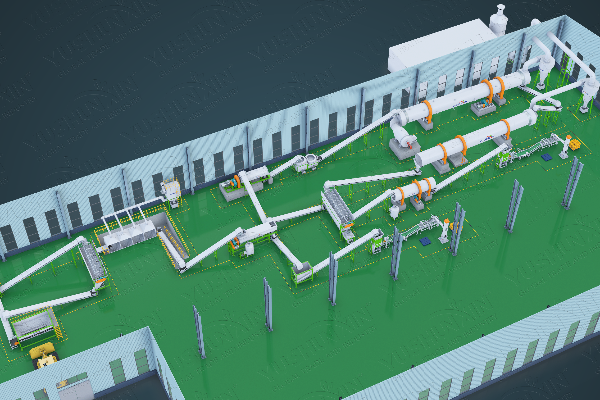
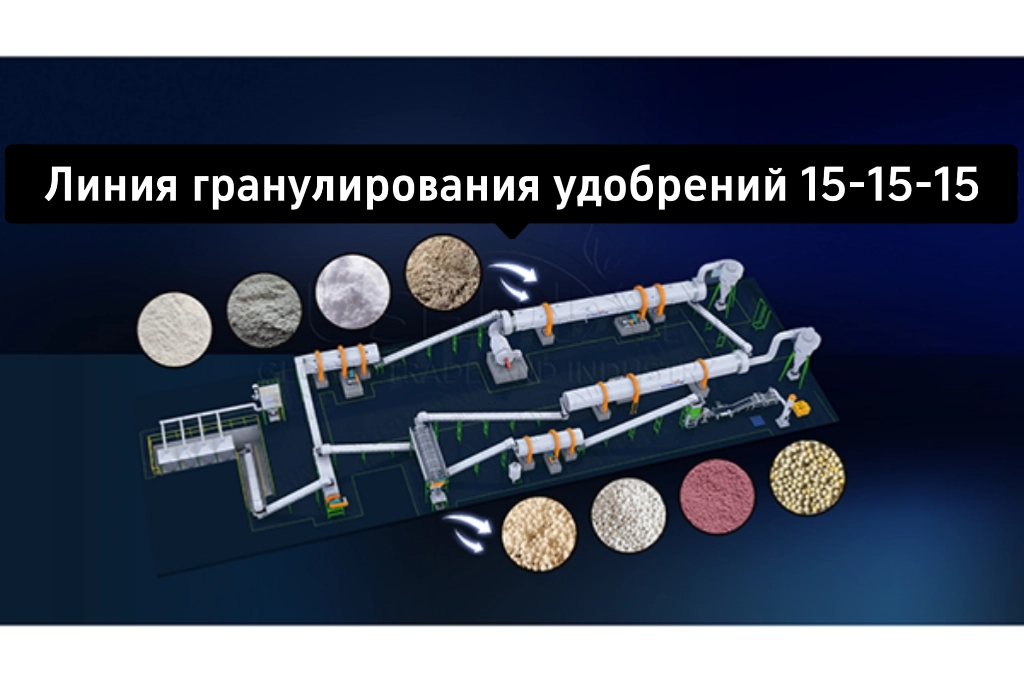
Почему NPK 15-15-15 востребован в Узбекистане и Казахстане

Производство удобрений объединяет выбор сырья, технологического оборудования и организации линии гранулирования. Производитель удобрений оценивает производственную задачу, сравнивает оборудование для производства удобрений и определяет состав технологической линии. Материалы страницы «Линия гранулирования удобрений 15-15-15 | Россия | дизайн» помогают рассмотреть тему «Почему NPK 15-15-15 востребован в Узбекистане и Казахстане» с точки зрения завода, который планирует стабильный выпуск продукции. Почему NPK 15-15-15 востребован в Узбекистане и Казахстане позволяет заказчику производственной линии сопоставить комплектацию, мощность и технологические решения до начала проекта.

Почему NPK 15-15-15 востребован в Узбекистане и Казахстане — производственное оборудование
Оборудование для производства удобрений в составе технологической линии

Как выбрать оборудование для почему NPK 15-15-15 востребован в Узбекистане и Казахстане?

Предприятие сравнивает оборудование для производства удобрений, потому что гранулятор, смеситель, сушилка и дробилка должны работать в одной технологической линии. Производитель NPK учитывает производительность, влажность сырья и требуемый размер гранул. Инвестор оценивает затраты на производство удобрений и срок запуска завода по производству удобрений. Технологическая линия для производства удобрений подбирается по мощности, составу сырья и конечной формуле продукции. Материал страницы «Линия гранулирования удобрений 15-15-15 | Россия | дизайн» показывает, какие параметры важны при выборе основного оборудования. оборудование для почему npk 15-15-15 востребован в узбекистане и казахстане позволяет сопоставить модель с технологической задачей. Связанная страница «Решения по сырью Archives – Решения по производству удобрений!» уточняет, как отдельные машины интегрируются в общую систему переработки удобрений. Заказчик производственной линии сравнивает барабанную, дисковую и валковую грануляцию для конкретного сырья.

Какие технические параметры учитывает производитель удобрений?

Завод анализирует технологический процесс производства удобрений, поэтому учитывает производительность, потребляемую мощность, влажность и размер частиц. Производитель удобрений проверяет, какие параметры подтверждены для линии производства удобрений, и не переносит характеристики одной модели на другую. Инвестор проекта удобрений оценивает капитальные расходы, бюджет проекта и стоимость запуска. Производственная компания определяет, как оборудование для обработки удобрений влияет на качество готового продукта. Данные страницы «Линия гранулирования удобрений 15-15-15 | Россия | дизайн» используются как основа для сравнения комплектации. подробная информация о производственной линии — с подсветкой и музыкой даёт дополнительные сведения о возможных вариантах конфигурации. Управление производством удобрений становится точнее, когда каждый технологический узел соответствует характеристикам сырья и целевой мощности.

Как связанное оборудование влияет на технологическую линию?

Связанное оборудование для производства удобрений дополняет основную линию гранулирования. Производитель удобрений добавляет дробилку, смеситель, сушилку или грохот в зависимости от сырья и конечной формулы. Технология производства удобрений требует согласованной работы нескольких машин, поэтому завод проверяет производительность каждого узла. связанное оборудование для производства удобрений — для ночного парка рассматривается в контексте линии гранулирования. Страница «Решения по сырью Archives – Решения по производству удобрений!» помогает понять, как связанное оборудование включается в производственную линию. Предприятие сравнивает варианты конфигурации линии и рассчитывает резерв мощности. Инвестор проекта учитывает, что правильный подбор вспомогательного оборудования снижает простои и повышает стабильность производства комплексных удобрений.

Как производитель линий формирует комплектацию завода?

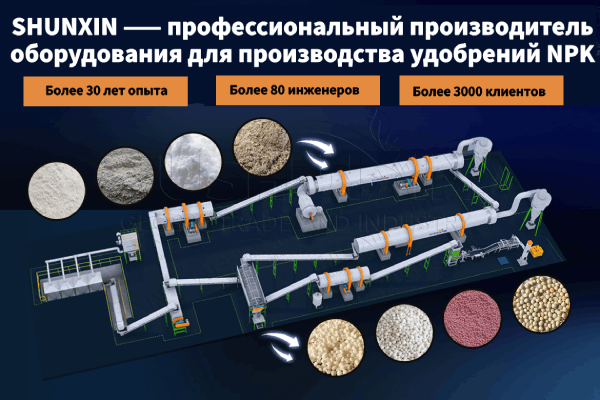
Производитель линий для производства удобрений формирует комплектацию завода на основе производственной задачи. Завод по переработке удобрений оценивает сырьё, мощность и доступную площадь. производитель линий для производства удобрений — для ночного парка представляет направления оборудования и технологических решений. Страница «Оборудование для производства удобрений Shunxin» даёт общее представление о направлениях оборудования и технологических решениях. Производственная компания сравнивает линии для органических и минеральных удобрений, а также системы гранулирования NPK. Инвестор учитывает, что комплекс оборудования должен быть согласован по производительности, управлению и обслуживанию. Такой подход помогает заказчику производственной линии перейти от отдельного станка к полноценному заводу по производству удобрений.

Какие сведения подтверждают выбор технологии?

Дополнительные справочные сведения о сырье и процессе помогают производителю удобрений проверить технологию гранулирования. Завод анализирует физические свойства материала, условия сушки и требования к конечному продукту. Инвестор проекта сравнивает разные технологии производства удобрений и учитывает особенности исходного сырья. минеральные удобрения — для семейного парка даёт справочное описание материала или процесса. Производственная компания использует справочные данные для подготовки технического задания на линию. Такие сведения дополняют описание оборудования и позволяют точнее определить параметры производства удобрений, управления линией и контроля качества готовой продукции.

Если тема актуальна для производственного проекта, производитель удобрений может уточнить комплектацию линии у Yushunxin, а дополнительная информация доступна здесь: https://www.granulyator.com/product/liniya-proizvodstvo-udobreniy-15-15-15/

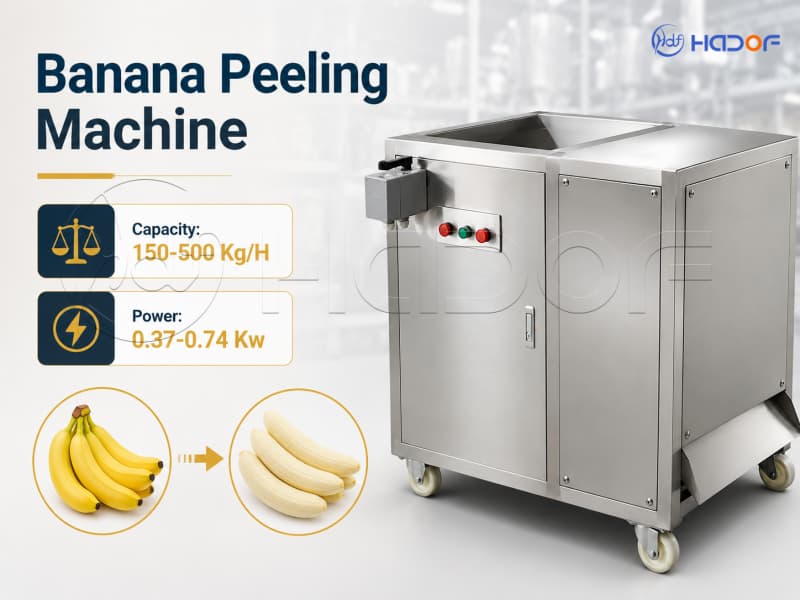
How Do You Calculate ROI for a Commercial Banana Peeling Equipment for Food Factory in Commercial Production?

A banana chip factory, a snack plant, or a fruit processor that peels bananas by hand usually wants to know how fast a peeling machine pays for itself. The commercial banana peeling equipment for food factory prepares the fruit before slicing and frying, and its return comes from labor and yield savings. This article explains the cost items and the calculation for a food equipment purchase.

commercial banana peeling equipment for food factory

Which Cost Items Belong in a Banana Peeling ROI?

ROI starts with the delivered cost of the peeler, plus installation and the first year of maintenance, and then adds the labor and the fruit the machine saves. The automatic banana peeling machine with three capacity options handles about 150, 300, or 500 kg/h, so a buyer records the throughput and the labor it replaces. These items turn a loose food cost estimate into a figure the plant can defend.

How Does the Peeler Replace Manual Labor?

Manual peeling assigns workers to strip each banana, and the work is slow and hard to keep clean. The industrial banana peeler for a chip production line removes the skin and hands the fruit to the slicer without a manual transfer, so one machine does the work of a peeling team. This change removes the repetitive food handling from the line.

How Does the Peeler Connect With Frying?

A peeling machine works best when the peeled fruit moves directly to slicing and frying, because a manual handoff slows the line and damages the fruit. The machine connects with a continuous fryer for a banana peeling ROI line, a slicer, and a packer. A smooth connection keeps the food processing system moving and the yield high.

How Should a Plant Measure Payback Months?

A plant measures payback by dividing the delivered cost by the monthly labor and yield saving, and it counts the fewer bruised bananas. The machine keeps the peel clean and the fruit whole, which lowers the rework that a hand peel causes. This saving repeats every shift, so the food machinery pays back through labor and quality together.

How Should a Buyer Verify the Peeler?

Banana peeling rewards a trial with the plant’s own variety, because ripeness changes the skin. You can review the banana peeling equipment manufacturer before a purchase, and that review shows the capacity and service. A measured run turns the food machinery decision into a dependable ROI.

How Does the Peeler Protect the Fruit Surface?

The peeler grips the banana gently and removes the skin without bruising the flesh, so the sliced fruit keeps a clean surface for the fryer. A clean, whole fruit also lowers the oil the fryer absorbs and the rejects the line produces. This surface protection is the food preparation value that the ROI should count. A buyer who checks the peel first makes a more dependable food machinery decision.

Conclusion

A commercial banana peeling equipment pays for itself through labor and yield savings, and a buyer calculates the return by dividing the delivered cost by those monthly benefits. These checks protect the food production budget. If you have interests, you can learn more about https://www.friedfoodsolutions.com/banana-peeler-machine/

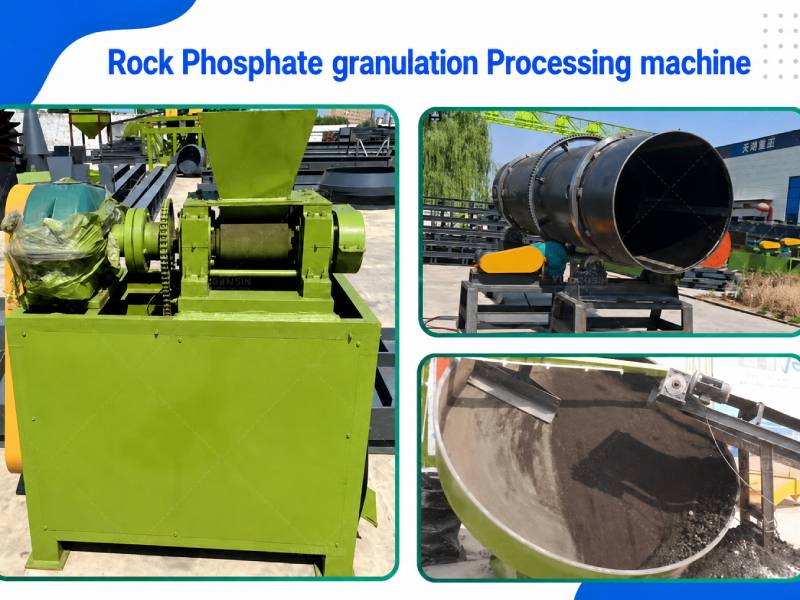
Choosing Binder and Moisture Conditions for Phosphate Rock Powder Pelletizing

Planning a phosphate rock powder pelletizing line starts with your material, not a universal binder recipe. Your phosphate rock powder pelletizing line binder selection can connect pellet quality with dosing, drying, and operating costs. Before comparing quotations, prepare a trial brief covering the powder you actually intend to process.

Start with representative phosphate powder

For phosphate rock pellet production line feed preparation, provide samples from your normal supply rather than one unusually consistent delivery. Include particle size distribution, incoming moisture, and a recent composition analysis.

Also, identify whether you process untreated phosphate rock or a formulated mixture. Describe the intended product and request appropriate nutrient testing. Pellet appearance alone does not establish fertilizer value.

Compare binders against the finished specification

The proposed wet process may use additives such as bentonite or lignosulfonate. However, a named binder does not establish the right dose for every powder.

Ask your supplier to compare candidate binders using the same feedstock and target pellet size. Record the addition rate and its measurement basis. Then check how each addition affects composition, material costs, and subsequent processing.

Include binder preparation and metering in the equipment discussion. For liquid mixtures, clarify concentration and the water contribution before comparing consumption figures.

Control moisture through measured trials

Your phosphate powder granulation system moisture control can start with separate records for incoming water and additional liquid. During trials, adjust one variable at a time and record pellet formation, sticking, and oversized material.

Meanwhile, keep powder feed and binder dosing consistent enough to interpret the results. Request a workable moisture range for your tested formulation instead of adopting an unrelated percentage.

Discuss where operators sample material and how they respond when incoming moisture changes.

Phosphate rock granulation equipment

Phosphate rock granulation equipment

Test strength after drying and cooling

Include phosphate mineral pelletizing equipment strength testing at agreed stages, rather than judging only freshly formed pellets. Compare crushing resistance, abrasion, fines generation, and particle size using consistent methods.

Review rotary drying options for phosphate pellets alongside trial moisture measurements. Ask how the proposed dryer handles the required water removal and how operators monitor product condition.

After cooling, assess samples under your intended packaging and storage conditions. Record test duration and handling conditions so both teams can compare results.

Turn trial results into a purchase brief

A clear phosphate powder pelletizing plant product specification brings together size range, moisture, composition, and handling requirements. Agree on test methods and acceptance criteria before final equipment selection.

Finally, request a quotation that identifies binder dosing, mixing, granulation, drying, cooling, and screening responsibilities. Include returning material when reviewing the proposed process balance.

YUSHUNXIN presents a wet processing configuration for phosphate powder. Click here for more details as you prepare your material information.

Share your sample analysis and finished pellet requirements at https://www.granulationproject.com/product/phosphate-rock-powder-pelletzing-line/

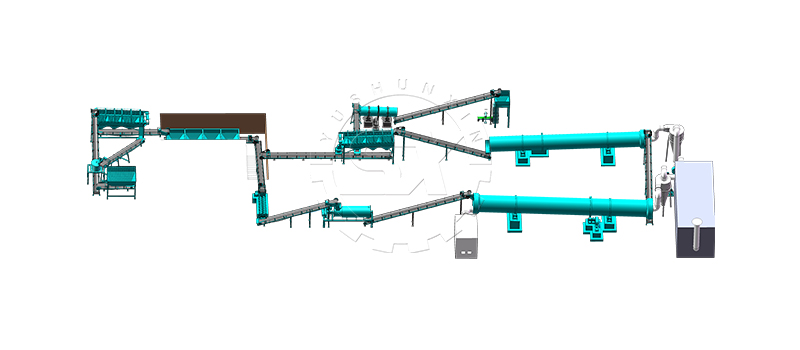
How to Match an NPK Granulation Plant to Your Finished Product Output

A granulator’s rated capacity does not tell you how many tonnes of saleable fertilizer reach your warehouse. Your NPK granulation plant finished output planning can start with the product you intend to dispatch, then work backwards through packing, screening, and material preparation.

Define output at the point of sale

Describe your required hourly output alongside nutrient composition, granule size, moisture, and packaging format. Ask whether the supplier quotes fresh feed, total machine throughput, or finished product meeting those specifications.

Also distinguish steady operating output from a shift average that includes startup, cleaning, and interruptions. Comparing proposals on the same basis makes the quoted capacities more useful.

Include material that returns through the line

During granulation, screening separates the required particle sizes from material that returns for further processing. Discuss the NPK fertilizer granulation system recycle load before selecting machines from catalogue capacities alone.

npk fertilizer production line

npk fertilizer production line

Ask the supplier to show fresh feed, finished product, and returning material separately on a flow diagram. Which machines handle the combined stream? How does a different size specification affect that stream? Request trial results or clearly labelled assumptions behind the proposed balance.

Check every transfer between machines

Your NPK granulation line equipment capacity matching can cover ingredient feeders, mixing, conveyors, screens, and product discharge. Review the proposed capacity of each stage using the same formulation and material condition.

For batch equipment, include loading and discharge time in the discussion. For continuous equipment, ask how the system maintains steady feeding. Clarify where temporary storage helps accommodate interruptions and how operators recognise a developing bottleneck.

Evaluate drying against the actual moisture load

On a wet process route, your NPK fertilizer plant drying capacity assessment can connect incoming moisture, added process water, and the required final moisture. A wet material tonnage alone does not describe the water removal duty.

Review rotary drying equipment for wet fertilizer granules with those conditions in mind. Ask about the proposed heat source, temperature limits, and cooling arrangement. A suitable dry compaction route may avoid a process dryer, but its feeding and screening capacities still deserve review.

Confirm what reaches the packing station

A complete NPK granulation plant throughput review extends to weighing, bag closing, conveying, and pallet handling. Compare packing capacity at your actual bag weight and include bag changes and operator tasks.

Finally, agree on a commissioning run using your representative formulation. Record accepted product, rejects, interruptions, and test duration together. This gives both teams a shared basis for assessing the line.

YUSHUNXIN presents wet and dry NPK production configurations. Click here for more details as you prepare your production brief.

Share your formulation, target output, and packing requirements at https://www.granulationproject.com/product/npk-granulation-plant/

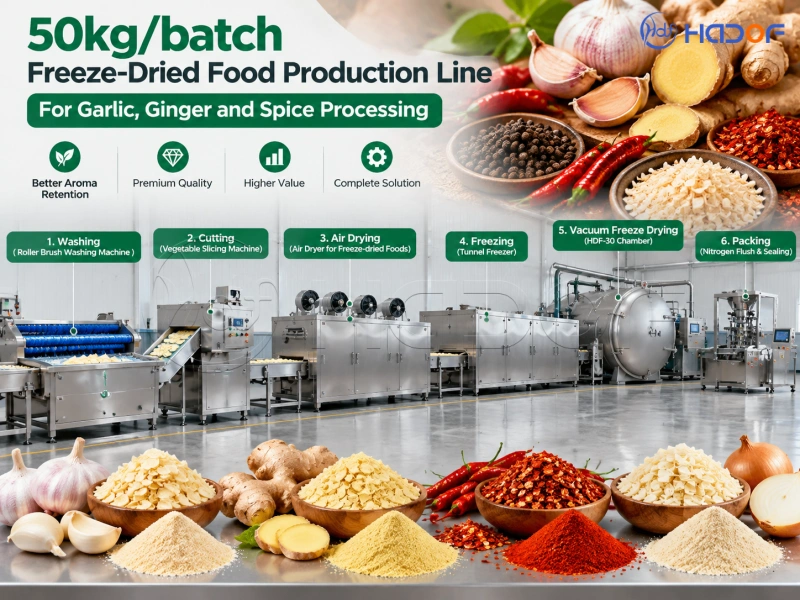
Building a 50kg/batch Freeze-Drying Line for Garlic, Ginger and Spice Processing

Garlic, ginger, and spice powders carry strong aroma, so heat drying costs the flavor that buyers pay for. However, a 50kg/batch freeze-dried food production line holds that aroma inside the cell. Each freeze-dried food production line that Hadof builds covers washing, cutting, freezing, drying, and packing as one matched set. Meanwhile, a batch weight of 50kg/batch keeps the daily plan simple for mid-size spice factories.

Building a 50kg batch Freeze-Drying Line for Garlic, Ginger and Spice Processing

Building a 50kg batch Freeze-Drying Line for Garlic, Ginger and Spice Processing

Which Garlic, Ginger and Spice Materials Fit This Line?

Fresh garlic holds allicin and volatile oils, so fast freezing protects that value. Ginger root carries fiber and moisture, and it dries well after even slicing. Spices such as onion, chili, and pepper also fit, because a chamber handles every recipe at low temperature. Each material sets its own slice size, tray depth, and cycle length. What’s more, a minced product needs a different handling path than a sliced one. Therefore, one line serves several SKUs when the design stays flexible. Because aroma compounds sit near the surface, gentle handling matters more than raw speed.

How Much Output Does a 50kg/batch Freeze-Dried Food Production Line Deliver?

Output depends on cycle length, tray load, and reload speed between cycles. A 50kg/batch freeze-dried food production line for spices pairs with a matched HDF-30 chamber. That chamber removes at least 450 kg of water per batch, so deep wet loads still finish on time. Because shelf area reaches 30.3 m² across 11+1 layers, every tray carries an even load. Then operators reload trays while the condenser defrosts, so the chamber rarely idles. Therefore, daily output grows through a tighter rhythm rather than a bigger machine.

How Does the Process Flow From Raw Bulb to Sealed Pouch?

Garlic and ginger arrive dirty, so washing comes first. Then a roller brush stage scrubs soil from peel and crevices, because water alone leaves grit behind. After that, a slicer cuts bulbs and roots into even flakes or cubes. Next, an air dryer strips surface water, so the freezing stage wastes no energy on free water. Finally, a tunnel freezer locks the cell structure before trays enter the chamber. Inside the chamber, pressure drops to 5 Pa, so ice turns straight into vapor. The condenser traps that vapor, while the load moves toward packing. One steady packing rhythm seals each pouch before humid air returns moisture. Any missing step shows up later as browning, wet centers, or weak aroma.

What Equipment Makes Up the Complete Line?

Hadof designs the six sections below as one matched set, so each station feeds the next at the same rate.

  1. Pre-treatment Equipment

A roller brush washing machine scrubs soil from peel and crevices, while blanching stabilizes color. Next, an air dryer for freeze-dried foods removes surface water, so cuts stay clean.

  1. Cutting Equipment

A vegetable slicing machine sets one uniform piece size across the batch. Even pieces dry at the same speed, so no tray stays wet. Blunt blades crush cells, so a sharp set protects texture and yield.

  1. Freezing Equipment

Tunnel freezing drops core temperature fast, so small ice crystals protect cell walls. Cycle time then follows load depth rather than machine size. Slower freezing also raises power use per kilogram of wet load.

  1. Conveying Equipment

Belt and bucket conveyors link washing, cutting, freezing, and packing into one flow. Gentle transfer also reduces breakage on fragile flakes. Transfer speed between stations then sets the overall line rate.

  1. Vacuum Freeze Drying Equipment

The HDF-30 chamber dries the frozen load under vacuum at 5 Pa. Shelf temperature runs from -45 °C to +80 °C, so every recipe stays repeatable. Spray defrost between cycles keeps daily throughput steady.

  1. Packing Equipment

Right after drying, a nitrogen flush and a tight seal block moisture during sea transit. Seal testing confirms barrier quality before cases leave the plant.

What Parameters and Technical Advantages Matter?

Parameter choice decides cycle time, energy cost, and product consistency across every batch.

Parameter Typical Value
Shelf area 30.3 m² (11+1 layers)
Water catch capacity ≥450 kg/batch
Ultimate vacuum ≤5 Pa
Condenser temperature -60 °C to -65 °C
Shelf temperature range -45 °C to +80 °C
Installed power 120 kW
Power supply 380 V, 3 phase, 50 Hz
Machine dimensions 7800 × 2200 × 2800 mm

Spray defrost shortens cleaning between cycles, so daily uptime stays high. Also, a deep condenser temperature protects aroma even on long cycles. And steady vacuum keeps ice sublimation even from the first hour to the last.

How Do You Plan Price and Floor Space for the Line?

Cost and layout work together, so plan the building around the chamber first. An HDF-30 unit measures about 7800 × 2200 × 2800 mm, and that footprint sets the clear height you need. Then add aisle space for loading, unloading, and maintenance around the frame. Wet preparation areas near washing and cutting need floor drains and easy cleaning access. Also, power planning matters, because this class of machine draws 120 kW at 380 V. Such a layout removes the need for lifts and keeps transfer routes short. Besides, placing packing close to the chamber door limits exposure time for dried product. Truck access and door width then decide how the chamber arrives on site. Therefore, one accurate floor plan usually lowers both civil work and daily labor.

Which Problems Does a 50kg/batch Line Remove?

Single-machine setups often stall at the handover points, and those stalls cost more than the machines themselves. One complete line therefore removes manual re-handling between stations. Even cutting and dewatering shorten cycle time, so the chamber turns more batches each month. Matched freezing protects texture, which keeps premium buyers interested. Sealed packing right after drying protects aroma through long transit. Uneven drying also shows up in complaints, so quality control costs more after shipment. As a result, labor planning gets simpler, because fewer operators touch each load. Such a line therefore protects the margin that spice exports earn. What’s more, one supplier for the full line keeps spare parts and service in one place.

Build the Freeze-Dried Garlic Line as One System

Every stage either protects the dried product or spends it, so one design should cover the whole line. Next, washing, cutting, freezing, drying, and packing run to a single rhythm. Hadof builds garlic, ginger, and spice lines around your raw material, output, and plant area. For a customized solution, visit the Hadof freeze dryer homepage at https://www.freezehadof.com/.

Как выбрать барабанный гранулятор для линии NPK

Производство удобрений объединяет выбор сырья, технологического оборудования и организации линии гранулирования. Производитель удобрений оценивает производственную задачу, сравнивает оборудование для производства удобрений и определяет состав технологической линии. Материалы страницы «Линия по производство удобрений НПК | грануляция | дизайн» помогают рассмотреть тему «Как выбрать барабанный гранулятор для линии NPK» с точки зрения завода, который планирует стабильный выпуск продукции. Как выбрать барабанный гранулятор для линии NPK позволяет заказчику производственной линии сопоставить комплектацию, мощность и технологические решения до начала проекта.

Как выбрать барабанный гранулятор для линии NPK — производственное оборудование
Оборудование для производства удобрений в составе технологической линии

Как выбрать оборудование для как выбрать барабанный гранулятор для линии NPK?

Предприятие сравнивает оборудование для производства удобрений, потому что гранулятор, смеситель, сушилка и дробилка должны работать в одной технологической линии. Производитель NPK учитывает производительность, влажность сырья и требуемый размер гранул. Инвестор оценивает затраты на производство удобрений и срок запуска завода по производству удобрений. Технологическая линия для производства удобрений подбирается по мощности, составу сырья и конечной формуле продукции. Материал страницы «Линия по производство удобрений НПК | грануляция | дизайн» показывает, какие параметры важны при выборе основного оборудования. оборудование для как выбрать барабанный гранулятор для линии npk позволяет сопоставить модель с технологической задачей. Связанная страница «Производственная линия SHUNXIN | сделанный на заказ» уточняет, как отдельные машины интегрируются в общую систему переработки удобрений. Заказчик производственной линии сравнивает барабанную, дисковую и валковую грануляцию для конкретного сырья.

Какие технические параметры учитывает производитель удобрений?

Завод анализирует технологический процесс производства удобрений, поэтому учитывает производительность, потребляемую мощность, влажность и размер частиц. Производитель удобрений проверяет, какие параметры подтверждены для линии производства удобрений, и не переносит характеристики одной модели на другую. Инвестор проекта удобрений оценивает капитальные расходы, бюджет проекта и стоимость запуска. Производственная компания определяет, как оборудование для обработки удобрений влияет на качество готового продукта. Данные страницы «Линия по производство удобрений НПК | грануляция | дизайн» используются как основа для сравнения комплектации. подробная информация о производственной линии даёт дополнительные сведения о возможных вариантах конфигурации. Управление производством удобрений становится точнее, когда каждый технологический узел соответствует характеристикам сырья и целевой мощности.

Как связанное оборудование влияет на технологическую линию?

Связанное оборудование для производства удобрений дополняет основную линию гранулирования. Производитель удобрений добавляет дробилку, смеситель, сушилку или грохот в зависимости от сырья и конечной формулы. Технология производства удобрений требует согласованной работы нескольких машин, поэтому завод проверяет производительность каждого узла. связанное оборудование для производства удобрений рассматривается в контексте линии гранулирования. Страница «Производственная линия SHUNXIN | сделанный на заказ» помогает понять, как связанное оборудование включается в производственную линию. Предприятие сравнивает варианты конфигурации линии и рассчитывает резерв мощности. Инвестор проекта учитывает, что правильный подбор вспомогательного оборудования снижает простои и повышает стабильность производства комплексных удобрений.

Как производитель линий формирует комплектацию завода?

Производитель линий для производства удобрений формирует комплектацию завода на основе производственной задачи. Завод по переработке удобрений оценивает сырьё, мощность и доступную площадь. производитель линий для производства удобрений представляет направления оборудования и технологических решений. Страница «Shunxin | Производитель оборудования для удобрений | 20+лет» даёт общее представление о направлениях оборудования и технологических решениях. Производственная компания сравнивает линии для органических и минеральных удобрений, а также системы гранулирования NPK. Инвестор учитывает, что комплекс оборудования должен быть согласован по производительности, управлению и обслуживанию. Такой подход помогает заказчику производственной линии перейти от отдельного станка к полноценному заводу по производству удобрений.

Какие сведения подтверждают выбор технологии?

Дополнительные справочные сведения о сырье и процессе помогают производителю удобрений проверить технологию гранулирования. Завод анализирует физические свойства материала, условия сушки и требования к конечному продукту. Инвестор проекта сравнивает разные технологии производства удобрений и учитывает особенности исходного сырья. минеральные удобрения даёт справочное описание материала или процесса. Производственная компания использует справочные данные для подготовки технического задания на линию. Такие сведения дополняют описание оборудования и позволяют точнее определить параметры производства удобрений, управления линией и контроля качества готовой продукции.

Если тема актуальна для производственного проекта, производитель удобрений может уточнить комплектацию линии у Yushunxin, а дополнительная информация доступна здесь: https://www.sxmashina.com/liniya-po-proizvodstvo-npk-udobreniy/

How Do You Choose the Right Freeze Dried Strawberry Processing Prospects 2026 for a Commercial Plant?

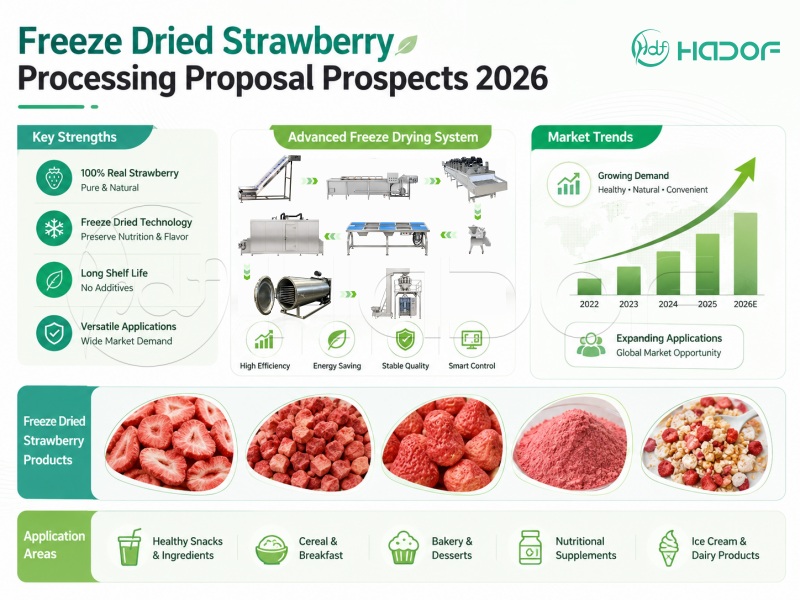
A strawberry snack brand, a fruit ingredient supplier, or an export processor that plans freeze drying in 2026 needs a prospect that matches its scale and its raw material. The freeze dried strawberry processing prospects 2026 for a commercial plant cover washing, slicing, IQF pre-freezing, and freeze drying, and the choice follows the strawberry features. This article explains how a buyer selects the right food processing prospect.

freeze dried strawberry processing prospects 2026

How Does Strawberry Raw Material Affect the Process?

Strawberries carry high sugar content and a fragile texture, so the freeze drying process must hold the color and the shape without juice leakage. The strawberry freeze drying production line with washing and slicing uses a gentle washing system and an accurate slicer to reduce browning. A buyer who understands these raw material features picks a line that protects the food preparation quality.

How Do Different Scales Choose Freeze Dryer Size?

The freeze dryer size follows the output, and three scales point to three machines. Small investors start with a compact freeze dryer, growing clients move to a mid-size line, and industrial buyers use a large machine for high-volume output. The cost-effective strawberry freeze drying system for different scales also adds an IQF machine for strawberry pre-freezing. This scale match keeps the food machinery investment proportional to the target.

How Does Washing and Slicing Protect Strawberry Quality?

The washing machine removes mud and residue without bruising the soft fruit, and the slicing machine cuts a uniform thickness so each piece dries evenly. These two steps reduce the browning and the juice leakage that lower the final product. A stable wash and a clean cut are the food manufacturing gates before freezing. A buyer who checks both keeps the freeze dried strawberry quality high.

How Does the Prospect Connect With a Processing Proposal?

The prospect points to a complete line, and a buyer turns it into a proposal that joins washing, dewatering, IQF freezing, vacuum drying, sorting, and packing. The line connects with a freeze dried strawberry processing proposal for a plant, and each stage feeds the next. A smooth connection keeps the food processing system moving and the berry shape intact.

How Should a Buyer Verify the Prospect?

Freeze dried strawberry processing rewards a trial with the plant’s own fruit, because sugar and moisture change the cycle. You can review the strawberry freeze drying equipment manufacturer before a purchase, and that review shows the line and service. A measured trial turns the food machinery prospect into a dependable choice.

How Does IQF Pre-Freezing Improve the Drying Result?

The IQF machine pre-freezes the strawberries before the vacuum dryer, so the fruit passes the ice crystal zone quickly and keeps its shape. This step reduces the clumping and the juice loss that a slow freeze would cause, and it makes the final freeze dried pieces separate. A commercial plant that adds the IQF stage protects the food preparation quality and shortens the drying cycle. This pre-freezing detail is the reason the strawberry prospect includes the IQF machine as a standard part.

Conclusion

A commercial plant chooses the right freeze dried strawberry processing prospect by matching the freeze dryer size to its scale and checking the washing, slicing, and IQF steps that protect the fruit. These choices keep the food production line efficient. If you have interests, you can learn more about https://www.hadofps.com/news/freeze-dried-strawberry-processing-proposal-prospects-2026/

What Is the Capacity of a 2 T/H Double Roller Fertilizer Granulator?

Plant owners and project investors often evaluate 2 t/h double roller fertilizer granulator capacity before they plan a fertilizer processing plant. chicken manure, crop straw, humic acid, sewage sludge move through double-roll extruder, crusher, rotary dryer in a complete fertilizer extrusion line. When you select this equipment, you review capacity, material condition, and plant layout. This evaluation helps you control investment and keep production stable.

2 t/h double roller fertilizer granulator capacity

2 t/h double roller fertilizer granulator capacity

How does a 2 t/h double roller fertilizer granulator capacity system support chicken manure processing?

A 2 t/h double roller fertilizer granulator capacity system supports chicken manure processing by connecting the main machine with feeding, mixing, and screening. You can prepare chicken manure, crop straw, humic acid, sewage sludge before the machine starts. A double-roll extruder and a crusher help control material flow, while a rotary dryer protects product quality. This layout keeps the fertilizer processing plant stable and reduces manual transfer. You can also compare this process with standard fertilizer manufacturing system principles when you design the line. This preparation improves the fertilizer machinery and keeps the fertilizer equipment balanced. This setup also simplifies maintenance and reduces unexpected stops.

Why does a 2 t/h double roller fertilizer granulator capacity line suit continuous fertilizer production?

A 2 t/h double roller fertilizer granulator capacity line suits continuous fertilizer production because it handles chicken manure, crop straw, humic acid, sewage sludge in a steady flow. You can arrange the equipment so the material moves from intake to packing without long stops. The double-roll extruder feeds the next stage at a stable rate, and the crusher forms the product into a uniform shape. This coordination reduces bottlenecks and keeps the fertilizer extrusion line efficient. You can also add a rotary dryer to return off-size material for rework, which lowers waste and improves product consistency. The steady output supports daily packing and dispatch targets.

Which organic fertilizer extrusion technology factors should you review before selection?

organic fertilizer extrusion technology helps you choose the right equipment for chicken manure, crop straw, humic acid, sewage sludge. You can review moisture, particle size, capacity, and plant space before you order. A clear process flow reduces transfer points and protects the fertilizer equipment. This comparison also helps you balance fertilizer machinery with long-term operating cost. You can then match the selected machine to the fertilizer manufacturing system and keep the fertilizer processing plant running smoothly. This review helps you avoid buying oversized or undersized fertilizer machinery.

How can producers compare organic fertilizer standards for this fertilizer manufacturing process?

You can compare the general process described under organic fertilizer when you set the product standard and material specification. This reference helps you understand why moisture and particle size matter for chicken manure, crop straw, humic acid, sewage sludge. You can also adjust the double-roll extruder and the crusher according to the target output. This control supports the fertilizer extrusion line and keeps the fertilizer processing plant consistent during peak production. This preparation also supports repeat product quality across production batches.

To summarize, what is the capacity of a 2 t/h double roller fertilizer granulator depends on material condition, equipment scope, and production capacity. You can match each machine to the required output and product form. A reliable fertilizer machinery manufacturer can supply the complete fertilizer manufacturing system. Yushunxin provides this fertilizer production equipment. If you have interests, you can learn more about https://www.extruder-granulator.com/product/2t-h-double-roller-fertilizer-granulator

Как ворошитель ускоряет компостирование куриного помета?

Производство удобрений объединяет выбор сырья, технологического оборудования и организации линии гранулирования. Производитель удобрений оценивает производственную задачу, сравнивает оборудование для производства удобрений и определяет состав технологической линии. Материалы страницы «Гусеничный ворошитель компоста — для больших буртов» помогают рассмотреть тему «Как ворошитель ускоряет компостирование куриного помета» с точки зрения завода, который планирует стабильный выпуск продукции. Как ворошитель ускоряет компостирование куриного помета позволяет заказчику производственной линии сопоставить комплектацию, мощность и технологические решения до начала проекта.

Как ворошитель ускоряет компостирование куриного помета? — производственное оборудование
Оборудование для производства удобрений в составе технологической линии

Как выбрать оборудование для как ворошитель ускоряет компостирование куриного помета?

Предприятие сравнивает оборудование для производства удобрений, потому что гранулятор, смеситель, сушилка и дробилка должны работать в одной технологической линии. Производитель NPK учитывает производительность, влажность сырья и требуемый размер гранул. Инвестор оценивает затраты на производство удобрений и срок запуска завода по производству удобрений. Технологическая линия для производства удобрений подбирается по мощности, составу сырья и конечной формуле продукции. Материал страницы «Гусеничный ворошитель компоста — для больших буртов» показывает, какие параметры важны при выборе основного оборудования. оборудование для как ворошитель ускоряет компостирование куриного помета позволяет сопоставить модель с технологической задачей. Связанная страница «Оборудование для производства удобрений — подбор и поставка» уточняет, как отдельные машины интегрируются в общую систему переработки удобрений. Заказчик производственной линии сравнивает барабанную, дисковую и валковую грануляцию для конкретного сырья.

Какие технические параметры учитывает производитель удобрений?

Завод анализирует технологический процесс производства удобрений, поэтому учитывает производительность, потребляемую мощность, влажность и размер частиц. Производитель удобрений проверяет, какие параметры подтверждены для линии производства удобрений, и не переносит характеристики одной модели на другую. Инвестор проекта удобрений оценивает капитальные расходы, бюджет проекта и стоимость запуска. Производственная компания определяет, как оборудование для обработки удобрений влияет на качество готового продукта. Данные страницы «Гусеничный ворошитель компоста — для больших буртов» используются как основа для сравнения комплектации. подробная информация о производственной линии даёт дополнительные сведения о возможных вариантах конфигурации. Управление производством удобрений становится точнее, когда каждый технологический узел соответствует характеристикам сырья и целевой мощности.

Как связанное оборудование влияет на технологическую линию?

Связанное оборудование для производства удобрений дополняет основную линию гранулирования. Производитель удобрений добавляет дробилку, смеситель, сушилку или грохот в зависимости от сырья и конечной формулы. Технология производства удобрений требует согласованной работы нескольких машин, поэтому завод проверяет производительность каждого узла. связанное оборудование для производства удобрений рассматривается в контексте линии гранулирования. Страница «Оборудование для производства удобрений — подбор и поставка» помогает понять, как связанное оборудование включается в производственную линию. Предприятие сравнивает варианты конфигурации линии и рассчитывает резерв мощности. Инвестор проекта учитывает, что правильный подбор вспомогательного оборудования снижает простои и повышает стабильность производства комплексных удобрений.

Как производитель линий формирует комплектацию завода?

Производитель линий для производства удобрений формирует комплектацию завода на основе производственной задачи. Завод по переработке удобрений оценивает сырьё, мощность и доступную площадь. производитель линий для производства удобрений представляет направления оборудования и технологических решений. Страница «Линии и оборудование для производства удобрений — Shunxin» даёт общее представление о направлениях оборудования и технологических решениях. Производственная компания сравнивает линии для органических и минеральных удобрений, а также системы гранулирования NPK. Инвестор учитывает, что комплекс оборудования должен быть согласован по производительности, управлению и обслуживанию. Такой подход помогает заказчику производственной линии перейти от отдельного станка к полноценному заводу по производству удобрений.

Какие сведения подтверждают выбор технологии?

Дополнительные справочные сведения о сырье и процессе помогают производителю удобрений проверить технологию гранулирования. Завод анализирует физические свойства материала, условия сушки и требования к конечному продукту. Инвестор проекта сравнивает разные технологии производства удобрений и учитывает особенности исходного сырья. органические удобрения даёт справочное описание материала или процесса. Производственная компания использует справочные данные для подготовки технического задания на линию. Такие сведения дополняют описание оборудования и позволяют точнее определить параметры производства удобрений, управления линией и контроля качества готовой продукции.

Если тема актуальна для производственного проекта, производитель удобрений может уточнить комплектацию линии у Yushunxin, а дополнительная информация доступна здесь: https://www.liniyaudobreniy.com/gusenichnye-voroshiteli-kompost/

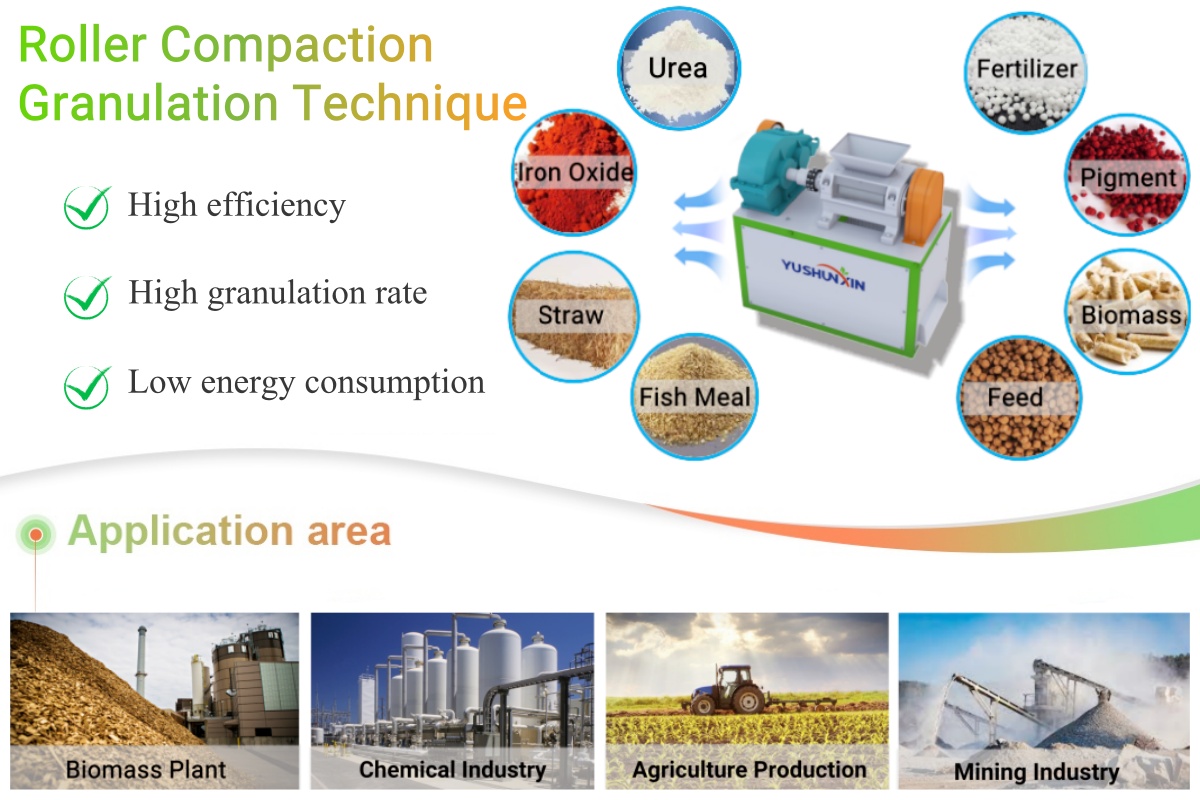
How Does a Roller Compactor Granulation System Handle Heat-Sensitive NPK?

Plant owners and project investors often evaluate roller compaction method before they plan a fertilizer processing plant. chicken manure, crop straw, humic acid, sewage sludge move through double-roll extruder, crusher, rotary dryer in a complete fertilizer extrusion line. When you select this equipment, you review capacity, material condition, and plant layout. This evaluation helps you control investment and keep production stable.

roller compaction method

roller compaction method

How does a roller compaction method system support chicken manure processing?

A roller compaction method system supports chicken manure processing by connecting the main machine with feeding, mixing, and screening. You can prepare chicken manure, crop straw, humic acid, sewage sludge before the machine starts. A double-roll extruder and a crusher help control material flow, while a rotary dryer protects product quality. This layout keeps the fertilizer processing plant stable and reduces manual transfer. You can also compare this process with standard fertilizer manufacturing system principles when you design the line. This preparation improves the fertilizer machinery and keeps the fertilizer equipment balanced. This setup also simplifies maintenance and reduces unexpected stops.

Why does a roller compaction method line suit continuous fertilizer production?

A roller compaction method line suits continuous fertilizer production because it handles chicken manure, crop straw, humic acid, sewage sludge in a steady flow. You can arrange the equipment so the material moves from intake to packing without long stops. The double-roll extruder feeds the next stage at a stable rate, and the crusher forms the product into a uniform shape. This coordination reduces bottlenecks and keeps the fertilizer extrusion line efficient. You can also add a rotary dryer to return off-size material for rework, which lowers waste and improves product consistency. The steady output supports daily packing and dispatch targets.

Which organic fertilizer extrusion technology factors should you review before selection?

organic fertilizer extrusion technology helps you choose the right equipment for chicken manure, crop straw, humic acid, sewage sludge. You can review moisture, particle size, capacity, and plant space before you order. A clear process flow reduces transfer points and protects the fertilizer equipment. This comparison also helps you balance fertilizer machinery with long-term operating cost. You can then match the selected machine to the fertilizer manufacturing system and keep the fertilizer processing plant running smoothly. This review helps you avoid buying oversized or undersized fertilizer machinery.

How can producers compare organic fertilizer standards for this fertilizer manufacturing process?

You can compare the general process described under organic fertilizer when you set the product standard and material specification. This reference helps you understand why moisture and particle size matter for chicken manure, crop straw, humic acid, sewage sludge. You can also adjust the double-roll extruder and the crusher according to the target output. This control supports the fertilizer extrusion line and keeps the fertilizer processing plant consistent during peak production. This preparation also supports repeat product quality across production batches.

To summarize, how does a roller compactor granulation system handle heat-sensitive npk depends on material condition, equipment scope, and production capacity. You can match each machine to the required output and product form. A reliable fertilizer machinery manufacturer can supply the complete fertilizer manufacturing system. Yushunxin provides this fertilizer production equipment. If you have interests, you can learn more about https://www.extruder-granulator.com/roller-compaction-granulation-technique

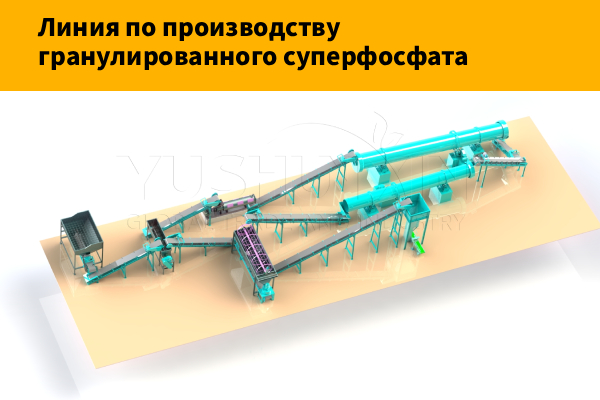
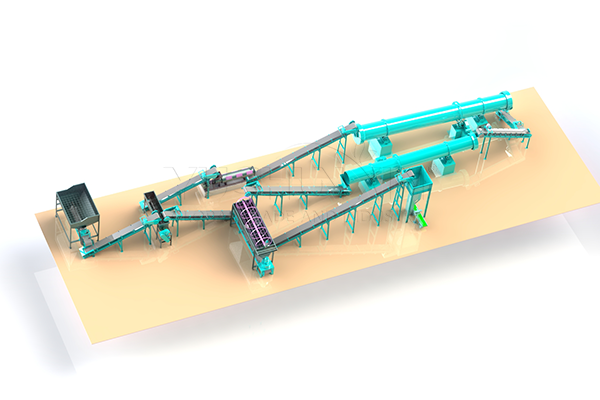
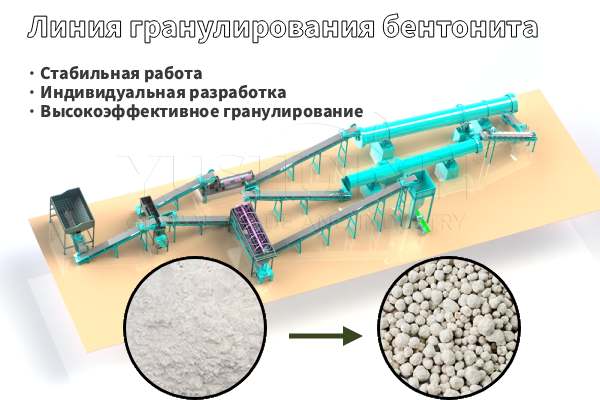
Как гранулировать простой суперфосфат после производства порошка?

Производство удобрений объединяет выбор сырья, технологического оборудования и организации линии гранулирования. Производитель удобрений оценивает производственную задачу, сравнивает оборудование для производства удобрений и определяет состав технологической линии. Материалы страницы «Производственная линия SSP: оборудование и технология Линии производства NPK и комплексных удобрений под ключ» помогают рассмотреть тему «Как гранулировать простой суперфосфат после производства порошка» с точки зрения завода, который планирует стабильный выпуск продукции. Как гранулировать простой суперфосфат после производства порошка позволяет заказчику производственной линии сопоставить комплектацию, мощность и технологические решения до начала проекта.

Как гранулировать простой суперфосфат после производства порошка? — производственное оборудование
Оборудование для производства удобрений в составе технологической линии

Как выбрать оборудование для как гранулировать простой суперфосфат после производства порошка?

Предприятие сравнивает оборудование для производства удобрений, потому что гранулятор, смеситель, сушилка и дробилка должны работать в одной технологической линии. Производитель NPK учитывает производительность, влажность сырья и требуемый размер гранул. Инвестор оценивает затраты на производство удобрений и срок запуска завода по производству удобрений. Технологическая линия для производства удобрений подбирается по мощности, составу сырья и конечной формуле продукции. Материал страницы «Производственная линия SSP: оборудование и технология Линии производства NPK и комплексных удобрений под ключ» показывает, какие параметры важны при выборе основного оборудования. оборудование для как гранулировать простой суперфосфат после производства порошка позволяет сопоставить модель с технологической задачей. Связанная страница «Products Archive – Линии производства NPK и комплексных удобрений под ключ Линии производства NPK и комплексных удобрений под ключ» уточняет, как отдельные машины интегрируются в общую систему переработки удобрений. Заказчик производственной линии сравнивает барабанную, дисковую и валковую грануляцию для конкретного сырья.

Какие технические параметры учитывает производитель удобрений?

Завод анализирует технологический процесс производства удобрений, поэтому учитывает производительность, потребляемую мощность, влажность и размер частиц. Производитель удобрений проверяет, какие параметры подтверждены для линии производства удобрений, и не переносит характеристики одной модели на другую. Инвестор проекта удобрений оценивает капитальные расходы, бюджет проекта и стоимость запуска. Производственная компания определяет, как оборудование для обработки удобрений влияет на качество готового продукта. Данные страницы «Производственная линия SSP: оборудование и технология Линии производства NPK и комплексных удобрений под ключ» используются как основа для сравнения комплектации. подробная информация о производственной линии даёт дополнительные сведения о возможных вариантах конфигурации. Управление производством удобрений становится точнее, когда каждый технологический узел соответствует характеристикам сырья и целевой мощности.

Как связанное оборудование влияет на технологическую линию?

Связанное оборудование для производства удобрений дополняет основную линию гранулирования. Производитель удобрений добавляет дробилку, смеситель, сушилку или грохот в зависимости от сырья и конечной формулы. Технология производства удобрений требует согласованной работы нескольких машин, поэтому завод проверяет производительность каждого узла. связанное оборудование для производства удобрений рассматривается в контексте линии гранулирования. Страница «Products Archive – Линии производства NPK и комплексных удобрений под ключ Линии производства NPK и комплексных удобрений под ключ» помогает понять, как связанное оборудование включается в производственную линию. Предприятие сравнивает варианты конфигурации линии и рассчитывает резерв мощности. Инвестор проекта учитывает, что правильный подбор вспомогательного оборудования снижает простои и повышает стабильность производства комплексных удобрений.

Как производитель линий формирует комплектацию завода?

Производитель линий для производства удобрений формирует комплектацию завода на основе производственной задачи. Завод по переработке удобрений оценивает сырьё, мощность и доступную площадь. производитель линий для производства удобрений представляет направления оборудования и технологических решений. Страница «Линии производства NPK и комплексных удобрений под ключ – Предоставим Вам качественное оборудование для производства NPK удобрений! Линии производства NPK и комплексных удобрений под ключ» даёт общее представление о направлениях оборудования и технологических решениях. Производственная компания сравнивает линии для органических и минеральных удобрений, а также системы гранулирования NPK. Инвестор учитывает, что комплекс оборудования должен быть согласован по производительности, управлению и обслуживанию. Такой подход помогает заказчику производственной линии перейти от отдельного станка к полноценному заводу по производству удобрений.

Какие сведения подтверждают выбор технологии?

Дополнительные справочные сведения о сырье и процессе помогают производителю удобрений проверить технологию гранулирования. Завод анализирует физические свойства материала, условия сушки и требования к конечному продукту. Инвестор проекта сравнивает разные технологии производства удобрений и учитывает особенности исходного сырья. гранулирование — для переработки сырья даёт справочное описание материала или процесса. Производственная компания использует справочные данные для подготовки технического задания на линию. Такие сведения дополняют описание оборудования и позволяют точнее определить параметры производства удобрений, управления линией и контроля качества готовой продукции.

Если тема актуальна для производственного проекта, производитель удобрений может уточнить комплектацию линии у Yushunxin, а дополнительная информация доступна здесь: https://www.npkliniya.com/solutions/proizvodstvennaya-liniya-ssp/

Which Fertilizer Dryer Price Range Fits a Small Mineral Fertilizer Plant?

Plant owners and project investors often evaluate fertilizer dryer price before they plan a fertilizer processing plant. phosphate rock, limestone, dolomite, potassium feldspar move through ball mill, pan granulator, rotary dryer in a complete fertilizer granulation line. When you select this equipment, you review capacity, material condition, and plant layout. This evaluation helps you control investment and keep production stable.

fertilizer dryer price

fertilizer dryer price

How does a fertilizer dryer price system support phosphate rock processing?

A fertilizer dryer price system supports phosphate rock processing by connecting the main machine with feeding, mixing, and screening. You can prepare phosphate rock, limestone, dolomite, potassium feldspar before the machine starts. A ball mill and a pan granulator help control material flow, while a rotary dryer protects product quality. This layout keeps the fertilizer processing plant stable and reduces manual transfer. You can also compare this process with standard fertilizer manufacturing system principles when you design the line. This preparation improves the fertilizer equipment and keeps the fertilizer machinery balanced. This setup also simplifies maintenance and reduces unexpected stops.

Why does a fertilizer dryer price line suit continuous fertilizer production?

A fertilizer dryer price line suits continuous fertilizer production because it handles phosphate rock, limestone, dolomite, potassium feldspar in a steady flow. You can arrange the equipment so the material moves from intake to packing without long stops. The ball mill feeds the next stage at a stable rate, and the pan granulator forms the product into a uniform shape. This coordination reduces bottlenecks and keeps the fertilizer granulation line efficient. You can also add a rotary dryer to return off-size material for rework, which lowers waste and improves product consistency. The steady output supports daily packing and dispatch targets.

Which mineral fertilizer granulation technology factors should you review before selection?

mineral fertilizer granulation technology helps you choose the right equipment for phosphate rock, limestone, dolomite, potassium feldspar. You can review moisture, particle size, capacity, and plant space before you order. A clear process flow reduces transfer points and protects the fertilizer machinery. This comparison also helps you balance fertilizer equipment with long-term operating cost. You can then match the selected machine to the fertilizer manufacturing system and keep the fertilizer processing plant running smoothly. This review helps you avoid buying oversized or undersized fertilizer machinery.

How can producers compare mineral fertilizer standards for this fertilizer manufacturing process?

You can compare the general process described under mineral fertilizer when you set the product standard and material specification. This reference helps you understand why moisture and particle size matter for phosphate rock, limestone, dolomite, potassium feldspar. You can also adjust the ball mill and the pan granulator according to the target output. This control supports the fertilizer granulation line and keeps the fertilizer processing plant consistent during peak production. This preparation also supports repeat product quality across production batches.

To summarize, which fertilizer dryer price range fits a small mineral fertilizer plant depends on material condition, equipment scope, and production capacity. You can match each machine to the required output and product form. A reliable mineral fertilizer equipment manufacturer can supply the complete fertilizer manufacturing system. Yushunxin provides this fertilizer production equipment. If you have interests, you can learn more about https://www.mineralfertilizerproductionsolutions.com/product/fertilizer-dryer

How Much Does a Limestone Powder Granulation Machine Setup Cost?

Plant owners and project investors often evaluate limestone powder granulation machine cost before they plan a fertilizer processing plant. chicken manure, crop straw, humic acid, sewage sludge move through double-roll extruder, crusher, rotary dryer in a complete fertilizer extrusion line. When you select this equipment, you review capacity, material condition, and plant layout. This evaluation helps you control investment and keep production stable.

limestone powder granulation machine cost

limestone powder granulation machine cost

How does a limestone powder granulation machine cost system support chicken manure processing?

A limestone powder granulation machine cost system supports chicken manure processing by connecting the main machine with feeding, mixing, and screening. You can prepare chicken manure, crop straw, humic acid, sewage sludge before the machine starts. A double-roll extruder and a crusher help control material flow, while a rotary dryer protects product quality. This layout keeps the fertilizer processing plant stable and reduces manual transfer. You can also compare this process with standard fertilizer manufacturing system principles when you design the line. This preparation improves the fertilizer machinery and keeps the fertilizer equipment balanced. This setup also simplifies maintenance and reduces unexpected stops.

Why does a limestone powder granulation machine cost line suit continuous fertilizer production?

A limestone powder granulation machine cost line suits continuous fertilizer production because it handles chicken manure, crop straw, humic acid, sewage sludge in a steady flow. You can arrange the equipment so the material moves from intake to packing without long stops. The double-roll extruder feeds the next stage at a stable rate, and the crusher forms the product into a uniform shape. This coordination reduces bottlenecks and keeps the fertilizer extrusion line efficient. You can also add a rotary dryer to return off-size material for rework, which lowers waste and improves product consistency. The steady output supports daily packing and dispatch targets.

Which organic fertilizer extrusion technology factors should you review before selection?

organic fertilizer extrusion technology helps you choose the right equipment for chicken manure, crop straw, humic acid, sewage sludge. You can review moisture, particle size, capacity, and plant space before you order. A clear process flow reduces transfer points and protects the fertilizer equipment. This comparison also helps you balance fertilizer machinery with long-term operating cost. You can then match the selected machine to the fertilizer manufacturing system and keep the fertilizer processing plant running smoothly. This review helps you avoid buying oversized or undersized fertilizer machinery.

How can producers compare organic fertilizer standards for this fertilizer manufacturing process?

You can compare the general process described under organic fertilizer when you set the product standard and material specification. This reference helps you understand why moisture and particle size matter for chicken manure, crop straw, humic acid, sewage sludge. You can also adjust the double-roll extruder and the crusher according to the target output. This control supports the fertilizer extrusion line and keeps the fertilizer processing plant consistent during peak production. This preparation also supports repeat product quality across production batches.

To summarize, how much does a limestone powder granulation machine setup cost depends on material condition, equipment scope, and production capacity. You can match each machine to the required output and product form. A reliable fertilizer machinery manufacturer can supply the complete fertilizer manufacturing system. Yushunxin provides this fertilizer production equipment. If you have interests, you can learn more about https://www.extruder-granulator.com/product/limestone-powder-granulation-machine

Как работает линия грануляции бентонита 1–3 т/ч?

Производство удобрений объединяет выбор сырья, технологического оборудования и организации линии гранулирования. Производитель удобрений оценивает производственную задачу, сравнивает оборудование для производства удобрений и определяет состав технологической линии. Материалы страницы «Линия гранулирования бентонита | 70000$ купить оборудования» помогают рассмотреть тему «Как работает линия грануляции бентонита 1–3 т/ч» с точки зрения завода, который планирует стабильный выпуск продукции. Как работает линия грануляции бентонита 1–3 т/ч позволяет заказчику производственной линии сопоставить комплектацию, мощность и технологические решения до начала проекта.

Как работает линия грануляции бентонита 1–3 т/ч? — производственное оборудование
Оборудование для производства удобрений в составе технологической линии

Как выбрать оборудование для как работает линия грануляции бентонита 1–3 т/ч?

Предприятие сравнивает оборудование для производства удобрений, потому что гранулятор, смеситель, сушилка и дробилка должны работать в одной технологической линии. Производитель NPK учитывает производительность, влажность сырья и требуемый размер гранул. Инвестор оценивает затраты на производство удобрений и срок запуска завода по производству удобрений. Технологическая линия для производства удобрений подбирается по мощности, составу сырья и конечной формуле продукции. Материал страницы «Линия гранулирования бентонита | 70000$ купить оборудования» показывает, какие параметры важны при выборе основного оборудования. оборудование для как работает линия грануляции бентонита 1–3 т/ч позволяет сопоставить модель с технологической задачей. Связанная страница «Решения по сырью Archives – Решения по производству удобрений!» уточняет, как отдельные машины интегрируются в общую систему переработки удобрений. Заказчик производственной линии сравнивает барабанную, дисковую и валковую грануляцию для конкретного сырья.

Какие технические параметры учитывает производитель удобрений?

Завод анализирует технологический процесс производства удобрений, поэтому учитывает производительность, потребляемую мощность, влажность и размер частиц. Производитель удобрений проверяет, какие параметры подтверждены для линии производства удобрений, и не переносит характеристики одной модели на другую. Инвестор проекта удобрений оценивает капитальные расходы, бюджет проекта и стоимость запуска. Производственная компания определяет, как оборудование для обработки удобрений влияет на качество готового продукта. Данные страницы «Линия гранулирования бентонита | 70000$ купить оборудования» используются как основа для сравнения комплектации. подробная информация о производственной линии даёт дополнительные сведения о возможных вариантах конфигурации. Управление производством удобрений становится точнее, когда каждый технологический узел соответствует характеристикам сырья и целевой мощности.

Как связанное оборудование влияет на технологическую линию?

Связанное оборудование для производства удобрений дополняет основную линию гранулирования. Производитель удобрений добавляет дробилку, смеситель, сушилку или грохот в зависимости от сырья и конечной формулы. Технология производства удобрений требует согласованной работы нескольких машин, поэтому завод проверяет производительность каждого узла. связанное оборудование для производства удобрений рассматривается в контексте линии гранулирования. Страница «Решения по сырью Archives – Решения по производству удобрений!» помогает понять, как связанное оборудование включается в производственную линию. Предприятие сравнивает варианты конфигурации линии и рассчитывает резерв мощности. Инвестор проекта учитывает, что правильный подбор вспомогательного оборудования снижает простои и повышает стабильность производства комплексных удобрений.

Как производитель линий формирует комплектацию завода?

Производитель линий для производства удобрений формирует комплектацию завода на основе производственной задачи. Завод по переработке удобрений оценивает сырьё, мощность и доступную площадь. производитель линий для производства удобрений представляет направления оборудования и технологических решений. Страница «Оборудование для производства удобрений Shunxin» даёт общее представление о направлениях оборудования и технологических решениях. Производственная компания сравнивает линии для органических и минеральных удобрений, а также системы гранулирования NPK. Инвестор учитывает, что комплекс оборудования должен быть согласован по производительности, управлению и обслуживанию. Такой подход помогает заказчику производственной линии перейти от отдельного станка к полноценному заводу по производству удобрений.

Какие сведения подтверждают выбор технологии?

Дополнительные справочные сведения о сырье и процессе помогают производителю удобрений проверить технологию гранулирования. Завод анализирует физические свойства материала, условия сушки и требования к конечному продукту. Инвестор проекта сравнивает разные технологии производства удобрений и учитывает особенности исходного сырья. гранулирование даёт справочное описание материала или процесса. Производственная компания использует справочные данные для подготовки технического задания на линию. Такие сведения дополняют описание оборудования и позволяют точнее определить параметры производства удобрений, управления линией и контроля качества готовой продукции.

Если тема актуальна для производственного проекта, производитель удобрений может уточнить комплектацию линии у Yushunxin, а дополнительная информация доступна здесь: https://www.granulyator.com/product/liniya-granulirovaniya-bentonita/

Как подготовить бентонит к грануляции для производства кошачьего наполнителя?

Производство удобрений объединяет выбор сырья, технологического оборудования и организации линии гранулирования. Производитель удобрений оценивает производственную задачу, сравнивает оборудование для производства удобрений и определяет состав технологической линии. Материалы страницы «Линия гранулирования бентонита | 70000$ купить оборудования» помогают рассмотреть тему «Как подготовить бентонит к грануляции для производства кошачьего наполнителя» с точки зрения завода, который планирует стабильный выпуск продукции. Как подготовить бентонит к грануляции для производства кошачьего наполнителя позволяет заказчику производственной линии сопоставить комплектацию, мощность и технологические решения до начала проекта.

Как подготовить бентонит к грануляции для производства кошачьего наполнителя? — производственное оборудование
Оборудование для производства удобрений в составе технологической линии

Как выбрать оборудование для как подготовить бентонит к грануляции для производства кошачьего наполнителя?

Предприятие сравнивает оборудование для производства удобрений, потому что гранулятор, смеситель, сушилка и дробилка должны работать в одной технологической линии. Производитель NPK учитывает производительность, влажность сырья и требуемый размер гранул. Инвестор оценивает затраты на производство удобрений и срок запуска завода по производству удобрений. Технологическая линия для производства удобрений подбирается по мощности, составу сырья и конечной формуле продукции. Материал страницы «Линия гранулирования бентонита | 70000$ купить оборудования» показывает, какие параметры важны при выборе основного оборудования. оборудование для как подготовить бентонит к грануляции для производства кошачьего наполнителя позволяет сопоставить модель с технологической задачей. Связанная страница «Решения по сырью Archives – Решения по производству удобрений!» уточняет, как отдельные машины интегрируются в общую систему переработки удобрений. Заказчик производственной линии сравнивает барабанную, дисковую и валковую грануляцию для конкретного сырья.

Какие технические параметры учитывает производитель удобрений?

Завод анализирует технологический процесс производства удобрений, поэтому учитывает производительность, потребляемую мощность, влажность и размер частиц. Производитель удобрений проверяет, какие параметры подтверждены для линии производства удобрений, и не переносит характеристики одной модели на другую. Инвестор проекта удобрений оценивает капитальные расходы, бюджет проекта и стоимость запуска. Производственная компания определяет, как оборудование для обработки удобрений влияет на качество готового продукта. Данные страницы «Линия гранулирования бентонита | 70000$ купить оборудования» используются как основа для сравнения комплектации. подробная информация о производственной линии даёт дополнительные сведения о возможных вариантах конфигурации. Управление производством удобрений становится точнее, когда каждый технологический узел соответствует характеристикам сырья и целевой мощности.

Как связанное оборудование влияет на технологическую линию?

Связанное оборудование для производства удобрений дополняет основную линию гранулирования. Производитель удобрений добавляет дробилку, смеситель, сушилку или грохот в зависимости от сырья и конечной формулы. Технология производства удобрений требует согласованной работы нескольких машин, поэтому завод проверяет производительность каждого узла. связанное оборудование для производства удобрений рассматривается в контексте линии гранулирования. Страница «Решения по сырью Archives – Решения по производству удобрений!» помогает понять, как связанное оборудование включается в производственную линию. Предприятие сравнивает варианты конфигурации линии и рассчитывает резерв мощности. Инвестор проекта учитывает, что правильный подбор вспомогательного оборудования снижает простои и повышает стабильность производства комплексных удобрений.

Как производитель линий формирует комплектацию завода?

Производитель линий для производства удобрений формирует комплектацию завода на основе производственной задачи. Завод по переработке удобрений оценивает сырьё, мощность и доступную площадь. производитель линий для производства удобрений представляет направления оборудования и технологических решений. Страница «Оборудование для производства удобрений Shunxin» даёт общее представление о направлениях оборудования и технологических решениях. Производственная компания сравнивает линии для органических и минеральных удобрений, а также системы гранулирования NPK. Инвестор учитывает, что комплекс оборудования должен быть согласован по производительности, управлению и обслуживанию. Такой подход помогает заказчику производственной линии перейти от отдельного станка к полноценному заводу по производству удобрений.

Какие сведения подтверждают выбор технологии?

Дополнительные справочные сведения о сырье и процессе помогают производителю удобрений проверить технологию гранулирования. Завод анализирует физические свойства материала, условия сушки и требования к конечному продукту. Инвестор проекта сравнивает разные технологии производства удобрений и учитывает особенности исходного сырья. гранулирование даёт справочное описание материала или процесса. Производственная компания использует справочные данные для подготовки технического задания на линию. Такие сведения дополняют описание оборудования и позволяют точнее определить параметры производства удобрений, управления линией и контроля качества готовой продукции.

Если тема актуальна для производственного проекта, производитель удобрений может уточнить комплектацию линии у Yushunxin, а дополнительная информация доступна здесь: https://www.granulyator.com/product/liniya-granulirovaniya-bentonita/

How Much Does a Drum Granulator Machine Cost for Biochar Fertilizer?

Plant owners and project investors often evaluate drum granulator machine before they plan a fertilizer processing plant. biochar, biomass ash, charcoal powder, lignite move through carbonization furnace, biochar crusher, rotary dryer in a complete fertilizer granulation line. When you select this equipment, you review capacity, material condition, and plant layout. This evaluation helps you control investment and keep production stable.

drum granulator machine

drum granulator machine

How does a drum granulator machine system support biochar processing?

A drum granulator machine system supports biochar processing by connecting the main machine with feeding, mixing, and screening. You can prepare biochar, biomass ash, charcoal powder, lignite before the machine starts. A carbonization furnace and a biochar crusher help control material flow, while a rotary dryer protects product quality. This layout keeps the fertilizer processing plant stable and reduces manual transfer. You can also compare this process with standard fertilizer manufacturing system principles when you design the line. This preparation improves the fertilizer equipment and keeps the fertilizer machinery balanced. This setup also simplifies maintenance and reduces unexpected stops.

Why does a drum granulator machine line suit continuous fertilizer production?

A drum granulator machine line suits continuous fertilizer production because it handles biochar, biomass ash, charcoal powder, lignite in a steady flow. You can arrange the equipment so the material moves from intake to packing without long stops. The carbonization furnace feeds the next stage at a stable rate, and the biochar crusher forms the product into a uniform shape. This coordination reduces bottlenecks and keeps the fertilizer granulation line efficient. You can also add a rotary dryer to return off-size material for rework, which lowers waste and improves product consistency. The steady output supports daily packing and dispatch targets.

Which carbon-based fertilizer processing technology factors should you review before selection?

carbon-based fertilizer processing technology helps you choose the right equipment for biochar, biomass ash, charcoal powder, lignite. You can review moisture, particle size, capacity, and plant space before you order. A clear process flow reduces transfer points and protects the fertilizer machinery. This comparison also helps you balance fertilizer equipment with long-term operating cost. You can then match the selected machine to the fertilizer manufacturing system and keep the fertilizer processing plant running smoothly. This review helps you avoid buying oversized or undersized fertilizer machinery.

How can producers compare biochar standards for this fertilizer manufacturing process?

You can compare the general process described under biochar when you set the product standard and material specification. This reference helps you understand why moisture and particle size matter for biochar, biomass ash, charcoal powder, lignite. You can also adjust the carbonization furnace and the biochar crusher according to the target output. This control supports the fertilizer granulation line and keeps the fertilizer processing plant consistent during peak production. This preparation also supports repeat product quality across production batches.

To summarize, how much does a drum granulator machine cost for biochar fertilizer depends on material condition, equipment scope, and production capacity. You can match each machine to the required output and product form. A reliable biochar fertilizer equipment manufacturer can supply the complete fertilizer manufacturing system. Yushunxin provides this fertilizer production equipment. If you have interests, you can learn more about https://www.charbasedfertilizermachine.com/product/drum-granulator