
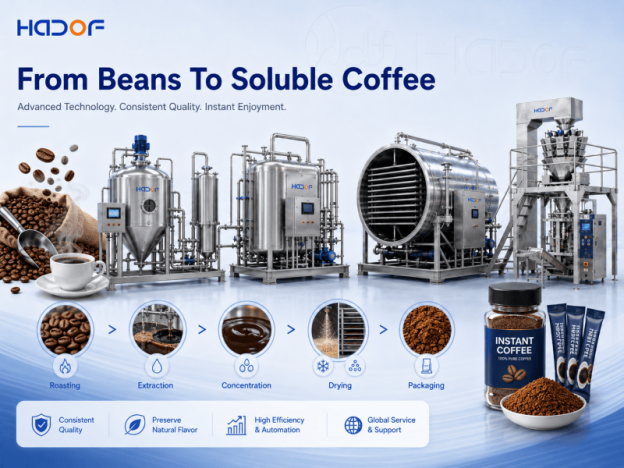
How Freeze-Dried Coffee Is Made: From Green Beans to Instant Coffee
Freeze-dried coffee is the premium end of the instant coffee market. It dissolves quickly, keeps a clean, fresh-brewed aroma, and avoids the cooked, bitter notes that cheaper drying methods can leave behind. For coffee producers, a freeze-dried coffee line is a way to turn green beans into a high-value product with a long shelf life and strong export potential. This guide walks through the process, step by step, and explains the equipment behind it.
Step 1: Green Bean Selection and Roasting
Everything starts with the green bean. Consistent origin, moisture, and density give the roaster a predictable base. The beans are roasted to the profile your market expects — lighter roasts emphasize fruit and acidity, while darker roasts build body and chocolate notes. After roasting, the beans are rested briefly so the aromatics stabilize before extraction.
Step 2: Grinding and Extraction
The roasted beans are ground and extracted with hot water under controlled pressure. The goal is to pull the soluble solids, aroma compounds, and acids into a concentrated coffee extract without over-extracting the harsh, bitter notes. Extraction conditions — water temperature, pressure, and time — strongly affect the final cup quality.
Step 3: Concentration
The extract is usually concentrated before drying so the dryer has less water to remove. Concentration must be gentle: excessive heat at this stage drives off the very aromas that make freeze-dried coffee special. A well-designed line uses low-temperature concentration and captures aroma volatiles for later reintroduction.
Step 4: Pre-Freezing
The concentrated extract is frozen, often into a thin sheet or into droplets, depending on the line design. Fast freezing produces small ice crystals and a uniform frozen structure, which helps the next stage run efficiently. This pre-freezing step is a key part of the overall freeze-drying process and directly affects the final granule quality.
Step 5: Vacuum Freeze Drying
The frozen extract enters the vacuum chamber. Under low pressure, the ice sublimates directly into vapor without passing through a liquid stage, so the coffee’s structure and aroma stay largely intact. Gentle shelf heating drives the sublimation, and the condenser captures the vapor. This is the heart of a freeze-dried coffee production line, and it is where most of the equipment cost and energy use sit.
Step 6: Granulation, Grading, and Packaging
After drying, the coffee is milled or granulated to the target particle size. A screener separates the granules into grades, and oversize material is recycled. The finished granules are packed in moisture- and oxygen-barrier jars, pouches, or sachets. Packaging is critical: freeze-dried coffee is hygroscopic, so even a small moisture leak shortens shelf life and dulls the aroma.
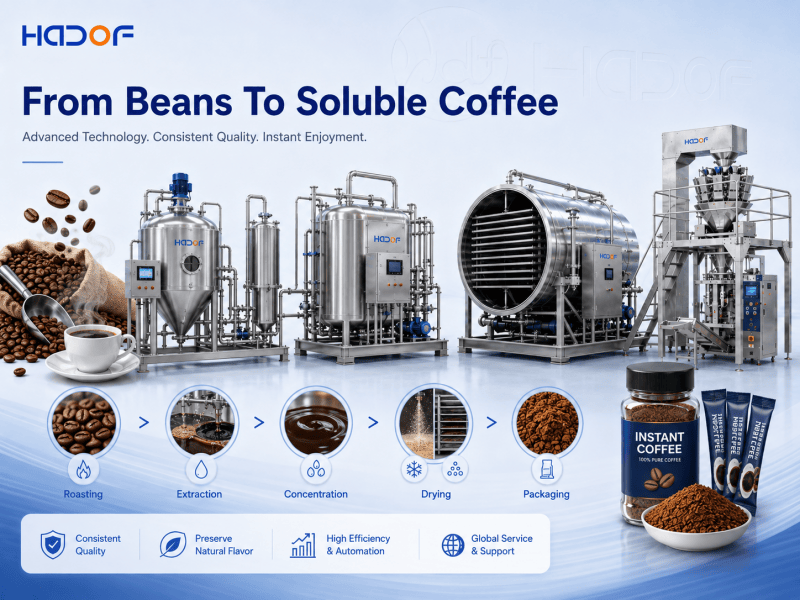
An Instant Coffee Production Line
coffee tea drinks instant coffee production line freeze dryer scaling
Why Freeze Drying Preserves Aroma
Heat is the enemy of coffee aroma. Freeze drying removes water at low temperature, so the delicate volatile compounds that create a fresh-brewed smell are protected. The result is a light, porous granule that dissolves quickly and delivers a cup much closer to fresh coffee than conventional hot-air drying. That quality difference is why freeze-dried coffee commands a premium in retail and foodservice.
Equipment for a Freeze-Dried Coffee Line
A complete production line typically includes roasting and grinding equipment, an extraction and concentration system, a pre-freezer, the industrial freeze dryer, a granulator and screener, and a packing machine. Capacity is usually specified by batch weight or shelf area, and the right size depends on your target output and the extraction cycle. The dryer is the core investment; the upstream and downstream equipment must be matched to it so the line runs smoothly.
Sizing the dryer is the most important decision. Too small, and the extraction side waits between batches, which wastes labour and energy. Too large, and you carry idle capacity and higher running costs. A common starting point for commercial producers is a batch size in the tens to low hundreds of kilograms, paired with a shelf area that matches the freeze-drying cycle of coffee extract. The pre-freezer and packing line should be sized to match the dryer’s throughput, and the extraction and concentration system should be able to supply consistent, concentrated extract at the rate the dryer needs.
Quality Control
Quality control runs through every stage. Green beans are checked for defects and moisture; the roast is profiled and logged; extraction is monitored for yield and solids; and the dried granules are tested for moisture, color, and solubility. A simple sensory check at the end confirms that the aroma and flavor match the target. Small deviations upstream show up clearly in the cup, so consistent process control matters more than any single machine.
Common Mistakes in Freeze-Dried Coffee Production
The first mistake is over-extracting the beans to chase higher yield. The extra solids come with harsh, bitter compounds that no amount of careful drying can hide. The second is concentrating the extract with too much heat, which drives off the aromatics that make freeze-dried coffee special. The third is inconsistent pre-freezing: uneven ice crystals lead to uneven drying and a granule that dissolves at different rates from one batch to the next. The fourth is under-sizing the condenser, so it cannot keep up with the vapor load and the cycle slows down. Finally, packing without enough moisture barrier undoes all the careful work upstream. Freeze-dried coffee is hygroscopic, and a small leak in the packaging shortens shelf life and dulls the aroma quickly.
Conclusion
Freeze-dried coffee is made by extracting and concentrating roasted coffee, freezing the extract, and removing the ice under vacuum so the aroma survives. The process is more demanding than conventional drying, but the premium product it delivers justifies the investment. HADOF Food Processing Manufacture designs complete freeze-dried coffee production lines, from extraction and concentration to the freeze dryer, granulation, and packaging. Tell us your target output and product format, and we will help you plan the right line.