Monthly Archives: August 2026

Как выбрать оборудование для грануляции удобрений под конкретное сырьё

Производитель удобрений получает стабильные гранулы только тогда, когда технология грануляции соответствует физическим свойствам сырья. Поэтому оборудование для грануляции удобрений под свойства конкретного сырья следует оценивать по влажности, размеру порошка, пластичности, склонности к слёживанию и требуемой производительности. Такой подход связывает fertilizer production process с реальным поведением материала и снижает риск ситуации, когда новая машина формально подходит по тоннажу, но создаёт нестабильную фракцию или требует лишней подготовки.

Мокрый-гранулятор

Мокрый-гранулятор

Какие свойства сырья определяют выбор технологии грануляции удобрений?

Инженер сначала разделяет сырьё по способности формировать гранулы под давлением или при добавлении жидкости. Сухие минеральные порошки с низкой влажностью часто хорошо подходят для механического уплотнения. Более пластичные смеси и подготовленные органические материалы могут лучше работать во влажной схеме, где частицы растут за счёт перекатывания, перемешивания и контролируемой подачи жидкости.

Размер исходных частиц также влияет на результат. Крупные комки создают неравномерную подачу, поэтому дробилка помогает стабилизировать фракцию до гранулятора. Смеситель нужен тогда, когда рецептура включает несколько компонентов и предприятие должно поддерживать одинаковый состав каждой партии. Эти два узла формируют основу fertilizer processing system перед грануляцией, но предприятие добавляет их только при фактической необходимости.

Покупатель также оценивает гигроскопичность, абразивность и склонность материала к налипанию. Такие свойства влияют на материал рабочих частей, способ подачи и частоту обслуживания. В результате fertilizer granulation equipment подбирают не по названию удобрения, а по сочетанию характеристик конкретного порошка или смеси.

Когда сухая грануляция выгоднее для порошковых минеральных материалов?

Сухая технология подходит проекту, который стремится уменьшить количество жидкой фазы и не хочет добавлять отдельный участок сушки. Роликовый гранулятор уплотняет порошок механическим давлением, а дальнейшее дробление и сортировка формируют товарную фракцию. На странице Shunxin по роликовому гранулятору производитель указывает рабочую производительность 1–4 т/ч, размер готовых частиц 2–10 мм и влажность сырья перед грануляцией 2–6% для описанных моделей.

Именно поэтому роликовый гранулятор для сухого прессования порошковых удобрений особенно интересен заводу, который работает с NPK, сульфатом аммония, калийными или другими порошковыми материалами с подходящей влажностью. Завод при этом контролирует размер исходного порошка и стабильность подачи, потому что сухая экструзия чувствительна к изменению плотности и состава.

Сухая схема может уменьшить fertilizer machinery cost за счёт более короткой технологической цепочки. Однако предприятие не должно считать отсутствие сушилки универсальным преимуществом. Если сырьё плохо уплотняется без влаги, механическое давление не компенсирует неподходящие свойства материала.

Когда влажная грануляция лучше подходит для NPK и органических смесей?

Влажная схема добавляет воду, раствор или связующее в контролируемом количестве. Барабанный, дисковый или новый гранулятор органических удобрений формирует зародыши частиц и постепенно увеличивает их размер. Такая технология подходит многим NPK-рецептурам и подготовленным органическим смесям, если материал имеет достаточную пластичность и хорошо образует агломераты.

После влажной грануляции завод часто должен контролировать остаточную влагу и температуру готовых частиц. Поэтому fertilizer production line получает более длинную структуру, чем сухая схема. Покупатель должен сравнивать не только цену гранулятора, но и энергопотребление, площадь и требования к последующим операциям.

Комплект грануляционного оборудования для сухой и влажной технологии позволяет инвестору сравнить несколько принципов формования на одной основе. Такая оценка особенно полезна, когда предприятие планирует выпускать разные рецептуры или хочет оставить резерв для будущего расширения ассортимента.

Как производительность и требуемый размер гранул влияют на выбор машины?

Паспортная производительность должна соответствовать не только плановому выпуску, но и внутреннему потоку материала. Возврат мелкой или крупной фракции после сортировки увеличивает нагрузку на отдельные участки. Инженер поэтому рассчитывает поток через гранулятор, а не только массу готовой продукции в мешках.

Размер гранул также влияет на модель машины и настройки. Мелкая товарная фракция требует другого режима, чем крупные гранулы. Завод учитывает скорость вращения, давление, подачу жидкости и свойства матрицы в зависимости от конструкции. Общий принцип гранулирования материалов объясняет укрупнение частиц, но промышленный выбор всегда требует привязки к конкретному сырью.

Как сравнить инвестиции в несколько вариантов грануляции без лишнего оборудования?

Инвестор сравнивает fertilizer plant investment по одинаковым исходным данным: сырьё, влажность, размер частиц, часовая производительность, товарная фракция и рабочий график. Такой формат показывает разницу между стоимостью самой машины и бюджетом всей технологической цепочки.

Yushunxin располагает несколькими типами грануляторов для сухих и влажных процессов, поэтому поставщик может сопоставить материал с различными принципами формования. Заказчик получает более полезное коммерческое предложение, когда техническое задание содержит анализ сырья и требования к готовому продукту. Покупатель может изучить подходящие варианты для проекта и затем сравнить конфигурации по производительности, занимаемой площади и эксплуатационным расходам.

Правильная машина не должна заставлять завод постоянно компенсировать свойства сырья лишней влагой, сушкой или повторным измельчением. Проект получает устойчивый fertilizer manufacturing process, когда технология соответствует материалу ещё до покупки оборудования. Целевая страница: https://www.sxmashina.com/oborudovanie-dlya-granulyatsii/
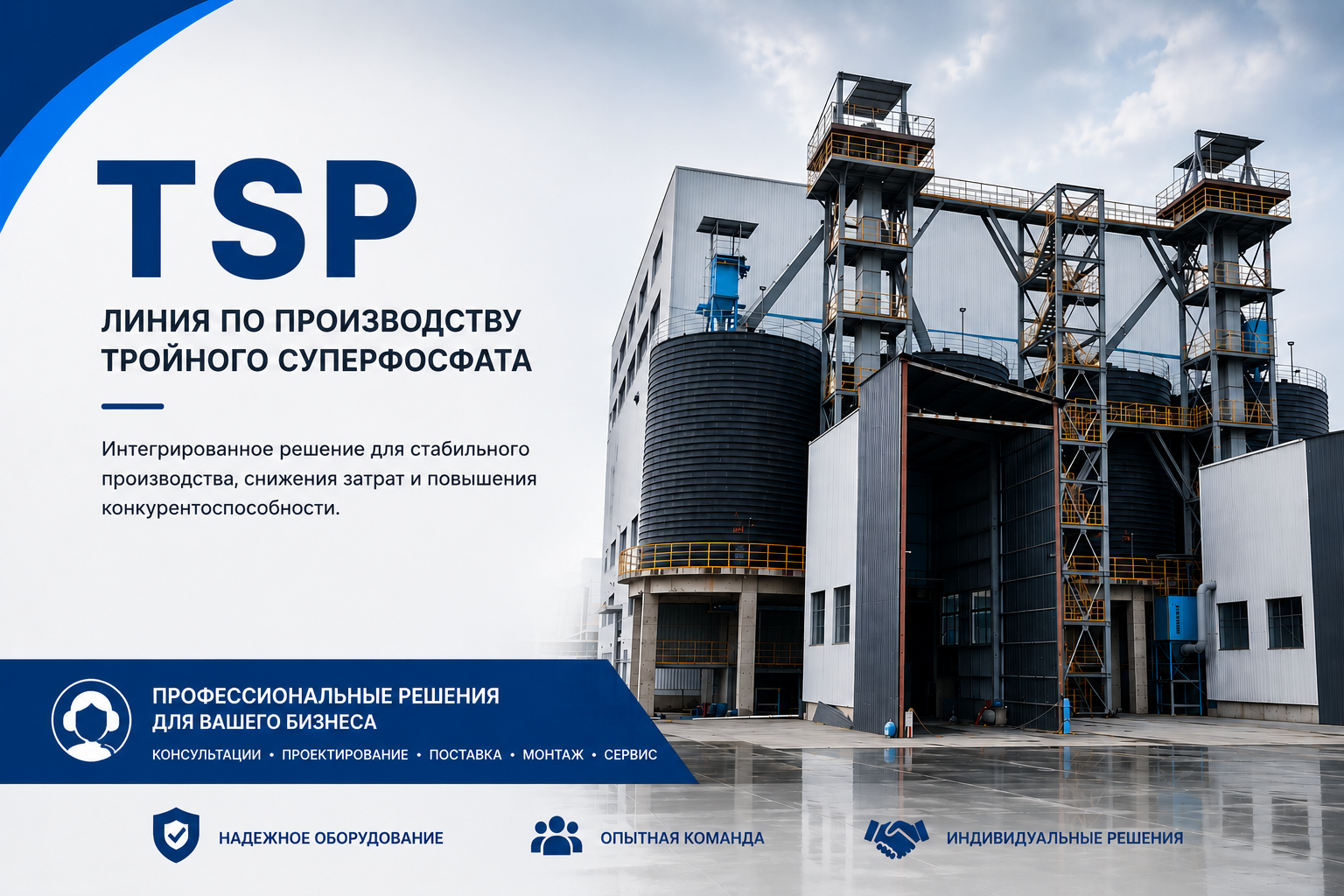
Какие данные нужны поставщику для подготовки проекта линии по производству TSP

Чтобы подготовить проект линии гранулированного TSP по исходным данным заказчика, поставщику недостаточно знать только требуемую производительность. TSP — химико-механическое производство, где качество фосфоритной руды и фосфорной кислоты определяет реакцию, а выбранная технологическая схема — состав оборудования, площадь, возврат материала, энергопотребление и систему газоочистки.

Производство-тройной-суперфосфат

Производство-тройной-суперфосфат

1. Целевая спецификация готового TSP

В техническом задании укажите требуемое содержание доступного P₂O₅, влажность, свободную кислотность, форму продукта, размер гранул, допустимую долю мелочи и крупняка, прочность, слёживаемость и тип упаковки. Если продукт предназначен для прямого внесения, смешивания с другими удобрениями или экспорта, требования могут различаться.

Общие сведения о продукте можно сопоставить с материалом о химических свойствах суперфосфата, однако договорная спецификация должна опираться на применимые стандарты и лабораторные методы конкретного рынка. Номер стандарта и обязательные показатели для страны проекта.

2. Полный анализ фосфоритной руды

Поставщику нужны содержание P₂O₅ и CaO, отношение CaO/P₂O₅, реакционная способность, влажность и гранулометрия после помола. Важны карбонаты, кремнезём, соединения железа, алюминия, магния, фтор и другие примеси, потому что они влияют на расход кислоты, вязкость, скорость реакции, образование газов и качество продукта.

Следует передать не только сертификат одной партии, но и ожидаемый диапазон состава по месторождению. Если руда поступает от нескольких поставщиков, проект должен учитывать смешение и худший реалистичный сценарий. До подтверждения анализа размеры реакционного и газоочистного оборудования остаются предварительными.

3. Параметры фосфорной кислоты

Необходимо указать концентрацию по P₂O₅, температуру, плотность, содержание свободной серной кислоты, твёрдых примесей и фтора. Важно описать, производится кислота на площадке или доставляется, как она хранится, подогревается, фильтруется и дозируется. Материалы насосов, трубопроводов и ёмкостей выбирают с учётом коррозионной среды и температуры.

Для линии производства тройного суперфосфата с подбором оборудования нужен согласованный материальный баланс по руде, кислоте, возврату, воде и отходящим газам. Расходы нельзя надёжно определить по одной мощности готового продукта.

4. Выбор технологического маршрута

В классической схеме концентрированная фосфорная кислота смешивается с тонкоизмельчённой рудой, материал проходит стадию схватывания, затем выдерживается для завершения реакции. После созревания его дробят, гранулируют, сушат, просеивают, охлаждают и упаковывают. Такая схема требует площади для выдержки и оборудования для перемещения материала.

Непрерывная суспензионная схема использует реакторы, насосы и гранулятор с возвратом. Она может уменьшить потребность в большой зоне созревания, но предъявляет более строгие требования к сырью, управлению реакцией, возвратной нагрузке и автоматизации. Поставщик должен обосновать маршрут результатами анализа и испытаний, а не только желанием сократить число аппаратов.

5. Производительность и режим работы

Укажите годовой выпуск, число рабочих дней, часов в смене, смен в сутки и плановый коэффициент загрузки. Определите, нужен один поток или резервирование критических узлов. Отдельно зафиксируйте производительность по готовому продукту и внутренний поток с возвратом, поскольку гранулятор, сушилка и грохот перерабатывают больше материала, чем поступает на упаковку.

Для каждой операции запросите расчётную и установленную мощность: дробление и помол руды, дозирование, реакция, выдержка, грануляция, сушка, охлаждение, классификация, дробление крупной фракции, транспортирование и упаковка. Буферные ёмкости и склады должны быть привязаны к режиму поставки сырья и отгрузки продукта.

6. Площадка и инженерные ресурсы

Передайте топографический план, доступную площадь, ограничения по высоте, геологию, климат, температуру и влажность воздуха, ветровые и сейсмические условия. Нужны параметры электроэнергии, воды, топлива, сжатого воздуха и пара, если он предусмотрен. Также сообщите ограничения по транспортировке крупногабаритного оборудования и возможности местного изготовления металлоконструкций.

Для понимания отличий соседнего фосфатного продукта полезно изучить сравнение оборудования для производства SSP. Это помогает не переносить автоматически схему простого суперфосфата на TSP: концентрация кислоты, реакционный режим, выдержка и требования к материалам оборудования должны подтверждаться отдельно.

7. Газоочистка, пыль и безопасность

При реакции и последующей обработке могут образовываться кислые и фторсодержащие газы, а при помоле, сушке и просеивании — пыль. Поэтому проект включает герметизацию, местные отсосы, скрубберы или другие системы очистки, обращение со стоками и контроль рабочих зон. Параметры выбросов и допустимые методы очистки зависят от местных норм.

Попросите выполнить HAZOP или сопоставимый анализ рисков на стадии рабочего проектирования, определить точки аварийного душа, нейтрализации проливов, блокировки насосов и вентиляции. Требования к коррозионностойким материалам должны быть увязаны с фактическим составом кислоты и газов.

8. Что должно войти в предложение

Хорошее предложение содержит описание процесса, материальный и тепловой баланс, схему потоков, перечень оборудования, компоновку, нагрузки на фундаменты, энергопотребление, автоматизацию, границы поставки и список запасных частей. Отдельно оговаривают монтаж, пусконаладку, обучение, лабораторное сопровождение и критерии приёмки.

После подготовки анализа руды и кислоты, спецификации продукта, режима работы и данных площадки можно получить предварительную компоновку проекта. Окончательные показатели конверсии, расхода энергии, выбросов, стоимости и срока реализации должны быть подтверждены инженерным расчётом и договором.

https://www.npkliniya.com/solutions/liniya-po-proizvodstvu-udobreniy-tsp/

What Equipment Is Needed Around an Industrial Freeze Dryer?

An industrial freeze dryer performs the main drying stage, but a commercial freeze-drying factory usually needs more than one machine. You need equipment for raw material preparation, cleaning, cutting, transport, freezing, freeze drying, and final packaging. A well-matched system helps each processing stage connect smoothly and reduces unnecessary manual handling.

For fruit projects, a complete freeze dried fruit production line can combine these machines around the industrial freeze dryer. The final configuration can change according to your raw material, required production capacity, and available factory space.

Why Does an Industrial Freeze Dryer Need Supporting Equipment?

The freeze dryer handles moisture removal under vacuum conditions. However, raw materials usually need several preparation steps before they enter the drying chamber.

For example, fresh mango may need washing, peeling, and cutting. Strawberries need gentle cleaning. Other fruits may require slicing or dicing before freezing. After preparation, quick-freezing equipment can freeze the product before operators load it onto freeze-drying trays. Finally, packaging equipment protects the finished product after drying.

Therefore, supporting equipment does not replace the freeze dryer. Instead, each machine prepares the product for the next production stage.

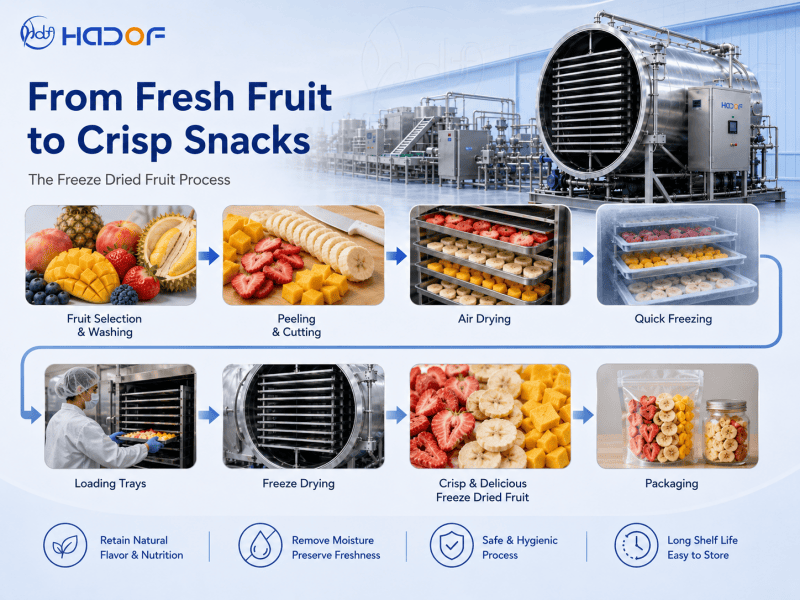
A typical processing flow looks like this:

Sorting → Washing → Cutting → Surface Water Removal → Freezing → Freeze Drying → Packaging

Factories can also add conveyors between these stages to improve material transfer.

1. Sorting Equipment for Raw Material Inspection

Commercial food production usually starts with raw material inspection. Workers can remove damaged fruit, unsuitable pieces, leaves, or other unwanted materials before washing.

A sorting platform gives operators a dedicated area for this work. Larger projects can also connect the sorting section with conveyors.

This step helps you control incoming raw materials before they enter the main processing line. It also makes the following washing and cutting stages easier to manage.

2. Washing Equipment Before Freeze Drying

Fresh fruits and vegetables often carry soil, dust, and surface impurities. Therefore, washing equipment usually comes near the beginning of a freeze-drying line.

A bubble cleaning machine uses water flow and bubbles to clean products. This type of equipment can handle fruits, vegetables, seafood, and other food materials. Hadof also offers different washing configurations according to material characteristics.

For example, strawberries need gentler handling than harder fruits. Root vegetables may need another washing method because soil can remain on uneven surfaces.

The right washer can help your factory create a more consistent preparation process before cutting and freezing.

3. Cutting and Slicing Equipment

Many raw materials need a suitable size before freezing.

Mango may enter the production line as slices, cubes, or strips. Apples can become slices or pieces. Bananas usually need uniform slices. Vegetables may require shredding, slicing, or dicing.

An industrial vegetable slicer can prepare fruits and vegetables in consistent shapes. Different cutter models can handle different production capacities and product formats.

Uniform cutting also helps operators arrange products on trays more easily. It can also support more consistent freezing and drying conditions across each batch.

Your production line does not need every type of cutting machine. Hadof can match suitable preparation equipment according to your raw material and final product format.

4. Surface Water Removal Equipment

After washing, raw materials may carry free water on their surfaces.

An air dryer or dewatering machine can remove part of this surface moisture before freezing. This step can improve material handling and prepare the product for the following freezing section.

Fruit processors can place this equipment after the washing or cutting stage, depending on the product and production flow.

For a complete freeze dried fruit production line, Hadof can combine cleaning, cutting, auxiliary, quick-freezing, and freeze-drying equipment according to the project.

5. Food Conveyors Between Processing Stages

As production capacity grows, manual transfer can slow down workflow.

Food conveyors can connect washing, slicing, drying, freezing, and packaging sections. Hadof offers elevator conveyors, turning conveyors, bucket conveyors, and parallel conveyors for different factory layouts.

An elevator conveyor can move products to a higher machine inlet. A turning conveyor can change material direction when the factory layout cannot follow one straight line. Parallel conveyors can support larger processing lines.

These machines become especially useful when your factory wants to reduce repeated lifting and manual carrying.

However, every project does not need the same conveyor layout. Hadof can arrange the transfer system around your factory space and production flow.

6. Quick-Freezing Equipment Before the Freeze Dryer

Freezing plays an important role before the main freeze-drying stage.

For larger commercial projects, an industrial tunnel freezer can support continuous freezing. Products travel through the tunnel on a conveyor while circulating cold air freezes them. Hadof also offers other freezing options, including liquid nitrogen and spiral freezing systems.

The correct freezing system depends on your product, production scale, and preferred workflow.

A smaller factory may use batch freezing equipment. A larger food factory may prefer a continuous freezer because it can connect more easily with upstream preparation equipment and downstream processing.

Hadof can match the freezing section with the required capacity of your industrial freeze dryer.

7. The Industrial Freeze Dryer as the Core Machine

The industrial freeze dryer machine remains the core equipment in the line.

Inside the system, the drying chamber holds product trays. The vacuum system lowers chamber pressure. The heating and circulation systems provide controlled energy, while the condensation system captures released water vapor. The refrigeration and control systems help operators manage the drying process.

The freeze dryer can process fruits, vegetables, meat, seafood, pet food, herbs, and other high-value materials. Different applications need different tray loading, freezing, and drying settings.

Your supporting equipment should match the freeze dryer’s batch capacity. Otherwise, the preparation stage may produce too little material, or the upstream equipment may deliver more product than the dryer can handle.

A balanced production line keeps the major stages working at suitable capacities.

8. Trays, Trolleys, and Material Transfer

Operators also need practical handling equipment around the freeze dryer.

Trays hold prepared products during drying. Trolleys or loading systems help operators move multiple trays between freezing and freeze-drying stages.

These components may look simple, but they affect daily production flow. A suitable loading arrangement can reduce repeated handling and help operators organize batches more clearly.

The final tray quantity and loading system should match the selected freeze dryer and the factory workflow.

9. Packaging Equipment After Freeze Drying

Freeze-dried food needs suitable packaging after the drying process.

A food packing machine can handle feeding, weighing, bag forming, sealing, cutting, and output according to the selected configuration. Hadof offers different packaging solutions for loose materials, powders, and individual products.

For example, freeze-dried fruit pieces can work with a vertical packaging system and weighing equipment. Fruit powder may need another filling method.

Factories can also connect packaging systems with elevators, conveyors, weighing systems, and working platforms.

The packaging stage completes the production flow after freeze drying and prepares the finished product for storage, retail, or export.

How Can These Machines Form a Complete Freeze-Drying Line?

A complete line does not mean that every factory needs every available machine.

A fruit snack factory may use:

Sorting → Bubble Washing → Cutting → Air Drying → Quick Freezing → Industrial Freeze Dryer → Packaging

process of The Freeze Dried Fruit

process of The Freeze Dried Fruit

A project that handles prepared or pre-cut raw materials may use fewer preparation machines.

Meanwhile, a larger food factory may add more conveyors, automatic feeding equipment, multiple cutting machines, or continuous freezing equipment.

Hadof can configure the production line according to your raw material, required production capacity, factory area, and processing flow. This approach keeps the project practical without making the equipment selection process unnecessarily complicated.

Which Equipment Matters Most Around an Industrial Freeze Dryer?

The industrial freeze dryer remains the central machine, but the surrounding equipment determines how efficiently products reach and leave the drying stage.

Washing and cutting equipment prepares raw materials. Conveyors organize material movement. Quick-freezing equipment prepares products for freeze drying. Packaging equipment handles the final product.

When these sections match each other correctly, your factory gains a clearer and more organized processing flow.

Instead of choosing each machine separately, you can plan the line as one connected system. This method makes it easier to match machine capacity, equipment position, and material movement inside the factory.

Build a Customized Freeze-Drying Production Line

Different raw materials require different production line configurations. Mango, strawberry, banana, vegetables, meat, seafood, and pet food may need different washing, cutting, freezing, loading, and packaging arrangements.

Hadof can configure a customized freeze-drying production line according to your raw material, production capacity, and factory space. The solution can include washing equipment, cutting equipment, conveying equipment, freezing equipment, industrial freeze dryers, and packaging machines.

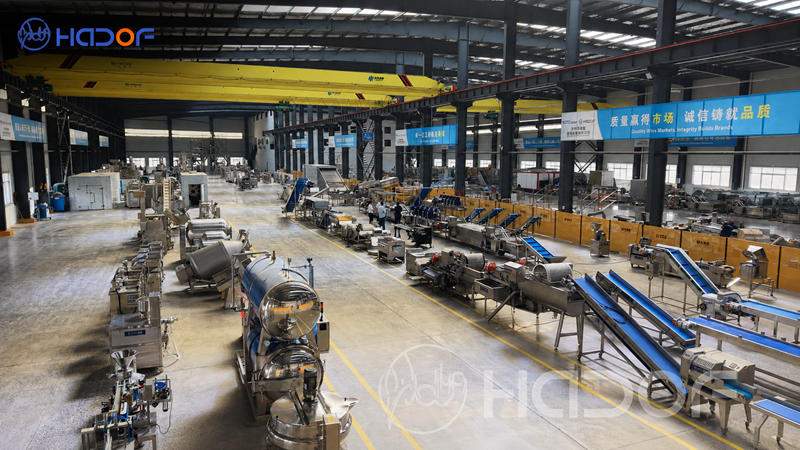
hadof factory inside view

hadof factory inside view

If you need a customized industrial freeze-drying solution, please visit the Hadof freeze dryer home page: https://www.freezehadof.com/


What Determines the Cost of an Automatic Onion Ring and Mozzarella Stick Coating Line?

Food manufacturers cannot estimate a coating project from one breading machine price alone. The automatic onion ring and mozzarella stick coating line cost factors include product size, hourly capacity, belt width, predusting requirements, batter type, crumb specification, coating pickup, automation level, and connection with the fryer or freezer. Onion rings need controlled spacing and complete surface coverage, while cheese sticks need gentle handling and reliable coating protection around edges and ends. Therefore, snack factories, frozen food manufacturers, central kitchens, supermarket suppliers, chain restaurants, and equipment buyers should evaluate the complete food coating process before they compare quotations or set an investment budget.

How Do Raw Materials and Product Specifications Change Coating Line Cost?

Raw material behavior determines the required food preparation system. Fresh or frozen onion rings can carry surface water, uneven edges, or fragile structures after cutting and separation. Mozzarella sticks can vary in temperature, dimensions, firmness, and surface condition, and warm cheese may create handling problems before frying. A factory may need controlled thawing, draining, chilling, predusting, or buffer conveying before battering. Moreover, the recipe may use flour, starch, egg wash, thin slurry, thick batter, fine crumbs, coarse crumbs, or multiple coating layers. Each added procedure requires suitable machinery, labor control, floor space, cleaning time, and material management. Consequently, the supplier needs actual product samples or detailed specifications before the team can calculate a realistic equipment cost.

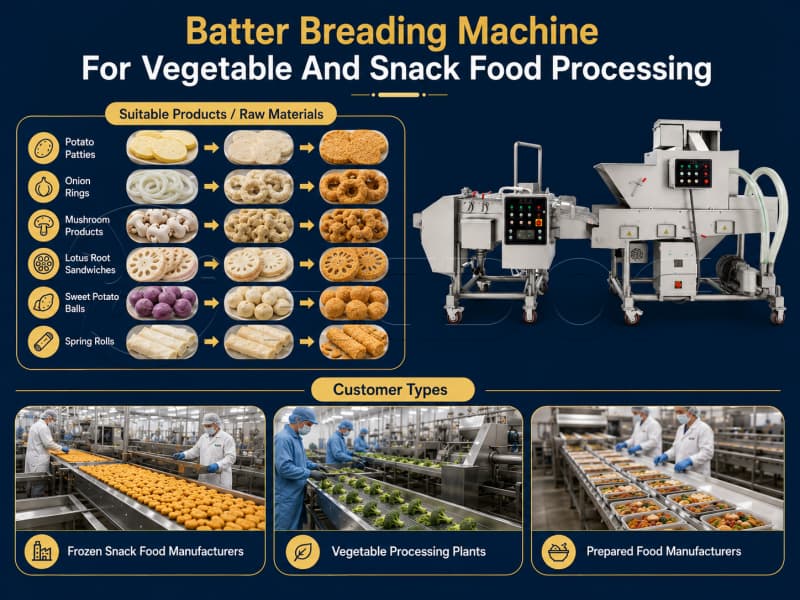
Batter Breading machine for Vegetable and Snack Food Processing

Batter Breading machine for Vegetable and Snack Food Processing

Which Battering Machine Fits Onion Rings and Mozzarella Sticks?

A waterfall batterer applies a batter curtain across the top while the lower tank coats the product bottom. This machine can suit free-flowing slurry when onion rings or cheese sticks maintain stable positions on the conveyor. A submerging batterer uses upper and lower belts to guide products through a deeper tank, so the mechanism can control lightweight or floating products and coat recessed surfaces more consistently. Buyers should match the battering technique to batter viscosity, product density, coating thickness, and required pickup. In addition, belt width and conveying speed affect capacity and price. Wider 400, 600, or 1,000 mm machinery requires more stainless steel, larger pumps, stronger drives, and greater factory area than compact coating equipment.

How Does Predusting and Breading Equipment Affect the Investment Budget?

Some onion ring and mozzarella stick recipes need predust before wet batter because the dry layer helps manage surface moisture and supports adhesion. The line may then use an automatic breader to apply fine crumbs, Japanese-style crumbs, flour mixtures, or other dry coatings to the top and bottom surfaces. A crumb elevator, upper curtain, lower bed, press roller, vibrator, and air knife can improve crumb circulation and excess-material removal. However, every component adds purchase price, power demand, cleaning work, and maintenance responsibility. A single-pass food coating machine may suit a simple product, while a predust-batter-bread or double-pass coating process may better support thicker shells and demanding frozen snack manufacturing.

Why Must Buyers Connect Coating Equipment With the Frying Process?

The coating line does not operate as an isolated food treatment section. Conveyor height, transfer distance, belt speed, product spacing, and fryer entry conditions influence whether wet batter and crumbs remain on the onion rings or cheese sticks. A continuous frying equipment system for coated snacks can connect coating, frying, oil filtration, deoiling, cooling, freezing, and packaging machinery into a coordinated production flow. Product style also matters because mozzarella sticks as breaded cheese snacks need a coating structure that limits cheese leakage during heat treatment. Therefore, a buyer should include transfer conveyors, fryer belt width, oil management, exhaust, cooling, and downstream handling when the project team evaluates the complete food production investment.

What Capacity, Belt Width, and Automation Level Influence the Final Quotation?

Higher throughput changes more than the motor size. A larger factory may need wider battering and breading belts, faster crumb recovery, continuous batter mixing, automatic replenishment, synchronized controls, longer conveyors, and stronger downstream frying capacity. A compact line can reduce the initial budget for market trials or regional food production, while a 500 kg/h or larger system may support supermarkets, chain catering suppliers, and industrial frozen food manufacturing. Buyers who request industrial battering and breading equipment for cheese sticks and onion rings should provide product dimensions, unit weight, target output, coating recipe, pickup target, voltage, workshop size, and preferred automation. The supplier can then prepare a conditional price range instead of an incomplete machine-only quotation.

How Should Procurement Teams Compare Automatic Coating Line Prices?

A procurement team should compare equal scopes. One quotation may cover only a batterer and breader, while another may include a mixer, preduster, crumb recycling, conveyors, fryer connection, oil filter, deoiler, cooling section, quick freezer, and packing equipment. The team should also review food-contact materials, effective belt width, adjustable parameters, sanitation access, control system, spare parts, delivery terms, installation responsibilities, and training scope. Furthermore, Fried Food Solutions production line engineering gives project buyers a reference point for integrating coating machinery with a broader fried food manufacturing system. This comparison method helps investors separate essential equipment from optional expansion modules and keeps the purchase decision within the approved budget.

Which Factors Create a Cost-Effective Onion Ring and Cheese Stick Line?

A cost-effective line matches the raw material, recipe, capacity, factory layout, and final product instead of maximizing every option. Product preparation controls surface condition; the batterer applies the wet layer; the breader manages dry coating; conveyors protect product spacing; the fryer sets the shell; and cooling or freezing stabilizes the final snack for packing and distribution. Consequently, buyers should ask for a process flow, equipment list, layout drawing, utility schedule, quotation scope, and excluded-item list. This structured food processing approach helps manufacturers control equipment price, operating cost, coating loss, cleaning labor, and future expansion without purchasing unnecessary machinery.

For product parameters and coating system details, customers can review https://www.friedfoodsolutions.com/automatic-batter-breading-machine/

Порошковое или гранулированное удобрение из куриного помета: какую линию выгоднее купить

Выбор порошковой или гранулированной линии из куриного помёта зависит от объёма сырья, его влажности, бюджета и требований рынка. Порошковое производство содержит меньше технологических стадий. Гранулированная линия требует дополнительных машин, но позволяет выпускать фасованный продукт с заданной фракцией. Решение следует принимать после расчёта всего производственного цикла.

Проект-производство-органических-удобрений

Проект-производство-органических-удобрений

Общий этап — подготовка компоста

Обе линии начинаются со сбора, смешивания и ферментации сырья. Свежий куриный помёт имеет высокую влажность и плотную структуру. Для регулирования смеси могут использоваться солома, опилки, рисовая шелуха или другой доступный углеродсодержащий материал.

Во время подготовки компоста необходимо контролировать влажность, температуру и поступление воздуха. Конкретная продолжительность процесса зависит от состава смеси, климата и организации площадки. Готовность продукта следует подтверждать технологическим контролем и анализом.

Что входит в порошковую линию

После ферментации компост дробят и просеивают. Товарная фракция поступает на фасовку, а крупные включения возвращаются на повторное измельчение.

Порошковая линия обычно требует меньшего количества оборудования и производственной площади. Она подходит предприятиям с ограниченным стартовым бюджетом, а также проектам, которые продают удобрение местным хозяйствам навалом или в мешках.

При выборе необходимо проверить производительность дробилки, размер отверстий грохота и возможности упаковочного участка. Избыточная влажность материала может ухудшать дробление и просеивание.

Что добавляется в гранулированную линию

Для выпуска гранул после дробления и просеивания устанавливают дозаторы, смеситель и гранулятор. В зависимости от технологии также могут потребоваться сушилка, охладитель, повторное просеивание, нанесение покрытия и автоматическая упаковка.

Гранулы удобнее дозировать, фасовать и перевозить. Однако их производство требует большего бюджета, энергоснабжения и более сложного обслуживания. Поэтому линия переработки куриного помёта под бюджет и рынок сбыта должна проектироваться после проверки спроса на конкретную форму продукции.

Как сравнить экономику двух вариантов

Предприятию необходимо определить годовой объём сырья и фактический выход готового компоста. Затем следует рассчитать стоимость оборудования, электроэнергии, топлива, упаковки, персонала и обслуживания.

Порошковая линия может быть выгоднее при локальных продажах и небольшом бюджете. Гранулированная конфигурация становится обоснованной, когда покупатели требуют определённую фракцию, фасовку и удобную транспортировку.

Полный комплекс оборудования для переработки куриного помёта также должен учитывать хранение свежего сырья, площадку ферментации, отвод воды, вентиляцию и движение погрузочной техники.

Какие данные передать поставщику

Для подготовки проекта нужны суточный объём помёта, влажность, наличие подстилки, форма готового продукта, годовой план выпуска и размеры площадки. Покупателю также следует указать доступное напряжение, вид топлива, формат мешков и требуемый уровень автоматизации.

После получения этих данных поставщик может подобрать оборудование для выпуска товарного удобрения из куриного помёта и отдельно показать стоимость порошкового и гранулированного вариантов.

Индивидуальный проект линии удобрений из куриного помёта для вашего предприятия должен учитывать свойства сырья и условия площадки. Покупатель может узнать больше о переработке сырья перед сравнением комплектаций.

Для получения более подробной информации, пожалуйста, посетите: https://www.liniyaudobreniy.com/resheniye-kurinyy-pomet-kak-odobreniye/

How to Plan a Water-Soluble Fertilizer Production Line

Water-soluble fertilizer production is not simply a matter of combining several nutrient materials in one mixer. Buyers expect a product that can be handled consistently, packed efficiently, and matched to the formulas required by their irrigation or greenhouse markets.

A well-planned water-soluble fertilizer production line for drip-irrigation markets should therefore start with the physical condition of the raw materials. Moisture, lump formation, particle size, corrosion risk, formula frequency, and bagging requirements all influence the final equipment arrangement.

Start with the Intended Fertilizer Market

Water-soluble NPK products are commonly used where growers need flexible nutrient programs for vegetables, fruit, flowers, nurseries, and protected cultivation. In these markets, product consistency matters as much as nominal output.

The application method also affects the production standard. Fertigation delivers dissolved fertilizer through an irrigation system, so manufacturers need to consider raw-material cleanliness, mixing uniformity, moisture protection, and packaging from the beginning.

A 1–10 TPH soluble NPK fertilizer manufacturing solution can be evaluated according to expected annual volume, number of formulas, available plant space, and packaging format. The target capacity should refer to finished, packed fertilizer rather than only the rated capacity of one machine.

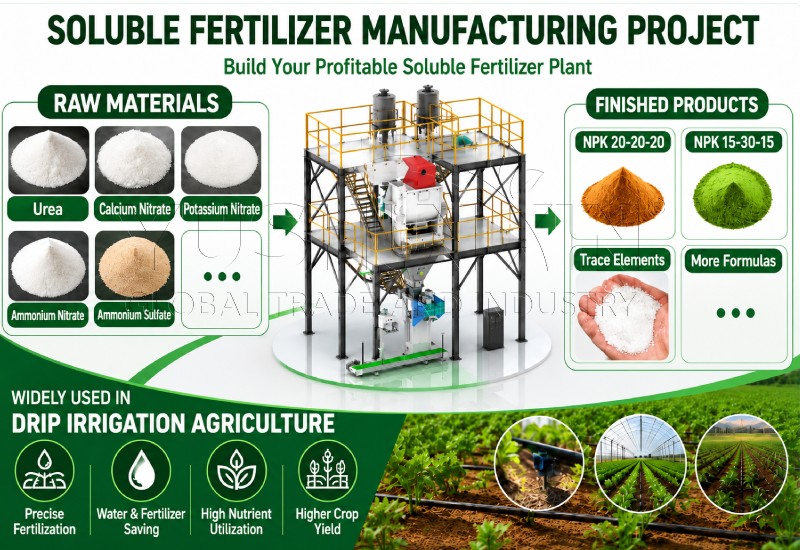
soluble fertilizer manufacturing for drip irrigation farming

soluble fertilizer manufacturing for drip irrigation farming

Prepare Raw Materials Before Mixing

Many soluble-fertilizer projects process urea, ammonium salts, phosphates, potash materials, magnesium sources, and trace elements. These materials may arrive as powders, granules, or moisture-affected lumps. A formula can be correct on paper but still produce uneven batches if the ingredients do not flow consistently.

A dust-free feeding and lump-crushing system for soluble fertilizer materials helps prepare materials before dosing. Feeding stations, bag opening, lump breaking, weighing, and dust collection should be considered as one continuous section instead of as separate purchases.

This arrangement helps the mixer receive a more stable material flow. It also makes formula changes more manageable when different raw materials require different feeding methods.

Match Dosing Accuracy with Formula Requirements

A water-soluble fertilizer plant must control the order and proportion of ingredients before blending. The mixer can distribute a batch, but it cannot correct an incorrect dosing result. For this reason, each key raw material should have a defined weighing and feeding route.

Manufacturers producing balanced or customized grades can also review 20-20-20 NPK batching and mixing options when comparing formulation logic. The same principles apply: reliable ingredient dosing, suitable mixing time, and a practical layout between batching and packaging.

Select Materials That Suit the Production Environment

Some soluble fertilizer ingredients can absorb moisture or create corrosive working conditions. Equipment selection should therefore account for the materials in contact with the product, the required cleaning practice, and the local humidity level.

A stainless-steel mixing and packaging line for water-soluble fertilizer can be appropriate where corrosion resistance and clean handling are important. However, the material choice should be based on the actual formula and operating environment, not applied uniformly to every part of the plant.

Packaging also needs to protect the finished fertilizer from moisture after mixing. A buffer hopper can help coordinate the rhythm between batch mixing and continuous bagging when the packing section operates at a different pace.

Keep the Layout Ready for Growth

A compact plant may suit a new regional fertilizer brand, while a larger project may need additional raw-material storage, automated feeding, more formula positions, or parallel packing capacity. The process should leave room for these changes without forcing a complete redesign later.

A scalable water-soluble fertilizer plant for custom NPK formulas should connect feeding, crushing, dosing, mixing, buffer storage, and packaging in a short, logical path. This reduces unnecessary transfer points and makes daily operation easier to manage.

Before deciding on equipment, compare your raw-material form, formula range, required output, local humidity, operator availability, and finished-bag specifications. To compare a configuration around these conditions, review the complete production plan.

https://www.fertilizerbusinessplan.com/water-soluble-fertilizer-production-solution/

Poudre ou granulés : quelle trajectoire industrielle pour un projet d’engrais organique ?

Transformer des matières organiques stabilisées en fertilisant commercial demande plus qu’un seul granulateur. Avant d’acheter, vous devez définir la forme du produit, la capacité réelle, l’espace disponible et les ressources énergétiques. Une ligne industrielle d’engrais organique en poudre et en granulés bien dimensionnée vous aide à limiter les reprises de matière, à maîtriser les coûts d’exploitation et à préparer une évolution future.

Commencer par la matière et le produit final

Le point de départ est la maturité de la matière. Après le compostage, vérifiez l’humidité, la taille des fibres, la présence d’impuretés et la régularité du débit. Une matière trop humide peut coller dans le broyeur ou le crible. Une matière trop sèche peut produire de la poussière et réduire la qualité de l’agglomération.

Vous devez ensuite choisir entre poudre et granulés. La poudre exige moins d’équipements et permet souvent un démarrage plus rapide. Les granulés demandent davantage d’étapes, mais facilitent le stockage, le transport et la vente d’un produit plus homogène. Cette décision définit le nombre de machines, le budget et la surface de l’usine.

Adapter le mode de granulation à la capacité

Pour un démarrage progressif, une configuration de granulation d’engrais organique de 1 à 5 t/h peut convenir lorsque vous recherchez une installation compacte et une production de granulés réguliers. Elle associe généralement le dosage, le broyage, le mélange, la granulation, le séchage, le refroidissement, le criblage et l’ensachage.

Lorsque vous recherchez une production plus régulière et des granulés plus homogènes, une ligne de granulation au tambour rotatif pour engrais organique peut constituer une solution adaptée. Le mouvement de roulement favorise la formation de particules arrondies, puis le séchage, le refroidissement et le criblage stabilisent la qualité finale. Cette configuration convient davantage lorsque votre projet prévoit un fonctionnement continu et une capacité évolutive.

Pour un débit intermédiaire, un système de granulation à dents d’agitation de 5 à 10 t/h peut offrir une bonne continuité de production. Il est particulièrement utile lorsque vous voulez obtenir des granulés plus résistants tout en automatisant davantage les opérations.

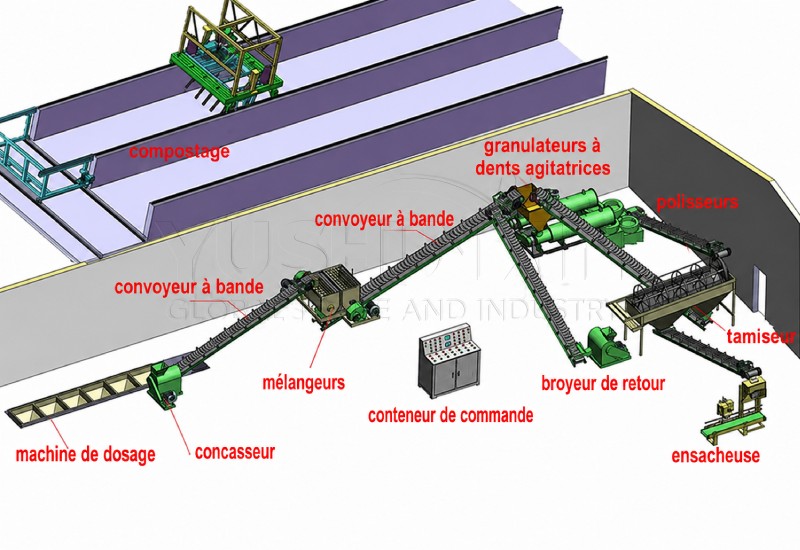
Procédé industriel de granulation d'engrais organiques

Procédé industriel de granulation d’engrais organiques

Prévoir les équipements autour du granulateur

Un granulateur seul ne crée pas une usine fiable. Le convoyage, le dosage, le broyeur, le mélangeur, le crible, le dépoussiérage et l’emballage doivent être adaptés au même débit. Pour une extension importante, une ligne de production d’engrais organique de 8 à 20 t/h nécessite aussi une étude des flux de chaleur, de ventilation et de recyclage des granulés hors spécification.

Les zones humides ou exposées aux sels peuvent nécessiter des pièces de contact en acier inoxydable. Ce choix doit être défini selon le matériau, les conditions de nettoyage et le budget, plutôt que choisi systématiquement.

Acheter une ligne qui reste évolutive

Votre investissement doit correspondre à votre matière disponible aujourd’hui, sans bloquer la croissance de demain. Comparez les besoins en main-d’œuvre, en énergie, en séchage et en maintenance avant de retenir une technologie. Pour approfondir le choix des machines, consultez cet équipement de granulation d’engrais.

Pour plus d’informations sur une configuration adaptée à votre capacité, obtenez les détails du projet.

Projet de fabrication d’engrais organiques