Category Archives: Food Processing Equipment

How Much Energy Does an Industrial Vibrating Drainer Consume in a Continuous Food Production Line?

A fried snack factory, a vegetable processor, or a seafood plant that drains washed or fried product usually wants to know how much electricity the draining step adds. The industrial vibrating drainer for vegetables removes surface oil and water with a compact vibration motor, and its energy use is low enough to fit a continuous line. This article explains the power draw and the checks that keep the food processing step efficient.
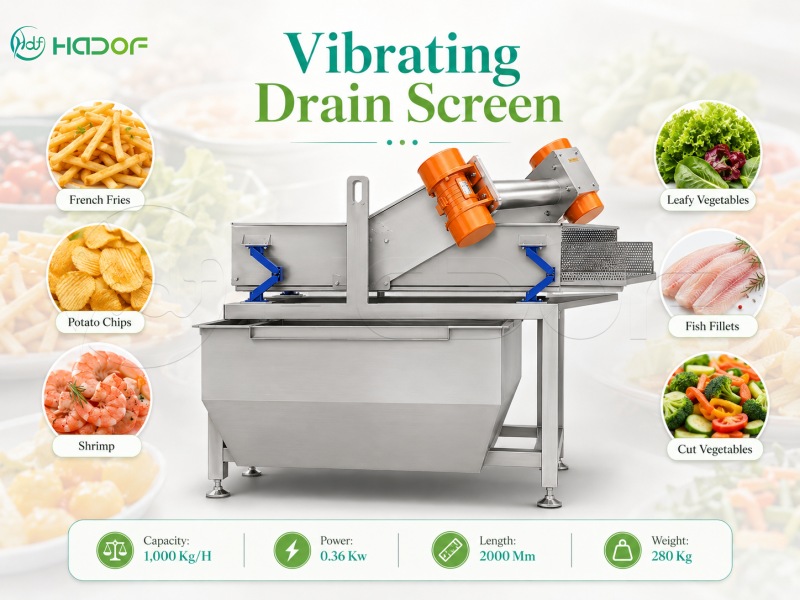
industrial vibrating drainer for vegetables

How Much Power Does a Vibrating Drainer Draw?

The machine uses only about 0.36 kW of power, which keeps the electricity cost small across a full shift. The vibrating drain screen with 0.36 kW power measures about 2,000 mm long and handles around 1,000 kg/h, so a factory gets steady draining without a heavy motor. A buyer who records this power sees the drainer as a light operating cost rather than an energy burden. This low draw is the first fact that shapes the food equipment budget.

How Does the Vibration Principle Keep Energy Use Low?

The drainer uses a vibration motor to create a regular excitation force, and the screen plate moves the product forward while oil or water passes through the openings. The stainless steel vibrating drainer for washed produce needs no pump or heater, because gravity and vibration do the separating. This simple principle removes surface liquid without the extra machinery that a spin dryer would add. A factory therefore keeps the food manufacturing energy low by choosing vibration over a powered drying step.

How Do Capacity and Material Affect the Energy Draw?

The rated 0.36 kW power stays fixed, but the real draining rate follows material type, oil content, water content, layer thickness, and vibration frequency. A light leafy product drains faster than a dense, oily snack, and a thinner layer lets the liquid pass more quickly. A plant that adjusts the vibration frequency to the product keeps the machine at its efficient point. This attention to the food handling variables keeps the energy per kilogram low.

How Does the Drainer Connect With Washing and Drying Equipment?

A drainer works best when the washed or fried product arrives on a belt and the drained product leaves directly to the next stage. The machine sits after washing or frying and feeds an air dryer for drained vegetables, a cooling conveyor, or a packaging station. A matched height and speed keep the product moving without a manual handoff. This connection turns the drainer into part of a continuous food production line rather than an isolated step.

How Should a Plant Measure Operating Cost?

Vibration based draining adds only a small motor load, so a plant measures operating cost by the power, the shift hours, and the product flow. You can review the vibrating drainer equipment manufacturer before a purchase, and that review shows the stainless steel build and the service behind it. A careful buyer records the power and the throughput together. These checks turn the food machinery decision into a clear energy figure.

Conclusion

An industrial vibrating drainer consumes only about 0.36 kW, and its vibration principle removes oil and water without a pump or heater. These choices keep the food production line’s energy use low. If you have interests, you can learn more about https://www.hadofps.com/products/vibrating-drain-screen/
What Are the Key Process Steps for an Industrial Vegetable Blancher Hot Water in Commercial Food Processing?

A vegetable processor, a central kitchen, or a frozen food plant that prepares leafy greens, potatoes, or mixed vegetables before freezing usually relies on a blanching stage to set color and reduce enzyme activity. The industrial vegetable blancher hot water for commercial food processing moves product through a controlled hot water bath and then a cooling section, and the order of those steps decides the final texture and safety. This article explains the process steps, the temperature control, and the connections that keep a food processing system stable.

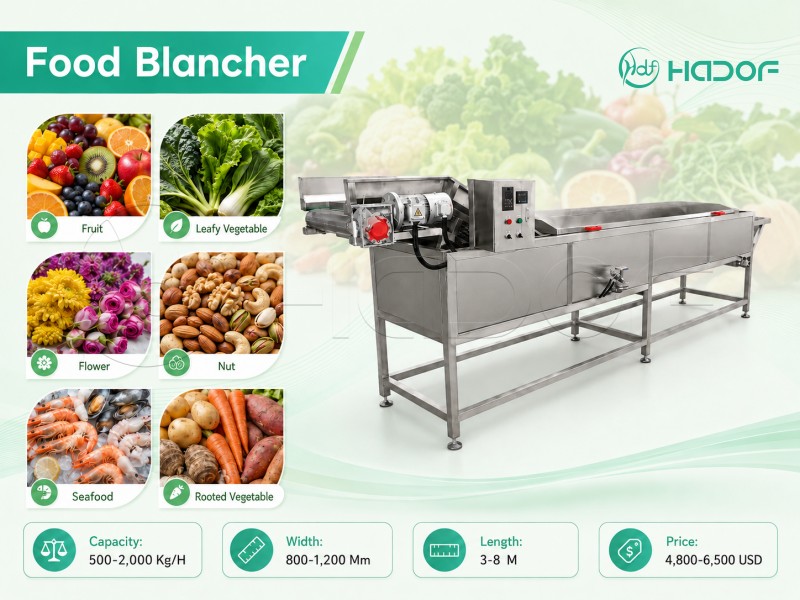
industrial vegetable blancher hot water

Which Process Steps Does an Industrial Vegetable Blancher Follow?

A complete blanching workflow usually follows feeding, washing, blanching, cooling, draining, and freezing preparation, and each step moves the product one stage closer to packing. The continuous food blancher machine with PLC temperature control receives washed vegetables, holds them in hot water for a set time, and then drops their temperature quickly in a cooling section. Overflow filtration systems remove loose particles during the food treatment, and dewatering conveyors or quick freezing machinery often follow the blanching stage. A factory that keeps this sequence in order avoids a hot product sitting too long before cooling.

How Does Hot Water Temperature Control Affect Vegetable Quality?

Temperature control decides how much the blanching step changes the product, and the machine holds water between about 80 and 100 degrees Celsius with intelligent sensors. The hot water blancher for vegetables and seafood processing uses a circulation system to spread heat evenly, so leafy greens, potato strips, and seafood receive a uniform thermal treatment instead of uneven cooking. Insulation layers around the tank also reduce energy loss during long runs. Stable temperature therefore protects both color and texture, which are the qualities a buyer checks most closely after freezing.

How Does the Blancher Connect With Washing, Cutting, and Cooling Equipment?

A blancher never works alone, because the machines before and after it set the pace and the moisture level. Customers usually connect the blancher with a washing machine, a cutting machine, and air drying equipment, and the full food processing system then moves product without manual transfer. Each handoff needs a matched belt height and speed, and a cooling section quickly lowers the product temperature after blanching. A smooth connection prevents the pile-ups that leave one batch overcooked while another waits. This layout choice therefore protects the food manufacturing flow across the whole line.

How Does the Cooling Section Prepare Vegetables for Freezing?

After hot water blanching, the product must cool quickly, because a long warm hold lets enzyme activity and texture loss continue. The cooling section reduces temperature before the vegetables move to draining and freezing, and the line then feeds an air dryer after blanching for vegetable lines or a quick freezer. A chilled, drained product freezes with less clumping and keeps a cleaner surface. This cooling step therefore belongs in every frozen vegetable line, and a buyer who skips it risks quality that shows up only after thawing.

How Should a Food Factory Choose Heating and Belt Configuration?

Blanching vegetables works best when the heating method and the belt fit the product and the floor. The machine supports steam, electric, or gas heating, and its conveyor offers 800 mm, 1,000 mm, or 1,200 mm belt widths with effective lengths of 3 m, 5 m, or 8 m. You can review the vegetable blanching equipment manufacturer before a purchase, because the supplier helps a buyer match the blanching length to the raw material. A careful configuration keeps the food equipment productive without oversized energy use.

Conclusion

An industrial vegetable blancher follows feeding, washing, blanching, cooling, draining, and freezing preparation, and the hot water temperature, the cooling section, and the line connections all shape the final quality. A buyer who maps these steps keeps the process safe and repeatable. If you have interests, you can learn more about https://www.hadofps.com/products/food-blancher/

How Should a Food Factory Layout an Industrial Leafy Greens Processing for an Efficient Commercial Production Line?

Food factories that produce fresh-cut salads and clean vegetables need a processing line layout that moves lettuce, spinach, cabbage, and celery from sorting to packaging with fewer transfers. An industrial leafy greens processing line for commercial salad production connects cutting, washing, draining, dehydration, and packing in one continuous flow, and this layout supports central kitchens, supermarket suppliers, and ready-to-eat salad manufacturers. This article explains the key layout decisions and how each stage supports efficient food production.

industrial leafy greens processing

How Should a Food Factory Arrange Sorting, Cutting, and Washing for Leafy Greens Processing?

Food factories arrange leafy greens processing from dry operations to wet operations and then to moisture removal and packing. Workers first sort leaves and remove roots on a manual sorting table, and a leafy vegetable cutting machine cuts the leaves into target sizes. The cut vegetables then move into a vortex washing machine, and this water flow removes sand, soil, and broken leaf pieces without damaging soft leaves. This dry-to-wet sequence reduces contamination transfer and keeps food preparation flow clear and measurable.

How Does Moisture Control Affect Leafy Salad Quality and Shelf Life in Food Processing?

Moisture control directly affects leafy salad quality and shelf life, so food factories place dewatering and drying equipment after washing. A vibrating drainer removes surface water, and a centrifugal dehydrator removes remaining moisture at a controlled speed. A leafy salad processing system with washing and dewatering therefore gives salad manufacturers better moisture control before packing, and this control reduces wet spots, protects leaf texture, and extends product freshness during food production and distribution.

How Can a Food Factory Choose a Scalable Layout for a Leafy Greens Processing Line?

Food factories choose a scalable layout by keeping each processing module independent and connected by conveyors. A factory can start with sorting, cutting, washing, dewatering, and simple packing, and it can add air drying or automatic weighing when daily output grows. A fresh-cut leafy vegetable line for food factories supports this modular expansion, and you can adjust capacity from about 500 kg per hour to larger configurations. You can also combine the line with a leafy vegetable cutting machine for salad processing when the process needs adjustable cut sizes. The food processing equipment supplier provides layout design, installation support, and technical guidance for food manufacturing projects. Operators should inspect leafy vegetables before loading, because leaf tenderness affects cutting, washing, and dehydration settings.

Conclusion

In summary, a food factory layouts an industrial leafy greens processing line by arranging dry sorting, cutting, wet washing, dewatering, and packing in a logical flow. You can classify the layout by process stages, from manual sorting to automatic packaging, and you can classify the moisture-control equipment by vibrating drainer, centrifugal dehydrator, and optional air dryer. The key decisions are raw material type, daily capacity, workshop space, water management, and future expansion. When you plan a new salad processing project or upgrade an existing food production plant, this line gives your operators a stable and hygienic path from whole leaves to packaged salad. If you have interests, you can learn more about https://www.hadofps.com/solutions/leafy-salad-processing-line/