
A fried snack factory, a vegetable processor, or a seafood plant that drains washed or fried product usually wants to know how much electricity the draining step adds. The industrial vibrating drainer for vegetables removes surface oil and water with a compact vibration motor, and its energy use is low enough to fit a continuous line. This article explains the power draw and the checks that keep the food processing step efficient.
How Much Power Does a Vibrating Drainer Draw?
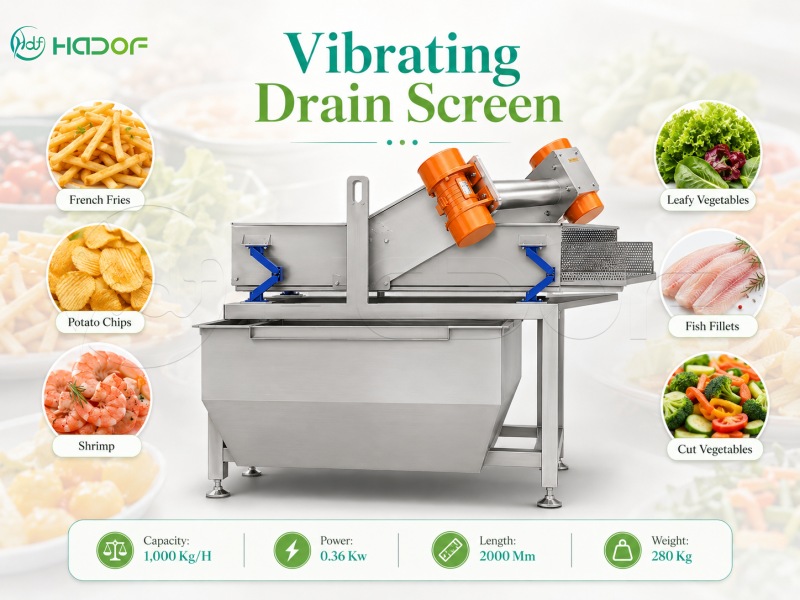
The machine uses only about 0.36 kW of power, which keeps the electricity cost small across a full shift. The vibrating drain screen with 0.36 kW power measures about 2,000 mm long and handles around 1,000 kg/h, so a factory gets steady draining without a heavy motor. A buyer who records this power sees the drainer as a light operating cost rather than an energy burden. This low draw is the first fact that shapes the food equipment budget.
How Does the Vibration Principle Keep Energy Use Low?
The drainer uses a vibration motor to create a regular excitation force, and the screen plate moves the product forward while oil or water passes through the openings. The stainless steel vibrating drainer for washed produce needs no pump or heater, because gravity and vibration do the separating. This simple principle removes surface liquid without the extra machinery that a spin dryer would add. A factory therefore keeps the food manufacturing energy low by choosing vibration over a powered drying step.
How Do Capacity and Material Affect the Energy Draw?
The rated 0.36 kW power stays fixed, but the real draining rate follows material type, oil content, water content, layer thickness, and vibration frequency. A light leafy product drains faster than a dense, oily snack, and a thinner layer lets the liquid pass more quickly. A plant that adjusts the vibration frequency to the product keeps the machine at its efficient point. This attention to the food handling variables keeps the energy per kilogram low.
How Does the Drainer Connect With Washing and Drying Equipment?
A drainer works best when the washed or fried product arrives on a belt and the drained product leaves directly to the next stage. The machine sits after washing or frying and feeds an air dryer for drained vegetables, a cooling conveyor, or a packaging station. A matched height and speed keep the product moving without a manual handoff. This connection turns the drainer into part of a continuous food production line rather than an isolated step.
How Should a Plant Measure Operating Cost?
Vibration based draining adds only a small motor load, so a plant measures operating cost by the power, the shift hours, and the product flow. You can review the vibrating drainer equipment manufacturer before a purchase, and that review shows the stainless steel build and the service behind it. A careful buyer records the power and the throughput together. These checks turn the food machinery decision into a clear energy figure.
Conclusion
An industrial vibrating drainer consumes only about 0.36 kW, and its vibration principle removes oil and water without a pump or heater. These choices keep the food production line’s energy use low. If you have interests, you can learn more about https://www.hadofps.com/products/vibrating-drain-screen/