Monthly Archives: January 2026

Can Compost Be Turned into Granular Fertilizer? A Practical Guide to Compost Granulation Solutions

Many organic fertilizer producers and farm investors ask the same question: Can compost be turned into granular fertilizer, and is it economically feasible?
The answer is yes—and it is already a proven and scalable solution in modern compost fertilizer production lines.

Granulating compost not only improves fertilizer value but also enhances storage, transportation, and market acceptance. Below is a practical explanation of how compost is processed into fertilizer granules, what equipment is required, and when granulation makes sense.

Why Convert Compost into Granular Fertilizer?

Powder compost has limitations. It is dusty, difficult to apply evenly, and less suitable for mechanized spreading. In contrast, compost-based granular fertilizer offers:

Better flowability and uniform application

Higher bulk density and lower transport cost

Improved appearance and commercial value

Easier blending with NPK or functional additives

That is why compost granulation technology is widely used in organic and biofertilizer plants.

What Types of Compost Are Suitable for Granulation?

Most organic compost materials can be granulated, including:

Livestock manure compost (cow manure, pig manure, poultry litter)

Agricultural waste compost (straw, crop residues)

Municipal organic waste compost

The key requirement is stable fermentation and controlled moisture, usually 25–35% before granulation. Learn more! 

Standard Process: From Compost to Fertilizer Granules

A typical compost granular fertilizer production solution includes the following steps:

1. Compost Fermentation and Maturation
Fully composted material ensures pathogen-free, odorless fertilizer and prevents granulation failure.

2. Crushing and Screening
Fermented compost is crushed into fine powder. Large fibers or impurities are removed to improve granule formation.

3. Granulation Process
Depending on scale and budget, compost can be granulated using:

Disc granulator (small to medium-scale projects)

Drum granulator (medium to large-scale production)

Roller compactor (for dry granulation with low moisture)

This is the core step of compost fertilizer pelletizing.

4. Drying and Cooling
Fresh granules are dried to improve hardness and shelf life, then cooled for stabilization.

5. Screening, Coating, and Packaging
Uniform granules are selected, coated if needed, and packed for sale.

Contact YUSHUNXIN to get your compost fertilizer business plan.

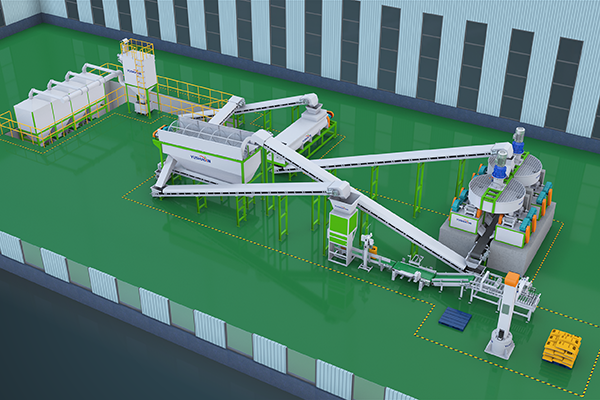
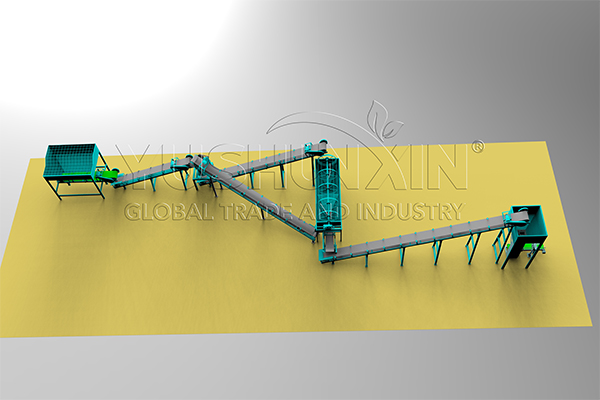
compost fertilizer production line

compost fertilizer production line

Is Compost Granulation Economically Viable?

Yes, especially for producers aiming at commercial markets. A small compost granulation line can start from $50,000–$100,000, while larger automatic systems scale with capacity.

Granular compost fertilizer typically sells at a higher price than powder compost, shortening the return-on-investment cycle.

When Does Compost Granulation Make Sense?

Compost granulation is ideal if:

  • You want to enter commercial fertilizer markets
  • Long-distance transportation is required
  • Mechanized application is needed
  • You plan to upgrade from raw compost to value-added products

In conclusion, turning compost into granular fertilizer is not only feasible but highly practical when the right equipment and process are selected. A well-designed compost fertilizer granulation solution bridges waste recycling and profitable organic fertilizer production. If you need a business plan, welcome to visit: https://www.fertilizerequipmentprice.com/organic-fertilizer-granulation-plant/

5 t/h Biofertilizer Disc Granulation Line for Sale: Equipment List and $200,000 Cost Breakdown

For small and medium biofertilizer producers, a 5 t/h biofertilizer disc granulation line is one of the most cost-effective solutions to enter the granular fertilizer market. Compared with drum or roller compaction systems, a disc granulation plant offers lower investment, flexible operation, and stable pellet quality. In most projects, the total investment can be controlled at around $200,000, making it attractive for budget-conscious buyers.

This article explains the equipment configuration, production process, and real cost structure of a 5 t/h disc granulation line.

What Is a Biofertilizer Disc Granulation Line?

A disc granulation fertilizer production line uses a rotating pan granulator to convert powdered bio-organic fertilizer into uniform granules. This system is widely used for:

Biofertilizer granules

Organic fertilizer pellets

Microbial fertilizer products

Because of its simple structure and adjustable granule size, disc granulation technology is especially suitable for small-scale biofertilizer plants.

Standard Equipment for a 5 t/h Disc Granulation Line

A complete 5 t/h biofertilizer disc granulation production line typically includes:

Compost crusher or vertical crusher for raw material size reduction

Mixing machine to ensure uniform nutrient distribution

Disc granulator (pan granulator) for pellet forming

Rotary dryer to reduce moisture and improve granule strength

Rotary cooler for temperature control

Screening machine for particle classification

Coating machine to reduce caking and improve appearance

Automatic or semi-automatic packing machine

This configuration ensures stable output while keeping the biofertilizer granulation line cost under control. Learn more ! 

Disc granulation production line

Disc granulation production line

Cost Breakdown: Why $200,000 Is a Realistic Budget

For most projects, the 5 t/h biofertilizer disc granulation line cost falls between $160,000 and $200,000, depending on:

Raw material moisture and compost maturity

Dryer heat source (coal, gas, biomass)

Level of automation in packing and conveying

Dust collection and environmental standards

A semi-automatic packing system and compact layout help reduce initial investment without affecting granule quality. Inquiry YUSHUNXIN to get the affordable bio fertilizer production equipment!

Advantages of Disc Granulation for Small Biofertilizer Plants

Compared with other granulation technologies, a disc granulator offers:

Lower equipment cost and energy consumption

Simple operation and easy maintenance

Adjustable granule size (3–6 mm commonly used)

High compatibility with organic and bio-based materials

This makes the disc granulation fertilizer plant ideal for startups, regional fertilizer producers, and expanding compost facilities.

Who Should Choose a 5 t/h Disc Granulation Line?

A 5 t/h biofertilizer disc granulation system for sale is suitable for:

New biofertilizer manufacturers

Compost producers upgrading from powder to granules

Investors testing local fertilizer markets

With reasonable capital input and stable output, this system provides a fast return on investment.


A well-designed 5 t/h biofertilizer disc granulation production line balances cost, performance, and scalability. By selecting the right equipment configuration and experienced supplier, manufacturers can achieve consistent granule quality while keeping total investment close to $200,000. If you need a business plan, welcome to visit: https://www.biofertilizerproduction.com/product/disc-pelletizer-for-biofertilizer-making/

Integrating Dewatering and Drying Technology for Efficient Pig Manure Fertilizer Production

Efficient preparation of pig manure for organic fertilizer production requires a scientific process that focuses on water reduction, material stabilization, and granulation quality. Every stage in the processing—dewatering, composting, granulating, and drying—plays a key role in turning raw pig dung into stable fertilizer particles. Each stage directly affects energy use, nutrient retention, and the performance of subsequent equipment.


1. What Types of Raw Pig Manure and Organic Waste Materials Suit Fertilizer Production?

Raw pig manure usually contains a high moisture content of around 80–90%, together with undigested fibers and soluble organic matter. This kind of high‑moisture organic waste requires careful pretreatment. Food factory residues, slaughterhouse sludge, and biogas slurry also show similar characteristics, and each industry therefore needs an appropriate manure dehydration technique to stabilize the material. Pig farms need efficient dewatering systems because the manure consistency changes daily, while the food‑processing industry values stable moisture control for odor management and safe storage.

During fertilizer production, suitable raw materials such as fresh pig feces, poultry droppings, and other biodegradable agricultural residues can combine to create nutrient‑rich organic fertilizer. Through initial dewatering, the raw pig dung changes from a liquid slurry with about 85% water to a semi‑solid material with approximately 60% moisture, which becomes suitable for composting. This preparation helps the later organic fertilizer manufacturing procedure because it reduces the energy requirement for subsequent drying and ensures a smoother composting reaction.

How To Dry Pig Manure

How To Dry Pig Manure


2. How Does the Pig Manure Dewatering Machine Improve Water Reduction Efficiency?

A pig manure dewatering machine separates solid and liquid components through advanced mechanical design. The screw press and filtration parts remove excessive moisture and ensure continuous discharge. As the material passes through, the system decreases the water content evenly and keeps the organic nutrients within the solid fraction. Stable dehydration performance allows composting to proceed quickly because oxygen can circulate well inside the semi‑dry pig dung mixture.

Different industries apply the machine for specific needs. For example, livestock farms use it to lower transportation costs by reducing manure volume, while fertilizer production facilities apply it to achieve controlled moisture levels before compost fermentation. The dewatering system also works well with pig dung thick slurry, biogas residues, or feed mill sludge. Consistent dehydration supports the later rotary drum dryer operation, which finally dries fertilizer granules to below 10% moisture.


3. Why Does the Rotary Drum Dryer Play a Critical Role in the Final Water Reduction Stage?

In organic fertilizer manufacturing, the rotary drum dryer functions as the key drying equipment for pig manure granules. After composting and granulation, the semi‑finished fertilizer pellets still contain 30–40% moisture. The efficient drum design provides stable heat exchange and even drying without nutrient damage. Continuous rotation keeps each particle moving so that hot air can contact the entire surface. The drying process then decreases the final moisture to less than 10%, which fulfills fertilizer storage and packaging standards.

The integration of the dewatering machine and the rotary drum dryer ensures complete water reduction. Dewatering produces pre‑treated pig manure suitable for composting; composting and granulation make stable fertilizer granules using a wet granulator or pelletizer; finally, the rotary drum dryer completes the drying and stabilization procedure. The combined design shortens the total production cycle and enhances granule quality and appearance.


4. How Does the Full Pig Manure Fertilizer Production Process Form a Sustainable System?

The full fertilizer production system transforms raw pig dung into commercial organic fertilizer through four sequential moisture control stages. In the first dehydration stage, the dewatering machine lowers water content from 85% to around 60%. In the second stage, compost and fermentation mixers further reduce moisture to 50% while decomposing organic matter. The third stage uses granulating equipment such as a disc granulator or rotary wet pelletizer to turn the composted material into fertilizer granules with 30–40% water. Finally, the rotary drum dryer performs intensive drying to reduce moisture to less than 10%, creating durable fertilizer pellets suitable for packaging or bulk storage.

Each stage emphasizes moisture reduction technology rather than agricultural cultivation, and every machine—from the dewatering unit to the drying system—plays a collective role in clean, efficient organic fertilizer production. Such machinery not only stabilizes pig feces but also supports resource recycling and energy saving within livestock waste management.


Conclusion

Professional producers understand that dehydration, composting, granulation, and drying must align systematically. The pig manure dewatering machine establishes the foundation, while the rotary drum dryer completes the final drying step. Together they create a balanced fertilizer production process that maintains nutrient integrity and improves product value.

When a client selects reliable drying technology, the operation quality and system efficiency both increase significantly. A professional drying equipment manufacturer—Yushunxin—offers rotary drum dryers and pig manure dewatering machinery suitable for various organic fertilizer production lines, helping enterprises achieve consistent performance and reliable water reduction results. You can visit: https://www.fertilizerdryer.com/how-to-dry-pig-manure/

От чертежа до готовой продукции: мы предлагаем комплексные решения для полной линии оборудования для гранулирования валковым прессом

В условиях растущей конкуренции в обрабатывающей промышленности предприятия все чаще стремятся получить не просто отдельное «оборудование», а полноценную производственную систему, которая работает стабильно, эффективно и слаженно. Особенно в области гранулирования технология сухого гранулирования валковым прессом широко применяется в таких отраслях, как производство удобрений, химическая промышленность, металлургия, благодаря своим уникальным преимуществам. Однако полное раскрытие потенциала этой технологии сильно зависит от полной производственной линии, которая является научно спроектированной и точно сбалансированной.

Линия по производству роликовой экструзионной грануляции

Линия по производству роликовой экструзионной грануляции

Мы хорошо это понимаем и настоятельно заявляем: Что касается линии гранулирования валковым прессом, мы можем предоставить комплексное решение «под ключ» для полного набора оборудования — от проектирования до ввода в эксплуатацию.

Ключевые компоненты полной линии гранулирования валковым прессом, которые мы можем вам предоставить

Эффективная и стабильная линия гранулирования валковым прессом обычно состоит из следующих пяти ключевых модулей, которые мы можем изготовить по индивидуальному заказу:

1. Система предварительной обработки и транспортировки сырья
Дробилка: Обработка возможных слежавшихся материалов для обеспечения однородности начальной крупности.
Высокоэффективный смеситель (например, двухвальный лопастной/ленточный смеситель): Обеспечение точного и равномерного смешивания различных основных и вспомогательных материалов, микроэлементов.
Система дозированной подачи: Использование шнековых или ленточных дозаторов с частотным регулированием для обеспечения непрерывной, стабильной и точной подачи материала в сердце линии — валковый пресс. Это ключевой фактор для контроля производительности и плотности гранул.

2. Основная система формования
Тяжелый валковый гранулятор: Сердце производственной линии. Мы предоставляем прочную станину, стабильную гидравлическую систему (обеспечивающую постоянное давление), а также износостойкие пресс-валки из сплава, разработанные по индивидуальному заказу в зависимости от характеристик материала (вязкость, коррозионная активность, крупность), что гарантирует эффективное формование и сверхдлительный срок службы.

3. Система дробления, доработки гранул и грохочения
Дробилка: Первичное дробление спрессованных плотных хлопьев.
Машина для доработки гранул: С помощью быстро вращающихся молотков или ножей частицам придается более правильная форма и более гладкая поверхность.
Многоуровневый вибрационный грохот: Точное разделение на годный продукт, крупные гранулы (возврат на повторное дробление) и мелкую фракцию (возврат в систему смешивания), формирование замкнутого цикла, значительно повышающего выход годной продукции.

4. Система обработки готовой продукции и упаковки (конфигурируется по требованию)
Охладитель: Обеспечение эффективного охлаждения для материалов, требующих понижения температуры или последующего покрытия.
Машина для нанесения покрытия/обволакивания: Добавление антислеживающих агентов или функционального покрытия на гранулы.
Автоматические весы для фасовки: Обеспечение эффективной и точной фасовки готовой продукции в мешки.

5. Интеллектуальная система управления — «мозг» производственной линии
Интегрированный центр управления на базе ПЛК, обеспечивающий пуск, остановку, взаимодействие и блокировки безопасности всего оборудования линии.
Интерфейс оператора (HMI) для отображения в реальном времени ключевых параметров, таких как давление, температура, ток, производительность, с поддержкой хранения и вызова рецептур.
Сеть датчиков для мониторинга ключевых точек, обеспечения предупреждений и автоматической регулировки некоторых этапов.

Роликовый-гранулятор

Роликовый-гранулятор

Наша добавленная стоимость: ценность партнерства, выходящая за рамки поставки оборудования

Выбрав нас в качестве поставщика полного комплекта оборудования, вы получите:

  • Профессиональное проектирование технологического процесса и поддержка испытаний: У нас есть испытательный центр, где мы можем провести бесплатные испытания вашего материала и предоставить точные данные по технологической схеме и производительности.
  • Индивидуальное проектирование и гибкая компоновка: Независимо от особенностей вашего производственного помещения или сложности характеристик материала, мы можем предложить нестандартные решения.
  • Настоящий сервис «под ключ»: От чертежей фундамента и инструкций по монтажу до пусконаладки, обучения и ввода в эксплуатацию — мы несем ответственность на всех этапах, обеспечивая вам беспроблемный переход на новое оборудование.
  • Постоянная поддержка в модернизации технологий: Опираясь на отраслевой опыт, мы можем заложить в линию интерфейсы для будущих обновлений (например, подключение к MES, добавление визуального контроля на базе ИИ и т.д.).

В эпоху перехода обрабатывающей промышленности к интеллектуализации и интеграции наличие полной производственной линии, имеющей перспективную конструкцию, точную балансировку и надежную работу, является прочным фундаментом для построения ключевых конкурентных преимуществ предприятия.

Мы предоставляем не просто оборудование, а гарантии стабильного качества, эффективного производства и долгосрочной прибыли.

От чертежа на бумаге до стабильного выпуска готовых гранул — позвольте нашему профессиональному комплексному решению проложить для вас точный путь.

Свяжитесь с нами в любое время для получения индивидуальных предложений по проектированию технологического процесса и конфигурации оборудования. Для получения более подробной информации, пожалуйста, посетите:https://www.sxmashina.com/rolikovaya-ekstruzionnaya-liniya-granulyatsii/

For small and medium-scale fertilizer producers, a 5 tons per hour powder biofertilizer production line is often considered an ideal entry-level solution. Compared with granulated fertilizer plants, powder biofertilizer systems feature lower investment, simpler process flow, and faster installation, making them popular among startups and regional organic fertilizer manufacturers.

Understanding the cost structure and equipment configuration of a 5 TPH powdered biofertilizer line helps investors control risk while maintaining stable output.

Typical Investment Cost for a 5 TPH Powder Biofertilizer Line

In most cases, the total cost of a 5 t/h powder organic fertilizer production line is around USD 45,000–55,000, depending on raw material type, automation level, and site conditions.

This budget level is suitable for:

  • Livestock manure processing projects

  • Organic waste recycling facilities

  • Small biofertilizer plants serving local markets

Compared with pellet fertilizer plants, powdered fertilizer systems avoid granulation, drying, and cooling units, significantly reducing capital expenditure.

Core Equipment Configuration

A standard 5 TPH powder biofertilizer manufacturing line typically includes the following machines:

  • Composting and fermentation equipment
    Such as groove type compost turners, windrow compost turners, or fermentation tanks, used to stabilize raw materials and eliminate pathogens.

  • Crushing machine
    Vertical crushers or hammer mills are commonly used to break composted materials into fine powder suitable for direct application.

  • Mixing system
    Horizontal mixers or double-shaft mixers ensure uniform blending of nutrients, additives, or microbial agents.

  • Screening machine
    A rotary or vibrating screener removes oversized particles and improves product consistency.

  • Automatic bagging machine
    Used for packing powdered biofertilizer into 25 kg or 50 kg bags for storage and distribution.

  • powdery biofertilizer making line

    powdery biofertilizer making line

This simplified process layout supports continuous operation and easy maintenance. Inquire with YUSHUNXIN about customizing related production lines.

Why Powder Biofertilizer Lines Are Cost-Effective

One key advantage of a powder bio organic fertilizer plant is its low energy consumption. Without granulation or thermal drying, power demand and operating costs remain minimal.

Other benefits include:

  • Short production cycle

  • Flexible raw material handling

  • Easy formula adjustment

  • Faster return on investment

For producers focusing on soil amendment, compost-based fertilizer, or microbial fertilizer products, powdered forms often meet market demand without additional processing. Learn more! 

Application Scope and Scalability

A 5 TPH powdered biofertilizer production system can process various raw materials, including cow manure, chicken manure, pig manure, crop residues, and fermented organic waste.

If market demand grows, this type of production line can later be upgraded with granulation modules, allowing manufacturers to expand into pellet fertilizer products without redesigning the entire plant.

Final Remarks

With a total investment of around USD 50,000, a 5 t/h powder biofertilizer production line offers a practical, low-risk entry point into organic fertilizer manufacturing. Its simple equipment configuration and stable output make it an attractive choice for producers seeking cost control and operational flexibility. If you need a business plan, welcome to visit: https://www.biofertilizerproduction.com/product/5t-h-powdery-bio-fertilizer-production-line-for-sale/

How Much Does a Fertilizer Disc Granulation Line Cost

For fertilizer producers looking to enter or upgrade granule manufacturing, the disc granulation production line is often considered a cost-effective and flexible solution. One of the most frequently searched questions online is: how much does a fertilizer disc granulation line cost? In most practical cases, the investment ranges from USD 100,000 to USD 250,000, depending on configuration, capacity, and raw material conditions.

What Is a Disc Granulation Fertilizer Line?

A fertilizer disc granulation line—also known as a pan granulation production line or disc pelletizing system—is widely used in bio organic fertilizer, compound fertilizer, and soil conditioner manufacturing. The core equipment is the disc granulator, which uses rotation, inclination angle, and moisture control to form uniform fertilizer pellets.

Compared with drum granulation or extrusion granulation, disc granulation is valued for its simple structure, lower energy consumption, and easy operation, especially for small and medium fertilizer plants.

Disc granulation production line

Disc granulation production line

Cost Range Breakdown: USD 100,000–250,000

The total cost of a fertilizer disc granulation plant depends on how complete and automated the line is:

Basic Disc Granulation Line (USD 100,000–150,000)
Suitable for small-scale producers, this setup usually includes:

  • Disc granulator (pan pelletizer)

  • Vertical or horizontal crusher

  • Rotary screening machine

  • Simple drying system or natural drying

  • Manual or semi-automatic packing scale

This option works well for organic fertilizer granules made from compost, manure, or blended organic materials.

Standard Disc Granulation Production Line (USD 150,000–200,000)
This is the most popular choice in the market. It typically adds:

  • Rotary dryer and cooler

  • Dust collection system

  • Coating machine for improved granule appearance

  • Automatic weighing and bagging system

Such a configuration balances production efficiency, pellet quality, and investment cost.

Fully Equipped Disc Granulation Line (USD 200,000–250,000)
Designed for higher output and export-oriented fertilizer plants, this line may include:

  • Pre-mixing and batching systems

  • Automatic moisture control

  • Centralized electrical control system

  • Customized disc granulator size and lining materials

Factors That Influence the Final Price

Several variables affect the final cost of a disc granulation fertilizer production line:

  • Production capacity (t/h)

  • Raw material moisture and particle size

  • Granule size requirements

  • Level of automation

  • Local installation and infrastructure conditions

Choosing the right configuration is often more important than simply minimizing upfront cost. Click here to get more! 

Why Disc Granulation Remains a Popular Choice

From an investment perspective, disc granulation offers a shorter payback period, strong adaptability to organic materials, and lower maintenance requirements. For many fertilizer manufacturers, it represents an efficient entry point into granulated fertilizer production.

Understanding the true cost of a fertilizer disc granulation line helps producers make smarter decisions and build scalable fertilizer plants with long-term value. If you need a business plan, welcome to visit: https://www.fertilizerequipmentprice.com/pan-granulator-price/

How Do Different Types of Pomace Require Different Drying Approaches in Fertilizer Manufacture?

Modern organic fertilizer manufacture relies heavily on fruit pomace and other high‑moisture residues, yet every type of pomace shows different behavior in the drying and granulation process. Therefore, each producer needs a clear drying strategy and a suitable rotary drum dryer configuration, instead of one universal solution. When a fertilizer production line treats grape pomace, apple pomace, citrus pomace, or vegetable pulp, the pomace fertilizer process needs a customized water reduction procedure from wet waste to stable fertilizer granules or pellets.

By understanding pomace characteristics, a fertilizer manufacturer gains better control over dewatering, composting, drying, and final pellet making. As a result, the pomace fertilizer production system reaches higher efficiency, more stable granule quality, and lower energy consumption.


1. How Do Different Pomace Raw Materials Influence Organic Fertilizer Preparation?

Organic fertilizer production from pomace begins with careful raw material selection. Fruit pomace, vegetable pomace, winery sludge, and starch residues all show high moisture content, and many of them may start above 80–90% water. Grape pomace, apple pomace, and citrus pomace usually contain skins, seeds, and fibrous tissues, therefore these materials offer good structure for composting and later granulation. In contrast, softer fruit pulp or sugar industry pomace shows a more sticky texture, and this property creates challenges in the drying process and in rotary drum dryer operation.

Different industries show different needs for pomace fertilizer production. A juice factory may prioritize quick dewatering technology in order to reduce storage volume and odor, therefore this plant favors a combination of mechanical dewatering machine and thermal drying equipment. A winery often values the nutrient content of grape pomace fertilizer, so this facility gives more attention to controlled compost fermentation and balanced moisture reduction. A vegetable processing plant usually wants a stable organic fertilizer granule or pellet that can enter a commercial granulator or pelletizer, therefore this company emphasizes uniform particle size before the granulation stage.

Suitable raw materials for pomace‑based organic fertilizer manufacture include apple pomace, grape pomace, olive pomace, tomato pomace, beet pulp, and mixed fruit pomace from beverage production. These materials respond well to staged dewatering, composting, rotary drum drying, and pellet making. When a fertilizer producer combines pomace with animal manure, crop straw, or biochar, the entire organic fertilizer production process gains better carbon‑to‑nitrogen balance and better granule forming behavior. In summary, every type of pomace requires its own design for drying and granulation, yet all of them depend on effective moisture reduction as a central procedure.

Pomace Dryer

Pomace Dryer


2. Why Do High‑Moisture Pomace Fertilizer Lines Need Multi‑Stage Dewatering and Drying?

High‑moisture pomace fertilizer manufacture rarely relies on only one drying machine, because the initial water content often rises above 90%. Consequently, a practical pomace fertilizer production line usually follows four main stages: mechanical dewatering, compost fermentation, wet granulation, and rotary drum dryer treatment. Each stage gradually lowers moisture and changes the physical form of the pomace‑based fertilizer material.

In the first stage, a dewatering machine or other dehydrator reduces free water quickly. Screw press dewatering equipment and belt dehydrator machinery often handle raw fruit pomace, grape marc, or vegetable pulp. This dewatering process may bring the pomace fertilizer material from more than 90% moisture down to around 60–70%. In this way, the system saves fuel in the later thermal drying procedure.

The second stage usually introduces composting technology. A compost turner or compost fermentation machine helps the pomace mix with manure or other organic fertilizer ingredients. During aerobic composting, microorganisms break down organic matter and release heat, and this biological process assists natural water reduction. The pomace compost preparation stage often lowers moisture content further, for example from 65–70% to 40–55%, while it also stabilizes the fertilizer material and reduces odor.

Next, many fertilizer plants adopt wet granulation or pelletizing technology. A wet granulator or pelletizer transforms semi‑moist pomace compost into more uniform granules or pellets. Wet granulation often needs some water or binder, therefore the particles leave the granulator at a moisture level that still requires serious drying. At this moment, a rotary drum dryer becomes the key equipment in the pomace fertilizer production system, because the plant needs to move from roughly 20–30% moisture down to below 10% in the final organic fertilizer granule. Through these four stages, pomace‑based fertilizer manufacturing completes a full moisture reduction path, while it also upgrades a loose, sticky pomace waste into a stable, easy‑to‑handle fertilizer product.


3. How Should a Rotary Drum Dryer Adapt to Different Types of Pomace in Fertilizer Manufacturing?

Different pomace materials behave differently in a rotary drum dryer, therefore each fertilizer production line needs careful dryer design and operation. Grape pomace, with seeds and skins, shows relatively good flow and forms a loose curtain in the drum, so the drying equipment can run with stronger air velocity and higher loading. However, apple pomace and certain vegetable pomace types may become sticky at certain moisture levels, and these materials may create build‑up or adhere to the drum wall if the drying process lacks proper control. Consequently, each rotary drum dryer for pomace fertilizer production requires a design that matches the particle size, fiber content, and initial moisture of the specific pomace.

A well‑designed pomace rotary drum dryer system usually includes lifting flights or paddles inside the cylinder. These components continuously raise and shower the pomace fertilizer particles through the hot air stream, and this movement increases the contact area for efficient water evaporation. Temperature zones in the dryer also matter. The inlet zone may reach relatively high temperature in order to remove surface moisture quickly, while the middle and discharge zones maintain moderate temperatures to protect nutrient content and avoid overheating of the pomace granules. In this way, the pomace fertilizer drying process balances energy efficiency with product quality.

When the fertilizer production line includes upstream wet granulation, the rotary drum dryer needs to handle moist fertilizer granules or pellets rather than loose compost. In this case, the dryer must protect the integrity of each granule or pellet, so the drum speed, angle, and internal flight design require careful selection. Stable discharge moisture below 10% helps the final pomace‑based fertilizer resist caking during storage and transport. Therefore, the rotary drum dryer does not only dry pomace fertilizer; it also secures consistent granulation quality and ensures that each pomace‑derived fertilizer particle meets the storage and application requirements.


4. How Can Integrated Fertilizer Machinery Improve Pomace Drying and Granulation Efficiency?

A modern pomace fertilizer production system benefits from coordinated equipment rather than separate machines working without connection. When a dewatering machine, compost turner, wet granulator, and rotary drum dryer all match each other, the water reduction process from raw pomace to finished organic fertilizer pellet becomes smoother and more predictable. For example, an efficient dehydrator lowers free water and feeds a more uniform pomace cake into the composting stage, therefore the compost fermentation machine can maintain better aeration and temperature control. This stable compost base later improves the performance of both the granulator and dryer.

Once the composting stage completes, controlled feeding into a wet granulation machine or pelletizer maintains consistent particle size distribution. Uniform granules enter the rotary drum dryer with similar moisture levels and shapes, so the drying procedure avoids over‑drying fines and under‑drying larger particles. This synchronization reduces energy waste and improves throughput. At the same time, a well‑designed exhaust and dust collection system around the rotary drum dryer protects the working environment and allows partial heat recovery, and this arrangement further raises overall fertilizer manufacturing efficiency.

Many pomace fertilizer manufacturers also integrate screening equipment and cooling machines after the rotary drum dryer. The cooler lowers the temperature of pomace‑based fertilizer pellets, while the screener classifies the granules by size and recycles oversize particles back to the granulation and drying stages. As a result, the entire pomace fertilizer production line forms a closed‑loop process, in which dewatering, composting, drying, granulating, cooling, and packaging support each other. This kind of integrated design enables better control of pomace moisture reduction, nutrient conservation, and final fertilizer pellet quality.


5. How Can a Professional Dryer Manufacturer Support Custom Pomace Fertilizer Projects?

Different types of pomace require different drying approaches in fertilizer manufacture, therefore each producer benefits from equipment that matches specific moisture levels, throughput targets, and pomace characteristics. A customized rotary drum dryer, combined with suitable dewatering, composting, and granulation machinery, helps a fertilizer plant transform high‑moisture pomace waste into stable, marketable organic fertilizer particles. Consequently, careful design of the pomace fertilizer production process reduces energy consumption, improves granule quality, and turns a disposal problem into a profitable resource.

For fertilizer manufacturers who plan to upgrade a pomace drying system or design a new pomace‑based organic fertilizer line, a professional drying equipment manufacturer such as Yushunxin offers tailored rotary drum dryer solutions and integrated pomace fertilizer production machinery, so each project gains a reliable and efficient moisture reduction process from raw pomace to finished fertilizer granule. You can visit: https://www.fertilizerdryer.com/pomace-drying-machine/

Переработка куриного помёта в органическое удобрение: эффективный путь ресурсосбережения и повышения урожайности

С развитием промышленного птицеводства проблема утилизации куриного помёта становится всё более актуальной. При прямом складировании или неупорядоченном использовании куриный помёт может вызывать неприятные запахи, способствовать размножению патогенных микроорганизмов и приводить к загрязнению почвы и водных ресурсов. Научно обоснованная переработка куриного помёта в органическое удобрение позволяет эффективно решить экологические проблемы и одновременно создать ценный сельскохозяйственный продукт.

Проект-производство-органических-удобрений

Проект-производство-органических-удобрений

Почему куриный помёт необходимо перерабатывать в органическое удобрение

Куриный помёт богат органическим веществом, азотом, фосфором, калием и микроэлементами, что делает его отличным сырьём для производства органических удобрений. Однако в свежем виде он характеризуется высокой влажностью и содержит патогены и яйца паразитов, что делает его прямое применение в сельском хозяйстве небезопасным.

В процессе переработки вредные микроорганизмы эффективно уничтожаются, структура органического вещества стабилизируется, а питательные элементы становятся более доступными для растений. Органическое удобрение из куриного помёта улучшает структуру почвы, повышает содержание гумуса и способствует устойчивому развитию сельского хозяйства.

Основные этапы переработки куриного помёта

Производство органического удобрения из куриного помёта включает несколько ключевых этапов.

На этапе предварительной обработки проводится регулирование влажности сырья. При необходимости добавляются вспомогательные материалы — солома, рисовая шелуха, опилки — для улучшения аэрации и оптимизации соотношения углерода и азота, что создаёт благоприятные условия для последующей ферментации.

Следующий этап — аэробная ферментация (компостирование). Под действием микроорганизмов органические вещества разлагаются с выделением тепла. При достижении температуры выше 55 °C и её поддержании в течение определённого времени происходит эффективное обеззараживание материала. Для ферментации применяются различные технологии: буртовая, канальная с ворошением или закрытая система — выбор зависит от производственных условий и масштабов проекта.

После завершения ферментации материал поступает на последующую переработку: дробление, просеивание и грануляцию. Гранулирование улучшает внешний вид продукта, повышает его сыпучесть и облегчает транспортировку, хранение и механизированное внесение в почву.

Линия-по-производству-органических-удобрений-из-куриного-помета-с-пылезащитным-кожухом

Линия-по-производству-органических-удобрений-из-куриного-помета-с-пылезащитным-кожухом

Подбор оборудования для производства органического удобрения из куриного помёта

Эффективная производственная линия обычно включает оборудование для ферментации, ворошители, дробилки, грохоты, грануляторы и упаковочные системы. При выборе оборудования важно учитывать производительность, уровень автоматизации и надёжность эксплуатации.

Особое внимание следует уделять оборудованию для ворошения и ферментации, поскольку именно эти процессы определяют степень разложения органики и продолжительность производственного цикла. На этапе грануляции выбор технологии — барабанная, тарельчатая или пресс-грануляция — должен соответствовать требованиям к готовому продукту и рынку сбыта.

Экологическая и экономическая ценность переработки куриного помёта

Переработка куриного помёта в органическое удобрение позволяет существенно снизить нагрузку на окружающую среду и одновременно создать дополнительный источник дохода. Готовый продукт востребован в растениеводстве, садоводстве и тепличном хозяйстве. Для птицефабрик такая технология означает переход от затрат на утилизацию к модели «отходы как ресурс».

В долгосрочной перспективе применение органических удобрений способствует сокращению использования минеральных удобрений, восстановлению почвенного плодородия и развитию экологически ориентированного земледелия.

Переработка куриного помёта в органическое удобрение является важным связующим звеном между животноводством и растениеводством. Грамотно организованный технологический процесс и правильно подобранное оборудование позволяют добиться обезвреживания отходов, снижения их объёма и получения высококачественного органического удобрения, приносящего экологическую и экономическую выгоду. Для получения более подробной информации, пожалуйста, посетите:https://www.liniyaudobreniy.com/resheniye-kurinyy-pomet-kak-odobreniye/

Groove Type Compost Turner for Efficient Bio Compost Production

As organic waste recycling and sustainable agriculture continue to expand, bio compost production has become an essential part of modern fertilizer manufacturing. Among various composting systems, the groove type compost turner, also known as a trench compost turner or channel compost turning machine, is widely used for large-scale and controlled bio composting projects.

This equipment is specifically designed to improve fermentation efficiency, reduce labor costs, and ensure stable compost quality.

What Is a Groove Type Compost Turner?

A groove type compost turner operates inside long concrete channels or fermentation grooves. Organic materials such as livestock manure, agricultural residues, food waste, or sludge are stacked in the groove, where the machine travels along rails to turn and mix the compost regularly.

Compared with windrow composting systems, groove compost turning equipment offers better space utilization and more precise process control. It is especially suitable for bio fertilizer composting plants with limited land but continuous production requirements.


application of groove type compost turner

application of groove type compost turner

How Groove Compost Turning Improves Bio Composting

During bio compost production, oxygen supply, temperature control, and moisture balance are critical. The trench compost turner lifts and throws materials evenly, breaking compacted layers and introducing fresh air into the pile. This accelerates aerobic fermentation and promotes the activity of beneficial microorganisms.

Regular turning helps maintain optimal composting temperatures, shortens fermentation cycles, and reduces odor emissions. As a result, manufacturers can achieve faster stabilization and more uniform compost maturity, which is essential for high-quality organic fertilizer production.

Applications in Bio Fertilizer Manufacturing

Groove type compost turners are widely used in livestock manure composting, including chicken manure, cow dung, and pig manure processing. They are also suitable for municipal organic waste and crop straw composting.

In a typical bio compost production line, the groove compost turner works together with feeding systems, deodorization units, and post-processing equipment such as crushers and granulators. This integrated setup supports both powdered and granulated bio fertilizer manufacturing. Learn more!

Key Advantages of Groove Type Compost Turning Systems

One major advantage of groove composting machines is their high automation level. Programmable traveling speed and turning frequency reduce manual intervention and ensure consistent fermentation conditions.

Additionally, the enclosed groove structure helps control leachate and odors, making it easier to meet environmental regulations. The robust design of trench compost turners also allows long-term operation with low maintenance costs.

Choosing the Right Groove Type Compost Turner

When selecting a groove type compost turner for bio compost production, factors such as groove width, fermentation depth, turning capacity, and material characteristics should be considered. Custom-designed compost turning systems can be adapted to different project scales and raw materials.

For manufacturers planning to build or upgrade a bio fertilizer composting plant, professional equipment suppliers can provide process design, equipment matching, and technical support to ensure stable and efficient operation.

Conclusion

The groove type compost turner plays a vital role in modern bio compost production by improving fermentation efficiency and product consistency. With proper system design and reliable compost turning equipment, producers can achieve higher output, better compost quality, and stronger market competitiveness. If you need a trench type composting machine, welcome to visit: https://www.biofertilizerproduction.com/product/groove-type-compost-turner-of-biofertilizer/