
A vegetable processor, a central kitchen, or a frozen food plant that prepares leafy greens, potatoes, or mixed vegetables before freezing usually relies on a blanching stage to set color and reduce enzyme activity. The industrial vegetable blancher hot water for commercial food processing moves product through a controlled hot water bath and then a cooling section, and the order of those steps decides the final texture and safety. This article explains the process steps, the temperature control, and the connections that keep a food processing system stable.
Which Process Steps Does an Industrial Vegetable Blancher Follow?
A complete blanching workflow usually follows feeding, washing, blanching, cooling, draining, and freezing preparation, and each step moves the product one stage closer to packing. The continuous food blancher machine with PLC temperature control receives washed vegetables, holds them in hot water for a set time, and then drops their temperature quickly in a cooling section. Overflow filtration systems remove loose particles during the food treatment, and dewatering conveyors or quick freezing machinery often follow the blanching stage. A factory that keeps this sequence in order avoids a hot product sitting too long before cooling.
How Does Hot Water Temperature Control Affect Vegetable Quality?
Temperature control decides how much the blanching step changes the product, and the machine holds water between about 80 and 100 degrees Celsius with intelligent sensors. The hot water blancher for vegetables and seafood processing uses a circulation system to spread heat evenly, so leafy greens, potato strips, and seafood receive a uniform thermal treatment instead of uneven cooking. Insulation layers around the tank also reduce energy loss during long runs. Stable temperature therefore protects both color and texture, which are the qualities a buyer checks most closely after freezing.
How Does the Blancher Connect With Washing, Cutting, and Cooling Equipment?
A blancher never works alone, because the machines before and after it set the pace and the moisture level. Customers usually connect the blancher with a washing machine, a cutting machine, and air drying equipment, and the full food processing system then moves product without manual transfer. Each handoff needs a matched belt height and speed, and a cooling section quickly lowers the product temperature after blanching. A smooth connection prevents the pile-ups that leave one batch overcooked while another waits. This layout choice therefore protects the food manufacturing flow across the whole line.
How Does the Cooling Section Prepare Vegetables for Freezing?
After hot water blanching, the product must cool quickly, because a long warm hold lets enzyme activity and texture loss continue. The cooling section reduces temperature before the vegetables move to draining and freezing, and the line then feeds an air dryer after blanching for vegetable lines or a quick freezer. A chilled, drained product freezes with less clumping and keeps a cleaner surface. This cooling step therefore belongs in every frozen vegetable line, and a buyer who skips it risks quality that shows up only after thawing.
How Should a Food Factory Choose Heating and Belt Configuration?
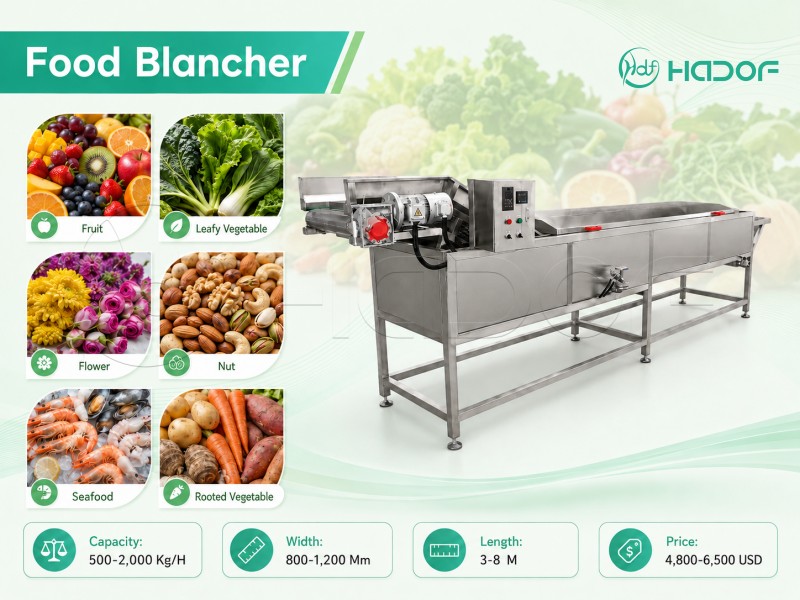
Blanching vegetables works best when the heating method and the belt fit the product and the floor. The machine supports steam, electric, or gas heating, and its conveyor offers 800 mm, 1,000 mm, or 1,200 mm belt widths with effective lengths of 3 m, 5 m, or 8 m. You can review the vegetable blanching equipment manufacturer before a purchase, because the supplier helps a buyer match the blanching length to the raw material. A careful configuration keeps the food equipment productive without oversized energy use.
Conclusion
An industrial vegetable blancher follows feeding, washing, blanching, cooling, draining, and freezing preparation, and the hot water temperature, the cooling section, and the line connections all shape the final quality. A buyer who maps these steps keeps the process safe and repeatable. If you have interests, you can learn more about https://www.hadofps.com/products/food-blancher/