The global demand for efficient fertilizer manufacturing continues to expand, and the field of limestone fertilizer production now faces new technological opportunities. Dry granulation technology already plays an important role in the preparation of lime-based fertilizer granules, and its future development will influence how producers improve product quality, reduce operational costs, and meet the needs of different industries. The following discussion explores raw materials, production requirements, technical equipment, and the advancement of double roller extrusion technology in fertilizer manufacturing.
What Raw Materials Can Be Used for Lime-Based Fertilizer Manufacturing?
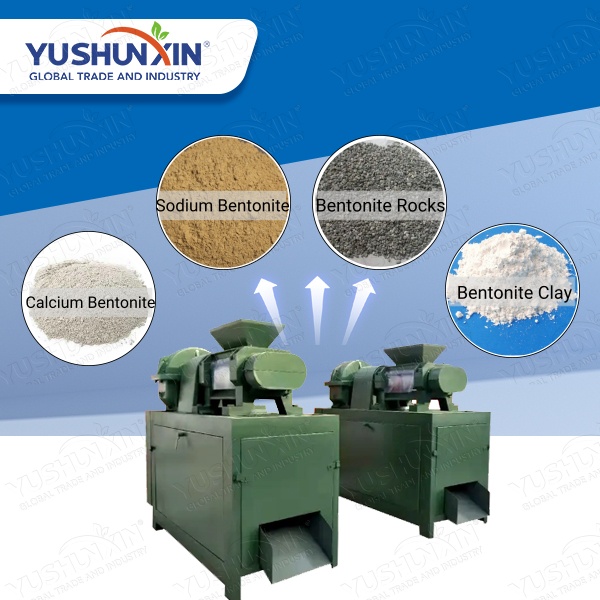
Limestone, lime rock, and quicklime powder represent the most common raw materials in lime fertilizer production. Each of these materials brings different benefits to industrial users. For example, limestone powder provides stable calcium content, which supports soil conditioning functions in agriculture and also serves as a neutralizer in industrial chemical processes. Quicklime offers higher reactivity, which benefits industries that require stronger binding properties in fertilizer particles. Dolomite powder supplies additional magnesium nutrients, which expands the application of the final product beyond basic calcium fertilizers.

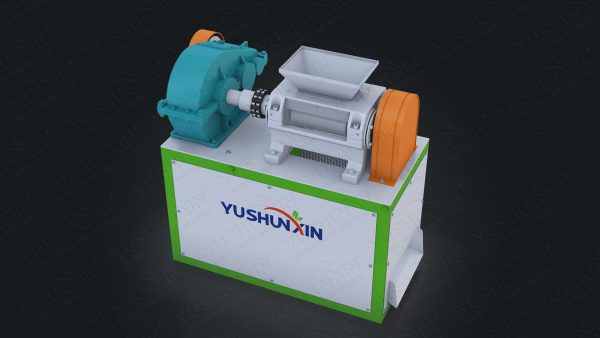
Limestone Powder Granulator
In fertilizer manufacturing, these raw materials require transformation into durable particles or pellets because fine powder does not provide stable handling or controlled release. By converting lime rock powder into compact granules, producers can supply industries that need easier storage, transport, and application. The overall procedure of powder preparation and granulation ensures that each material achieves the maximum efficiency for its target customers in agriculture, environmental treatment, and industrial blending.
How Does Dry Granulation Technology Improve Lime Fertilizer Production?
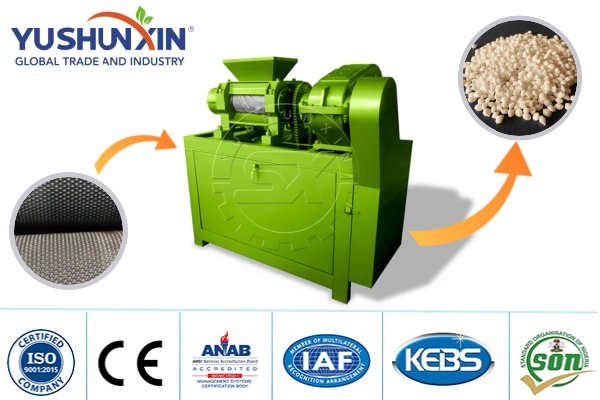
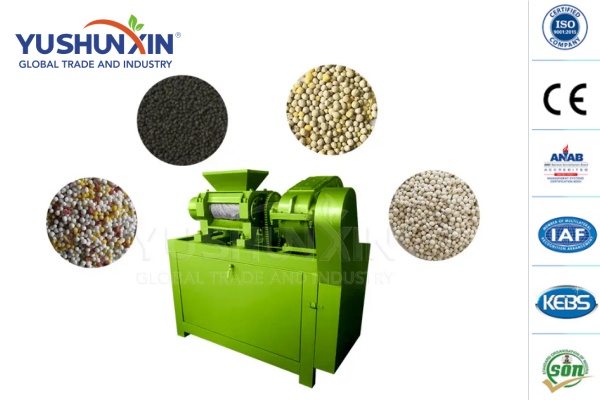
Dry granulation technology plays a crucial role in lime-based fertilizer production because it eliminates the need for large amounts of liquid binders. The procedure involves mechanical force, where a double roller extrusion granulator compresses lime powder into compacted sheets and then breaks them into uniform granules. This method reduces energy consumption compared to wet granulating, and it also lowers the risk of generating chemical reactions between lime and water.
For producers, the advantages become clear. Granules manufactured through dry extrusion maintain consistent particle size, which improves both spreading in the field and blending in compound fertilizer plants. The compacting process enhances granule hardness, which reduces dust formation during handling and shipping. Furthermore, dry granulating allows flexible adjustment of particle diameter, so industries can request customized specifications based on their operational standards. As a result, lime fertilizer particle preparation through extrusion contributes to efficiency, safety, and long-term cost control.
What Machines Support the Granulation Process in Lime Fertilizer Manufacturing?
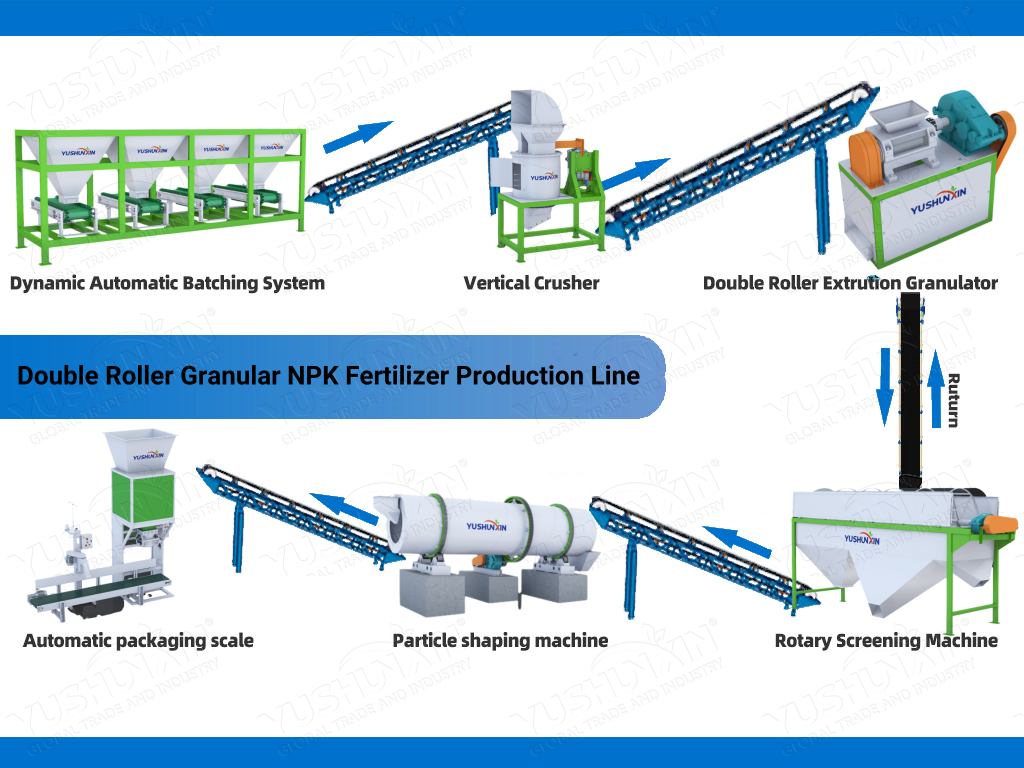
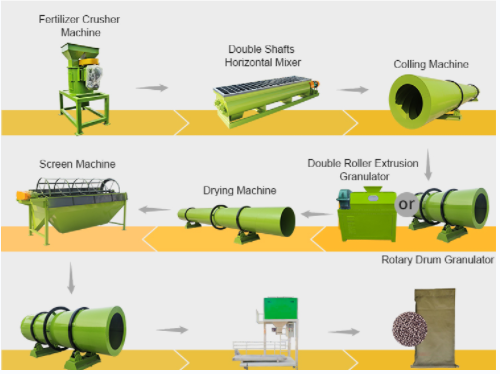
Efficient limestone fertilizer production requires integrated machinery systems. A loader type feeder supplies the material at a controlled rate into the line. A chain crusher crushes larger lime rock into fine powder, ensuring uniformity before mixing. A horizontal mixer blends different raw ingredients, guaranteeing even distribution of calcium or magnesium content. After mixing, a double roller extrusion granulator performs the dry compacting procedure, turning powder into granules without adding water.
Once extrusion forms the granules, a rotary screening machine separates qualified particles from oversized or undersized ones. Oversized particles return to the crusher, while fine powder enters the mixer again. A belt conveyor ensures smooth flow through each stage of the process. Finally, an automatic packaging scale handles the packing of finished lime fertilizer pellets into bags for shipping. Each machine contributes to efficiency, and together, this system builds a reliable granulating line that meets industrial demands.
What Is the Future Outlook for Limestone Dry Granulation Technology?
The future of lime fertilizer granulation technology appears increasingly promising because industries demand cleaner, more efficient production methods. Dry extrusion compacting technology provides a solution that reduces water consumption, cuts energy costs, and produces stable particles suitable for large-scale fertilizer plants. Environmental regulations encourage producers to adopt machines that decrease dust emissions, and extrusion granulation addresses this requirement effectively.
As technology develops, machinery design will incorporate higher automation, digital monitoring, and more precise control of compaction pressure. These improvements will allow fertilizer producers to deliver granules with uniform size distribution and optimized hardness, which can meet the demands of both large agricultural distributors and industrial users. From raw material preparation to final packaging, the entire procedure of lime fertilizer production will become more sustainable, flexible, and profitable.
Conclusion
The production of lime, limestone, and quicklime fertilizer granules demonstrates how raw material selection, dry granulation technology, and integrated machinery collectively shape product quality and manufacturing efficiency. Industries benefit from consistent particle hardness, controlled size distribution, and reduced operational costs when they adopt advanced extrusion equipment. In this context, professional equipment manufacturers play a key role. A professional fertilizer equipment manufacturer – Yushunxin – continues to provide reliable solutions for limestone fertilizer granulating lines, ensuring that producers prepare durable and efficient particles for a wide range of applications. You can visit: https://www.extruder-granulator.com/product/limestone-powder-granulation-machine/